Published on 6/14/2026
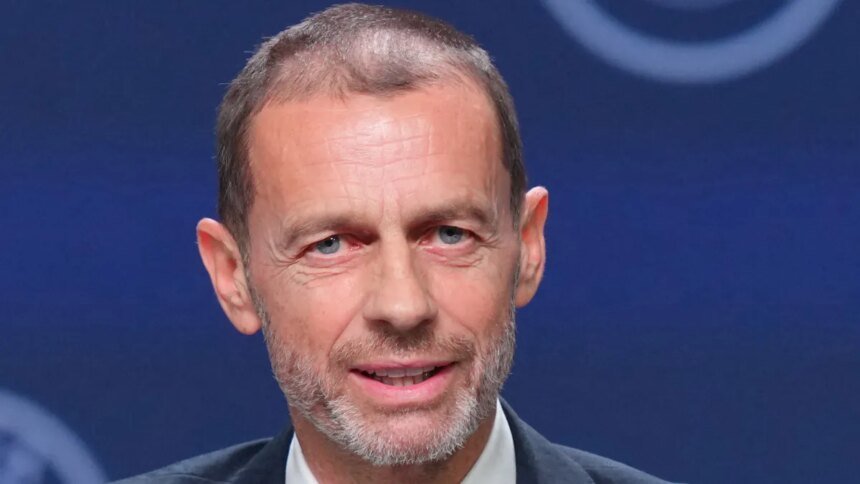
Thirteen countries participating in the 2026 FIFA World Cup qualifiers and finals, including the Arab Quartet (Egypt, Morocco, Tunisia, and Algeria), denounced the statements of UEFA President Aleksander Ceferin, in which he belittled some of the expanded World Cup matches and considered them “unimportant.”
This came in a joint statement issued by the football federations of: Cape Verde, Curaçao, Uzbekistan, the Democratic Republic of the Congo, Haiti, Algeria, Tunisia, Morocco, Egypt, Ghana, Senegal, Ivory Coast (Côte d’Ivoire), and South Africa.
Read also
list of 2 itemsend of list
Disappointment and firm rejection
The associations that signed the statement expressed their deep disappointment and categorical rejection of the recent statements issued by Ceferin, in which he described some World Cup matches as “uninteresting.” The federations stressed that there is no unimportant match in the global forum, considering that these allegations ignore the sacrifices and ambitions of the players, the football system, and fans around the world.
Generational dreams and the universality of the game. The statement stressed the historical dimension of World Cup participation, pointing out the following points:
- Historic achievement: Qualifying for the World Cup represents a dream for entire generations in emerging football countries such as Cape Verde, Curacao, and Uzbekistan.
- Return of the Spirit: Returning to the world stage after a long absence has special meaning for millions of fans in countries such as the Democratic Republic of Congo and Haiti.
- The universality of football: The strength of the game stems from its wide scope and not being limited to a limited group of countries and continents.
The federations added that every team that qualified for the tournament had deservedly reserved its place, stressing that participation inspires generations and is a source of pride and unity, and that every match carries value and meaning for millions of people.
The origin of the crisis
The roots of the crisis go back to an interview conducted by Slovenian Aleksander Ceferin with a television channel in his country, during which he criticized the decision to increase the number of teams participating in the World Cup from 32 to 48 teams, claiming that this expansion led to holding matches that lacked importance and excitement.
This joint statement is one of the strongest collective reactions issued by non-European football federations in recent years, reflecting increasing support for the efforts of the International Federation of Association Football (FIFA) aimed at expanding the base of global representation in the World Cup tournaments.