Khartoum – Hours after its signing, Sudanese factions that participated in consultative meetings in the Ethiopian capital, Addis Ababa, rejected the document approved by some blocs and civil forces to launch a comprehensive political process through a preparatory committee, and considered it “deficient,” while other factions adopted a third way.
Observers believe that the Addis Ababa meeting entrenched political polarization and division, and that the parties who failed to agree on a road map for a Sudanese dialogue find it difficult to agree on complex issues related to the post-war administration of their country.
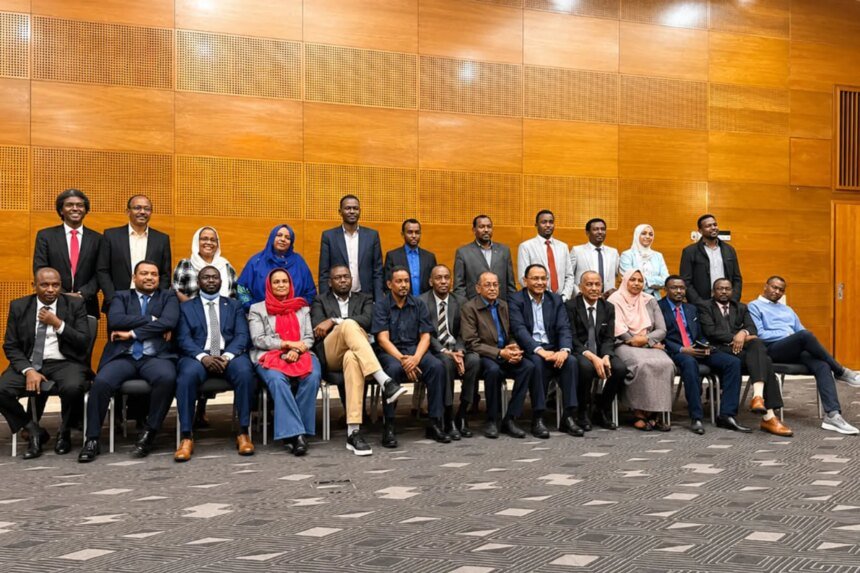
The meeting of political and civil forces came at the invitation of the five-member mechanism concerned with the Sudanese crisis, which includes the United Nations, the African Union, the European Union, the League of Arab States, and the Intergovernmental Authority for Development (IGAD).

Mechanism failure
Participants revealed to Al Jazeera Net that the mechanism was unable to bring the participating parties together under one roof, and no opening or closing session was held, and some participating parties held political consultations regarding arrangements for holding a Sudanese dialogue conference and forming a preparatory committee for it.
The Civil Democratic Alliance, Revolutionary Forces “Samoud,” refused to enter the hall in the presence of the National Forces Coordination Alliance. Representatives of the Democratic Bloc Alliance also refused to participate in the Sudan Constituent Alliance, “Taassus,” led by the Rapid Support Forces, and considered it a military force, not a political one.
The five-member mechanism organized separate meetings with a number of political actors, under the title “preliminary meetings” for the Sudanese-Sudanese dialogue, which concluded last night, Thursday, without agreeing on a unified vision among all participants.
While political and civil forces reached a joint statement that included the “Resilience” coalition and some factions of the Democratic Bloc, in addition to the Arab Socialist Baath Party – the origin, the Popular Congress, Ali Al-Hajj Movement, and the Umma Party headed by Mubarak Al-Fadil Al-Hadi, along with representatives of women’s and youth organizations.
In protest against what happened at the conference, Sally Zaki, assistant head of the Democratic Bloc, officially announced her resignation from the bloc during her participation in the Addis Ababa meeting, confirming in a publication her retirement from political work related to alliances, and being content with practicing politics as an independent Sudanese citizen who follows events and expresses her vision through her own platform.
Boycott and refuse
The factions of the Democratic Bloc signed the Sudan Liberation Movement, led by Minni Arko Minawi, the Democratic Alliance for Social Justice, headed by Mubarak Ardoul, and the United Popular Front for Liberation and Justice, headed by Secretary Daoud.
While 9 organizations from the Democratic Bloc boycotted the conference, most notably its president, Jaafar al-Mirghani, vice-president of the Democratic Unionist Party, his deputy, head of the Justice and Equality Movement, Jibril Ibrahim, and the Supreme Council of Beja and Independent Mayors, Muhammad al-Amin Turk.
In a later development, the Sudan People’s Liberation Movement-Democratic Revolutionary Current, a member of the “Resilience” coalition, announced its rejection of the document, stressing that it did not agree to the outcomes of the meeting despite its participation in it.
The movement’s vice president, Buthaina Dinar, said in a statement today, Friday, that the political process in Addis Ababa was marred by “major shortcomings,” considering that it did not adhere to the previous understandings that had been agreed upon.
She also announced her party’s reservations participating in the meeting to refuse to include a clear text prohibiting the participation of the former ruling National Congress Party and its political fronts in the process, saying that this raises questions about the ultimate goals of the political path and the possibilities of reproducing the forces that contributed to igniting the war.
Dinar criticized the proceeding with a political process without a clear commitment from both parties to the conflict to its results, and saw that this made it “a theoretical discussion that lacks practical impact on the ground.”
A third way
In a similar situation, the Sudan Liberation Movement, led by Abdel Wahid Nour, refused to sign the joint vision with the Democratic Bloc during political consultations due to disagreements over the exclusion of currents from the political process.
She said – in a statement – that the bloc refused to include a text that talked about excluding the National Congress, the Islamic Movement and their fronts from the arrangements for the political process, which prompted it to refrain from signing the joint paper.
On the other hand, political forces adopted a third path that included representatives of the National Movement Alliance led by Tijani Sissi, the Popular Congress, the movement of Al-Amin Mahmoud, and some figures classified as civil forces.
For his part, the head of the coordination of the return to the founding platform, Muhammad Wadaa, said that discussing the paths of the humanitarian, security and political peace process are strategic issues that require the presence of all concerned parties, which – in his opinion – is not available at a minimum in Addis Ababa.
In an interview with Al Jazeera Net, Wadaa explained that what was notable was the absence of the leaders of the Five-Year Mechanism, and that the representation of the political forces was mostly from the leaders of the second row, which was reflected in the outcomes of the meetings and the repetition of what was stated in previous documents. He attributed this to weak preparation and the bypassing of major forces that participated in all stages of the political dialogue.
As for the writer and political analyst Khaled Al-Tijani, he believes that calling for a new dialogue without recalling the lesson of the failure of previous political dialogues and agreements, and proposing new methods to address the sustainable crisis, will only be a recipe for inevitable failure, and its cost will be the worst consequence.
He told Al Jazeera Net that it is absurd to expect that any dialogue conducted without free Sudanese will, effective popular participation, and without any external interference, will be of any benefit. He described what happened as political forces that were invited to the Addis Ababa meeting and excluded each other, as “political bias.”