Published On 5/6/2026
An opinion writer in the Financial Times newspaper criticized in a sarcastic manner the political approach of US President Donald Trump, considering that his increasing obsession with immortalizing his name does not merely reflect a narcissistic tendency, but rather a deeper ambition towards creating a lasting legacy, and perhaps establishing a political dynasty.
Writer Edward Luce likened President Trump to a contemporary pharaoh, given the huge architectural projects he proposes, such as a triumphal arch 250 feet high (about 76 meters) in Washington, and a massive ballroom with an area of about 90,000 square feet (about 8,361 square meters) to replace the eastern wing of the White House.
Read also
list of 2 itemsend of list
The writer believes that these projects embody an unprecedented level of self-glorification in American political life.
Despite the speculation raised by Trump’s critics about the possibility of activating the 25th Amendment to remove him, Luce rules out this scenario, considering that talk of a “cognitive decline” is exaggerated.
Instead, the writer asserts that Trump’s behavior reflects a consistent pattern in his life, as he “has always put his name on things,” considering this part of his business practices, but the scale of these efforts and their political context raise deeper questions.
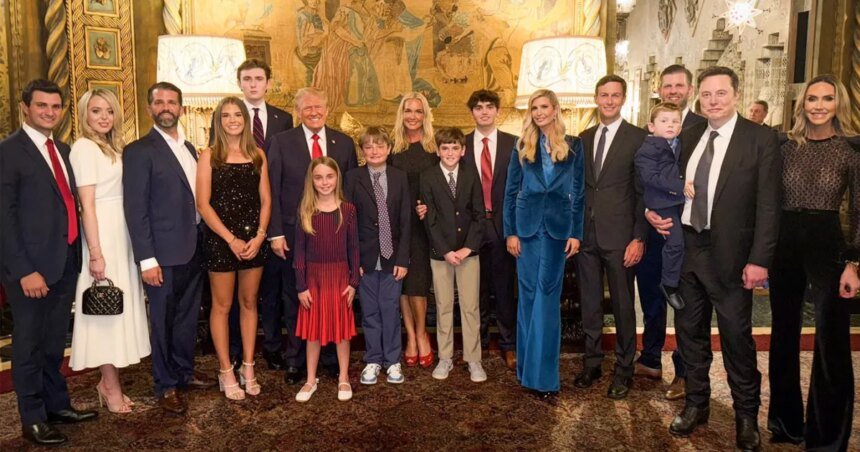
In this context, Luce raises the idea that Trump’s ambitions may go beyond personal glorification to seeking to create a political dynasty, and since the Twenty-Second Amendment prevents Trump from running for a third term, attention is turning to his children as potential heirs to this legacy.

Son’s choice
Among these, Luce believes that Donald Trump Jr. is the most fortunate, describing him as the most eager to gain his father’s approval. Although figures such as Vice President J.D. Vance and Secretary of State Marco Rubio are considered more qualified to win the Republican nomination in 2028, the writer questions their level of loyalty. In contrast, Trump Jr. may be a preferred choice for a president seeking to maintain his influence after leaving office.
Luce also explains the Trump-led renaming wave as part of this broader strategy. These attempts include changing the names of prominent institutions such as Dulles Airport in Washington and Penn Station in New York, in addition to his success in attaching his name to cultural and governmental institutions.
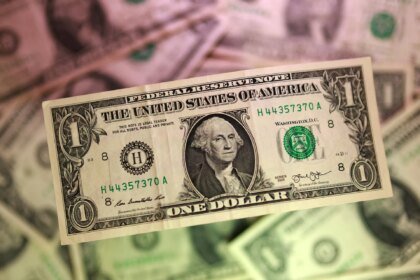
He also points to other symbolic initiatives, such as Trump’s “golden card” to obtain permanent residency, and even the idea of putting his image on currency, considering that all of this reflects a desire to leave a permanent mark on American identity.

Glamor and authority
However, the author points out the fragility of some of these steps, as many symbolic changes can be easily undone by subsequent administrations, unlike huge architectural projects that are difficult to remove. He believes that this contradiction may explain Trump’s interest in major projects that guarantee his long-term presence.
The writer placed Trump’s ambitions within a broader historical and psychological framework, noting that he “loves the glamor of property and craves the power of the tyrant,” but adds that his admiration for the idea of inheritance is often overlooked. Given his huge ambitions, Luce finds it not surprising that Trump is considering building a political dynasty bearing his name.