Published On 6/5/2026
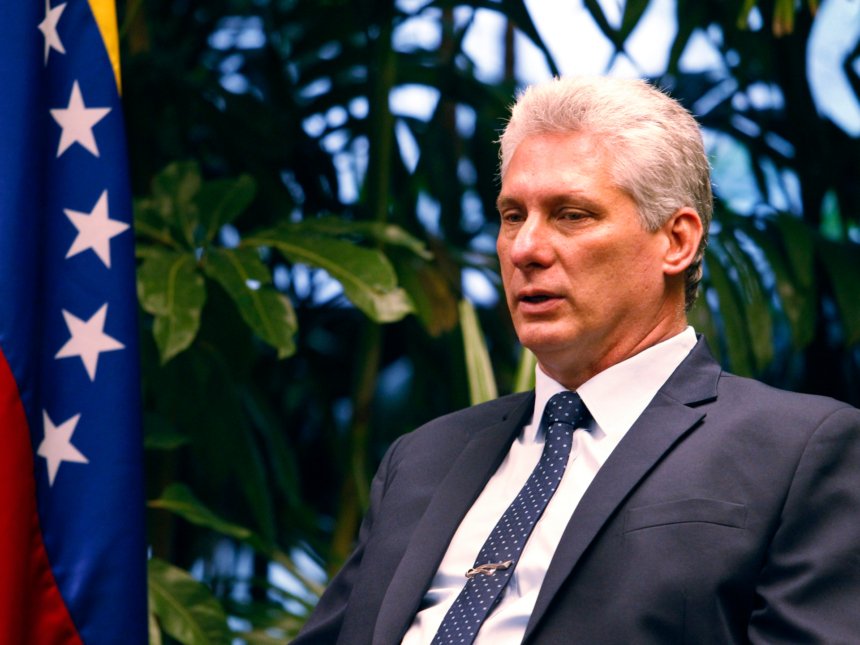
Yesterday, Thursday, the United States imposed new sanctions on Cuban President Miguel Díaz-Canel, along with figures from the family of former leader Raul Castro, in a step within Washington’s escalation of pressure on the communist government in Havana.
US Treasury Department data showed that the sanctions included Miguel Díaz-Canel (66 years old), four other people, including his wife and son, and five entities, including the Ministry of the Cuban Revolutionary Armed Forces.
The sanctions also included Alejandro Castro Espin, Raul Castro’s only son, who previously served as an advisor to the Cuban Defense and National Security Committee, and was present during Raul Castro’s meeting with former US President Barack Obama in Havana in 2016. The measures also included one of Raul Castro’s grandchildren.

These measures come after the United States brought criminal charges – last May – against Raul Castro with murder, against the backdrop of allegations related to his role in an incident that occurred in 1996, when Cuban fighter jets shot down planes operated by a group of Cuban exiles.
It also comes months after the administration of US President Donald Trump tightened its measures against Cuba, including previous restrictions on the visas of Diaz-Canel and high-ranking government officials, and sanctions imposed last month on 11 Cuban officials, including the Minister of Communications, a number of military commanders, and the country’s main intelligence service.
Washington has also previously targeted the GAISA Business Group, an economic conglomerate run by the Cuban Revolutionary Armed Forces, as part of American efforts to pressure institutions linked to the Cuban army.

Close dealing with the Cuba file
US President Donald Trump told reporters – yesterday, Thursday – that the United States wants Cuba to be a “well-run country,” at a time when he continues to talk about political change in the country, after previously pledging to implement what he described as a “friendly takeover” of Cuba, if its leadership does not open the economy to American investments and expel Washington’s opponents.
Trump added, saying, “We have very good plans for Cuba, and the ruling regime must be eliminated, as it is a very cruel and bad regime. We will take care of the Cuban file and deal with it, and the Cuban people want our presence and assistance very much,” according to his description.
He considered that Cuba had “collapsed to some extent,” but added that he would deal with its file soon, saying, “I want to deal with one file at a time, and we will first take care of the Iranian file and then we will deal with the Cuban file.”
US Secretary of State Marco Rubio said that Trump’s preference was to reach an agreement with Cuba’s socialist leadership, but he expressed doubts about the possibility of reaching a diplomatic solution with the current government.
The United States has imposed an economic embargo on Cuba for decades, but the Trump administration has escalated its pressure on Havana in recent months, especially after this administration overthrew Venezuelan President Nicolas Maduro last January, and imposed a virtual blockade on energy supplies to Cuba, which exacerbated the fuel crisis, electricity outages, and food shortages, and increased the fragility of the Cuban economy.