Published On 4/6/2026
In light of the ambiguity surrounding the negotiation path between Washington and Tehran, Iranian Leader Mojtaba Khamenei reappeared through a speech in which he warned against internal divisions. This came amid Iran’s continued betting on cards that an analyst says US President Donald Trump may blow up due to his sudden actions.
In the speech, the Supreme Leader spoke about what he considered attempts to create division within the Iranian street, and warned that “the enemy, after its defeat on the battlefield, seeks to harm the people’s steadfastness and cause internal divisions.”
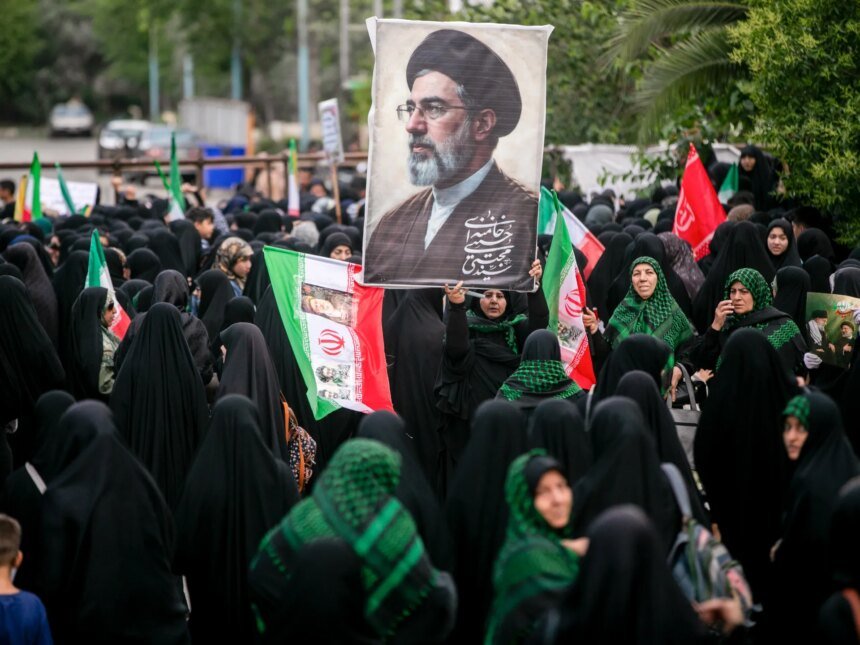
The Supreme Leader’s speech came in a written message that was read on his behalf, today, Thursday, during the ceremony commemorating the death of the founder of the Islamic Republic, Ruhollah Khomeini. !
He also said that “the hegemonic regime will spare no effort in taking any measures that prevent Iran from advancing,” in reference to the United States, which is negotiating with his country in order to end the war that Israel launched against Iran in late February.
Fear of driving
Dr. Hassan Al-Barari, professor of international relations at Qatar University, believes – in an analysis for Al Jazeera – that the leader’s new statements reflect the presence of fear within the Iranian leadership about divisions that have begun to surface, noting that the indicators of this division appear at the level of differences of opinion and the lack of coordination between the leaders, and “for example, Foreign Minister Abbas Araghchi announces one thing and the Revolutionary Guard implements another.”
The Supreme Leader and those around him believe that the United States may work to fragment the Iranian interior and create some kind of competition among the Iranian leadership, which threatens, Al-Barari adds, to weaken the Iranian position at the negotiating table.
Al-Barari points out that matters remain ambiguous regarding the status of the guide, and he considered that the statements of US President Donald Trump, in which he said that he – i.e. the guide – is engaged in negotiations and may meet with him later, cannot be taken seriously, given that most of what Trump says falls within the context of what he calls constructive ambiguity and manipulation of opponents, and therefore what he says regarding the guide cannot be relied upon.
Regarding the Iranian leadership’s view of the current situation in light of the ongoing faltering negotiations, the professor of international relations at Qatar University says that the survival of the regime in its view is a victory in itself, and that this regime has become more confident in dealing with the United States in what Al-Barari called a game of procrastination.
He explains that Iran has moved from the idea of ”strategic patience” to deterrence, that is, a strike for a strike. It receives strikes from the United States and responds by targeting Kuwait and Bahrain, and while Israeli Prime Minister Benjamin Netanyahu threatens to strike the southern suburbs of Beirut, Tehran threatens to strike northern Israel.
Cards that Tehran is betting on
Regarding the cards that Iran is betting on, Al-Barari says that it is betting on the issue of time, which it believes is in its favor, and that the one who is rushing the solution is Trump, because the state of neither war nor peace is harmful to him, in addition to other considerations related to the American interior.

It is also betting on Trump’s unwillingness to return to war, on the geography that plays in its favor, and on the problems that the global economy has fallen into due to the Strait of Hormuz, even though its economy is also suffering.
However, Al-Barari says, the Iranian bet may not be beneficial, given that Trump’s actions cannot be predicted, and he may surprise everyone by returning to military action, but he takes into account the issue of Iran becoming a player with the initiative.
Washington and Tehran have been engaged in difficult and intermittent negotiations for weeks, as the mediators seek a more sustainable truce in the American-Israeli war with Iran. The American President says in his latest statements that the negotiations are “going very well,” and that Iran has agreed not to possess a nuclear weapon.
While Tehran asserts that the issue of frozen Iranian funds represents the most prominent knot in the ongoing negotiations with the United States, while linking the stalemate in the negotiations to developments on the Lebanese scene, as Al Jazeera’s correspondent in Tehran, Omar Hawash, said.