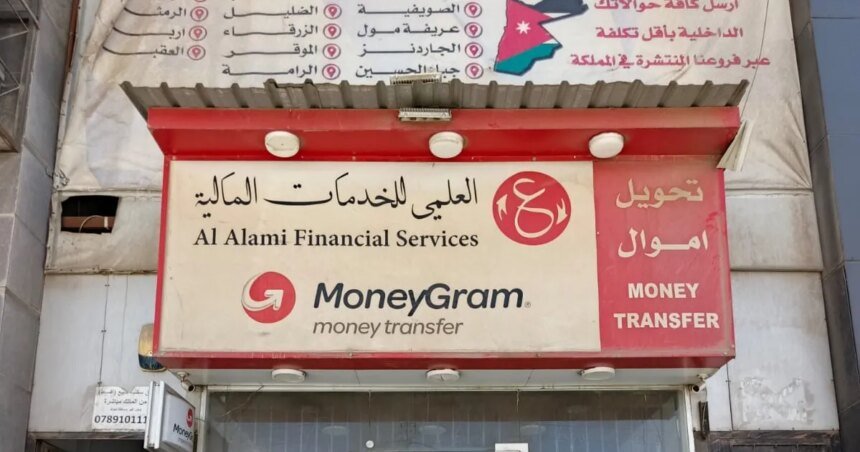
Oman – Remittances from Jordanians working abroad continue to consolidate their position as one of the most important sources of foreign exchange for the Jordanian economy, at a time when the importance of these financial flows in supporting families, stimulating local consumption, and enhancing Jordan’s foreign currency reserves is increasing, amid continuing regional and global economic challenges.
Official figures reveal that these transfers are no longer just money sent by expatriates to their families, but rather have become an essential component of financial and monetary stability in Jordan, and an influential element in the movement of markets and demand for the Jordanian dinar, and supporting levels of spending and investment.
Read also
list of 4 itemsend of list
According to preliminary data issued by the Central Bank of Jordan, seen by Al Jazeera Net, the total inward remittances from workers to Jordan during the first quarter of 2026 increased by 12.4% to reach about $1.23 billion, compared to the same period in 2025. In contrast, outward remittances from expatriate workers in Jordan increased by 13.6% to reach $477.4 million.
These numbers confirm the continued momentum recorded by Jordanian expatriate remittances in recent years, despite the economic transformations taking place in global labor markets.

The most prominent countries sending remittances
Data from the Central Bank of Jordan show that the UAE ranked first among the countries sending remittances to Jordan, accounting for 22.9% of the total incoming remittances, followed by the United States with 19.2%, then Saudi Arabia with 18.3%, then Qatar with 9.5%, then Kuwait with 5.4%, while the rest of the world’s countries combined accounted for 24.7%.
This geographical distribution reflects the concentration of large numbers of members of the Jordanian community in these countries, especially in the Gulf states and the United States, where Jordanians work in a wide range of economic and professional sectors, including education, health, engineering, financial services, information technology, and management, which makes these countries the main source of expatriate remittances to Jordan.
As for remittances out of Jordan, the numbers show that Egypt accounted for the largest share at 40.6% of the total outgoing remittances, followed by Bangladesh at 11.9%, then the Philippines at 5%, while the remaining percentage was distributed among other countries.
andThe number of Egyptian workers in Jordan is estimated at more than 900,000, along with tens of thousands of other Asian and Arab workers, who allocate part of their income to transfer it periodically to their families in their countries of origin.
Multiple economic benefits
The impact of remittances from Jordanians working abroad extends to the daily lives of thousands of Jordanian families who depend on money sent by their children to cover living, education, health and housing expenses. During the holiday seasons, the frequency of remittances increases significantly, which directly reflects on the commercial activity and purchasing power of these families.
The representative of the financial and banking sector in the Jordan Chamber of Commerce, Firas Sultan, confirms that the increase in expatriate remittances clearly reflected the increase in demand for the local currency and the activity of exchange companies, especially during holidays and various occasions.
Sultan believes in a statement to Al Jazeera Net that these flows contribute to revitalizing local markets and providing additional liquidity to the economy, and also support local consumption and reflect positively on many commercial and service sectors.
The same spokesman points out that remittances not only support demand for the dinar, but also constitute an important pillar of financial and monetary stability, as they contribute to strengthening the Kingdom’s foreign currency reserves and improving the balance of payments situation.
Continuous increase in conversions
Sultan explains that the continued growth of these remittances gives the Jordanian economy stable cash flows from abroad, which is increasingly important in light of global economic fluctuations and the decline of many traditional sources of financing.
During the year 2025, remittances from Jordanian workers abroad amounted to about $4.47 billion, an increase of 4.5% compared to 2024, which reflects the continued attachment of expatriates to their country’s economy and their confidence in the local banking sector.
The growth in remittances also coincides with the increase in tourism income, which recorded about $709 million last January, with a growth of 4.1%, which enhances the diversification of sources of foreign currency and gives the Jordanian economy greater ability to confront external shocks.
From another angle, the local exchange market began to regain its activity during the recent period, driven by the increase in the volume of transfers received from abroad.
The head of the Jordanian Money Exchange Association, Alaeddin Deiraniyeh, indicated in an interview with Al Jazeera Net that the market witnessed better movement compared to the previous month, supported by remittances from Jordanian expatriates and remittances from exporters, especially those linked to the Gulf markets.

Economic and monetary dimensions
Jordanian economist Hossam Ayesh said in an interview with Al Jazeera Net that the importance of remittances goes beyond its social dimension to broader economic and monetary dimensions.
According to his estimates, remittances from Jordanians working abroad during the year 2025 amounted to about $4.5 billion, recording a growth of 4.5% compared to the previous year.
Ayesh points out that remittances issued from Jordan in 2025 amounted to about $1.8 billion, representing approximately 40% of the total incoming remittances.
After calculating inflows and outflows, that is, transfers to Jordan less transfers from expatriate workers abroad, the net transfers to Jordan amount to about $2.7 billion, a number that reflects the real impact of these flows on the Jordanian economy.
The Jordanian economist links the growth in remittances to the rise in central bank reserves, which exceeded $27 billion by the end of the first third of 2026, considering that these flows constitute one of the factors supporting monetary stability in the Kingdom.
As for international economics expert Khaled Al-Rababa, he believes that the continued growth of remittances despite global economic conditions represents an important indicator of the confidence of Jordanians working abroad in the national economy.
Al-Rababa indicated in a statement to Al Jazeera Net that the value of remittances from Jordanian expatriates during the past year amounted to approximately 4.5 billion dollars.

Transfers via electronic wallets
In parallel with the growth of traditional remittances, Jordan is witnessing a rapid expansion in digital transfers. Data from the Jordanian Payment and Clearing Systems Company (JoPACC) showed that the value of transfers carried out via electronic wallets amounted to 5.25 billion dinars ($7.4 billion) from the beginning of 2025 until the end of October of the same year, through more than 81 million financial transfers.
The value of transactions carried out through the instant payment system exceeded 21.6 billion dinars ($30.4 billion) through about 214.9 million transactions. The number of electronic wallet users reached 2.66 million, an indication of the increasing reliance on digital tools for transfer and payment.
The instant payment system in Jordan is officially known as the “Click” system, which is a system supervised and managed by the Central Bank of Jordan in cooperation with the National Payments System Company (JoPACC). The payment system is an electronic network linking all Jordanian banks and electronic wallets, allowing individuals and companies to transfer money instantaneously and for free (or for a nominal fee) at any time.