Published on 5/30/2026
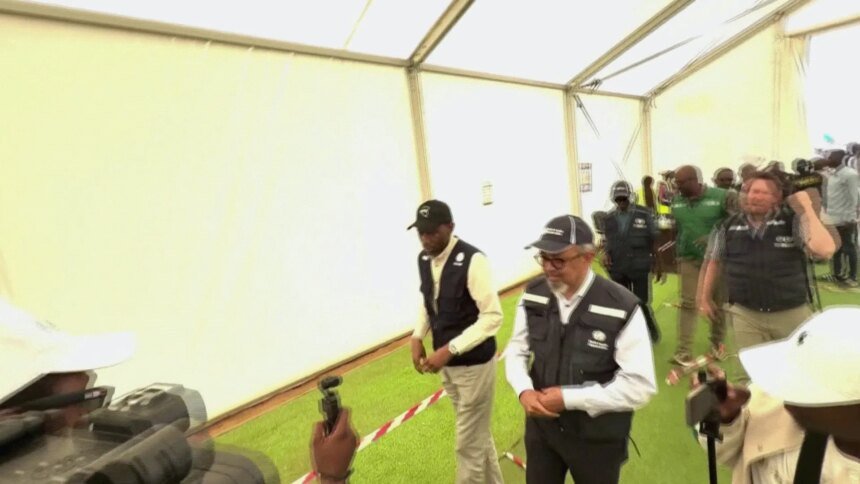
Despite assurances from international health officials that the current Ebola outbreak can be contained, the path toward controlling the disease is still fraught with complex scientific, health, and humanitarian challenges, most notably the absence of a vaccine or approved treatment for the strain currently spreading, in addition to the political and humanitarian conditions that hinder field response efforts.
Asala Lama, a physician specializing in molecular biology, said that the Ebola virus is not a new disease to the scientific community, as the world has witnessed previous outbreaks that allowed for the development of scientific knowledge and improvement of methods for dealing with infected people. However, the current crisis is linked to the emergence of a different strain for which no approved means of prevention or treatment are yet available.
She explained, in an interview with Al Jazeera from Toulouse, that the biggest challenge is that the currently spreading strain differs from the “Zaire” strain against which vaccines and treatments have been developed over the past years, while the new strain still lacks a ready-to-use vaccine despite the presence of a number of research projects that have reached advanced stages of clinical trials.
Lamaa pointed out that the development of vaccines against some viral strains faces great scientific complications, as not all research attempts achieve the desired results at the same speed, pointing out that this particular strain needed a longer time to develop effective vaccines compared to other strains that had previously been dealt with.
She confirmed that the World Health Organization is monitoring a number of promising vaccines, explaining that one of the most prominent of these vaccines may be ready to enter advanced stages of testing in the coming months, but that does not mean the availability of immediate, reliable protection to contain the current outbreak.
Absence of vaccines
She believed that the absence of vaccines and treatments is not the only factor complicating containment efforts, but rather that the political and security conditions in the affected areas play a fundamental role in slowing down the health response. Reaching the injured and their contacts requires the presence of medical teams capable of moving freely, which becomes more difficult in light of conflicts and instability.
She added that the large population displacement and the gathering of thousands of people inside camps that sometimes lack appropriate health services make it more difficult to track infections and isolate suspected cases, which raises the possibility of continued transmission of infection within affected communities.
The seriousness of the disease also lies, according to Lama, in the high death rate associated with it, which may exceed half of those infected in some waves of the outbreak, in addition to the fact that the infection may continue even after the death of the patient, which makes procedures for dealing with bodies and burial an essential part of efforts to combat the spread of the virus.
Regarding fears of the current outbreak turning into a global pandemic, Lamaa explained that the majority of specialists do not expect a scenario similar to what happened with Covid-19 to be repeated with Ebola, noting that the fundamental difference lies in the method of transmission of infection.
Ebola is transmitted mainly through contact with biological fluids of infected people or contaminated surfaces, which makes its transmission more limited compared to viruses that are able to spread through the air. According to this given, the chances of its spread globally remain much less than what the world witnessed during the Covid-19 pandemic.
However, she warned against underestimating the seriousness of any epidemiological hotspot, stressing that ignoring local outbreaks may open the door to unexpected developments, especially since viruses have the ability to mutate and change over time, which requires continued scientific monitoring and rapid response to any new developments.
Between the scientific challenges represented by the absence of an approved vaccine, and the field obstacles resulting from displacement and instability, the current battle to contain Ebola appears more complex than simply confronting a dangerous virus, as it requires concerted medical, humanitarian and political efforts to prevent it from turning into a broader health crisis in the affected region.