


Published On 5/22/2026
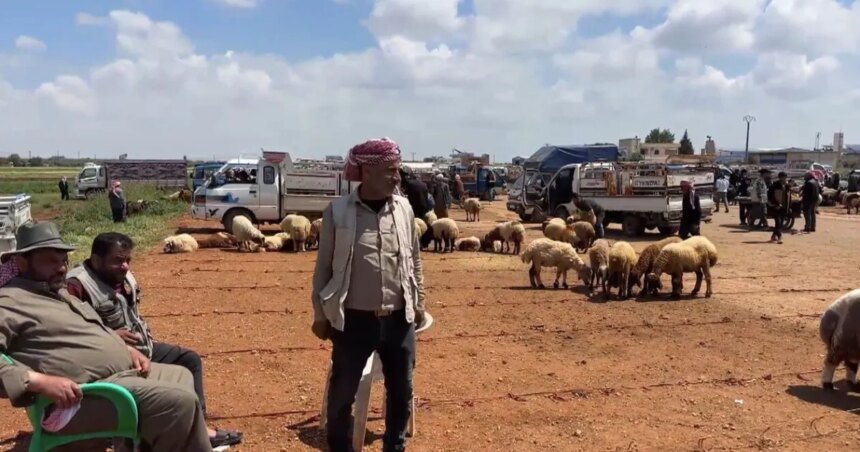
A few days before the blessed Eid al-Adha, livestock markets in the Idlib countryside are regaining their usual vitality, as the voices of sellers and buyers are rising in the market of the city of Maarat Misrin, the largest livestock market in northern Syria, amid an active buying and selling movement, despite breeders’ complaints about the high costs of breeding, medicines and fodder.
During an Al Jazeera Live field tour inside the market, the scene appeared crowded with breeders, merchants, and families coming from various Syrian regions in search of a sacrifice that suits their financial capabilities, at a time when prices vary according to the age, weight, and type of sheep.
One of the livestock traders said that the market is witnessing good activity as Eid approaches, explaining that prices vary to allow for different options for citizens, as the price of a kilo of sheep ranges between $7.25 and $7.5, while some types of rams are sold for about $6 per kilogram, and ewes are also available at lower prices starting at $4.5, which makes them a suitable option for some families.
The merchant explained that there are also calves and cows designated for sacrifice, with the price of a kilo of “lumi” calf being about $5, while “bakeera” is sold for $4.5 per kilogram, stressing that the market provides multiple alternatives to suit different segments.
During the tour, the merchant displayed one of the young sheep known locally as “Al-Tannu” or “Al-Raba’a,” noting that it was between two and three years old, and a kilogram of it was sold for $6.5 wholesale and $7 at retail.
Although traders confirm that prices this year are higher than last year, they consider them still lower than livestock prices in neighboring countries, citing the high prices in Turkey, Jordan, Iraq, and the Gulf states compared to Syria, which, according to their description, still maintains a large livestock wealth.
However, at the same time, breeders pointed to increasing challenges facing the livestock sector, most notably the high prices of veterinary medicines and customs duties on imported feed, in addition to the absence of direct government support for breeders.
Good season
One of the breeders called on the authorities to ease the restrictions imposed on the slaughter of some females that are not suitable for breeding, considering that preventing their slaughter raises the prices of sheep in the markets, and prompts some butchers to resort to slaughtering and selling them secretly.
Despite these difficulties, breeders indicated that the current season is relatively better than previous years, especially after the improvement of pastures and the decline in local barley prices, which this year recorded levels they described as acceptable, which helped some breeders recover part of their previous losses.
In the market halls, buyers seemed divided between those who saw prices as high compared to their living capabilities, and those who considered them acceptable compared to meat prices and rearing costs. One of the buyers said that he was still searching for a suitable sacrifice, explaining that people usually prefer the “quarter” sheep due to their young age and the tenderness of their meat compared to older rams.
On the other hand, another buyer confirmed that he bought a 38-kg sheep for a total price of $263, explaining that he intends to raise it for several months before reselling it after it gained weight, in reference to the continued movement of trade and breeding in parallel within the market.
One of the merchants confirmed that the Maarat Misrin market is the most prominent center for livestock trade in Idlib Governorate and northern Syria, as it is visited by sellers and buyers from Damascus, Homs, Hama, Raqqa, Manbij, Afrin and other Syrian regions, but he complained about the narrow current size of the market, demanding that it be returned to its old location, which was more spacious and capable of accommodating large traffic.
As Eid approaches, livestock markets in northern Syria continue to receive hundreds of buyers daily, in a scene where the rituals of preparing for sacrifices are mixed with breeders’ concerns about rising costs, while the people try to reconcile the requirements of the religious ritual with the difficult economic conditions that the country is experiencing.


