Published on 6/16/2026
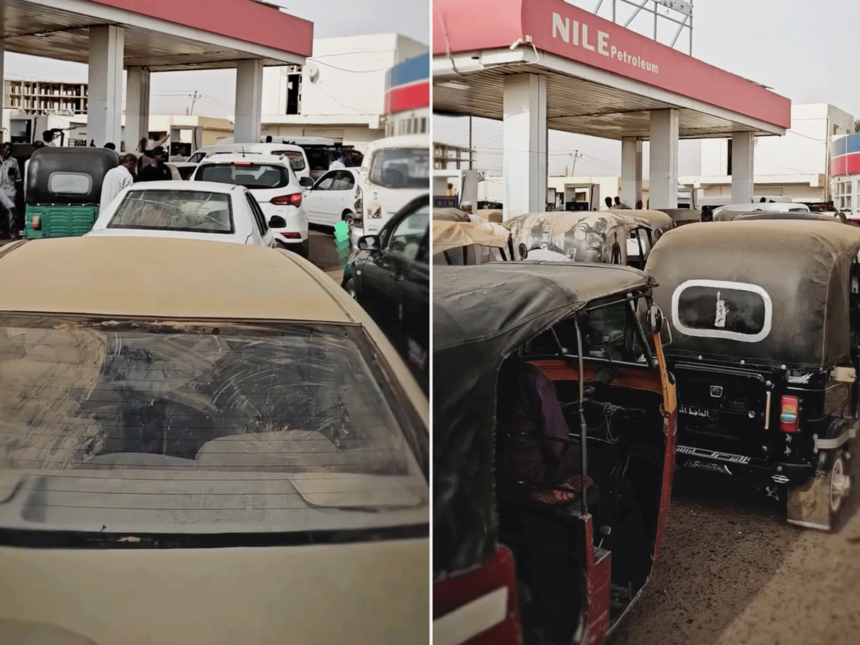
The Sudanese capital, Khartoum, with its three cities of Khartoum, Omdurman, and Khartoum Bahri, along with a number of states, witnessed a fuel crisis that extended over the past weeks and affected transportation, economic activities, and the daily lives of citizens.
During the peak of the crisis, the black market was noticeably active, with the price of a gallon of gasoline ranging between 27,000 and 30,000 Sudanese pounds (about 11 and 12 dollars).
Muhammad Ali, a citizen who owns a car, told Al Jazeera that the fuel crisis is linked to several factors, including the decline in the value of the local currency and the disruption of fuel supplies, which is reflected in the prices of goods and services and the lives of citizens in general.
For his part, Mukhtar Muhammadin, the owner of a passenger bus, explained to Al Jazeera that he was forced to stop working for a full day after two days of operation in order to secure fuel.
He pointed out that bus drivers spend long hours waiting in line in front of gas stations, which directly affects their daily income and their ability to continue working.
Additional burdens
In turn, Bashir Al-Khair, a bus owner, told Al Jazeera that the high costs of living and repeated increases in the prices of goods and services, in addition to the disruption of fuel supplies, imposed additional burdens on workers in the transportation sector.
He added that the effects of the war were reflected in various sectors, noting that vehicle owners face increasing difficulties in continuing their work on a regular basis.
On the other hand, Fayez Farouk, a gas station owner, confirmed to Al Jazeera that the crisis is heading towards a gradual relief, explaining that the disruption of supplies during the recent period has caused a shortage of available quantities and congestion of vehicles in front of the stations.
He added that the improvement in fuel flow in recent days contributed to alleviating the severity of the crisis, with expectations that the situation will gradually stabilize during the coming period.