Published On 4/29/2026
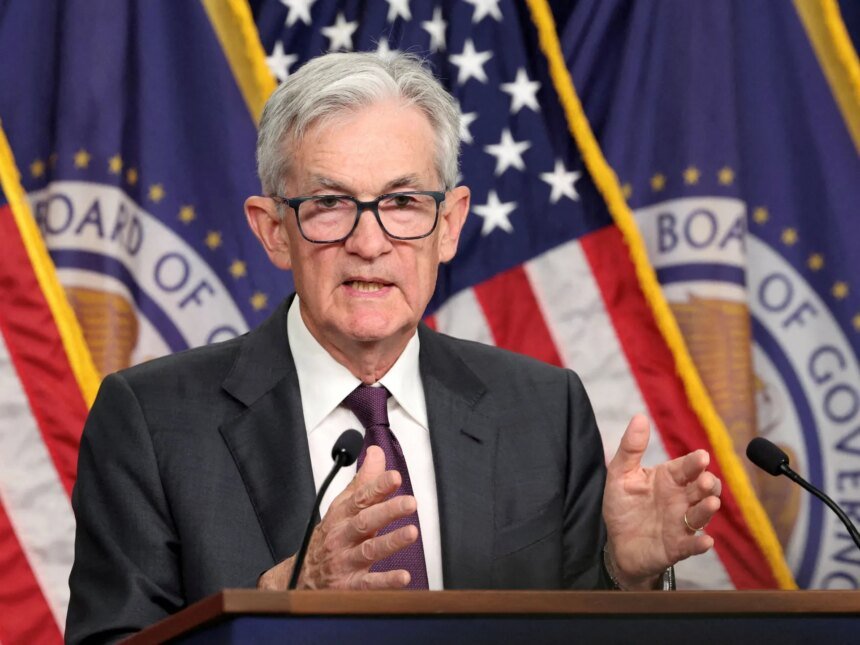
Today, Wednesday, the US Federal Reserve fixed interest rates at 3.5% to 3.75% at the conclusion of its meeting that began yesterday, while continuing to hedge against rising inflation and monitoring the impact of economic and geopolitical developments on the course of monetary policy, especially with the state of cautious anticipation of the outcomes of the ceasefire in the US-Israeli war on Iran.
The US Central Bank’s decision was driven by an increase in the consumer price index (inflation) last March, as data from the US Bureau of Labor Statistics showed that the consumer price index rose 0.9% on a monthly basis after an increase of 0.3% in February, and it also rose 3.3% on an annual basis.
Energy prices rose 12.5% on an annual basis last month.
The decisions of the most powerful central bank in the world are of great importance to the various monetary authorities and financial markets in the world, including the Arab region. The Fed’s decisions regarding interest rates control the cost of liquidity in the world. Raising interest attracts investments towards the dollar and increases debt burdens and inflationary pressures on countries of the world, while lowering the interest rate in the United States revives emerging markets and facilitates borrowing operations.

The US consumer spending index, which the Federal Reserve tracks as its preferred measure of inflation, showed in the latest available reading, which is for February, an increase of 2.8% on an annual basis and 0.4% on a monthly basis, while the core index, which excludes food and energy, rose 3% on an annual basis and 0.4% on a monthly basis.
Inflation pressures
High inflation is the main reason that prompts the Federal Reserve to raise interest rates to curb price levels, but in the current situation the US Central Bank merely warned of the repercussions of the war and held the interest rate steady.
Labor market data during March indicated that the US economy added 178,000 jobs, with the unemployment rate stable at 4.3% and average hourly wages rising by 3.5% on an annual basis.
Job growth is one of the signs of the strength of the world’s largest economies. When jobs increase, interest rates remain at high levels, which gives room for the Fed to stabilize or raise interest rates. Conversely, if jobs contract, this means that the economy needs revitalization, which makes it likely that interest rates will be reduced.
Powell’s succession
The Senate Banking Committee approved the appointment of Kevin Warsh as Chairman of the Federal Reserve to succeed Jerome Powell, after a vote of 13 to 11, with all Republican senators voting in favor of the appointment, while Democrats opposed it.
The US Attorney for the District of Columbia, Jeanine Pirro, said last Friday that the Justice Department had halted an investigation it had opened against Powell against the backdrop of the renovation of the central bank’s headquarters in Washington, and instead asked the Office of the Inspector General at the Federal Reserve to review the increase in costs.

Stopping the investigation opened the way again for the Senate to consider confirming Kevin Warsh, who was chosen by President Donald Trump to succeed Powell. He was a Republican senator who linked his approval of the appointment to dropping the investigation, which threatened to delay the approval of the nomination and for Powell to remain in his position after the end of his term as Speaker of the Senate in mid-May.
Warsh said earlier that he did not make any promise to Trump to lower interest rates, and added that President Trump did not ask him to commit to that, but at the same time he pledged to carry out “strong” reforms within the central bank, and called for changing frameworks and methods of communication, and held the Council under Powell responsible for part of the wave of inflation that followed the Corona virus pandemic.