Published On 4/28/2026
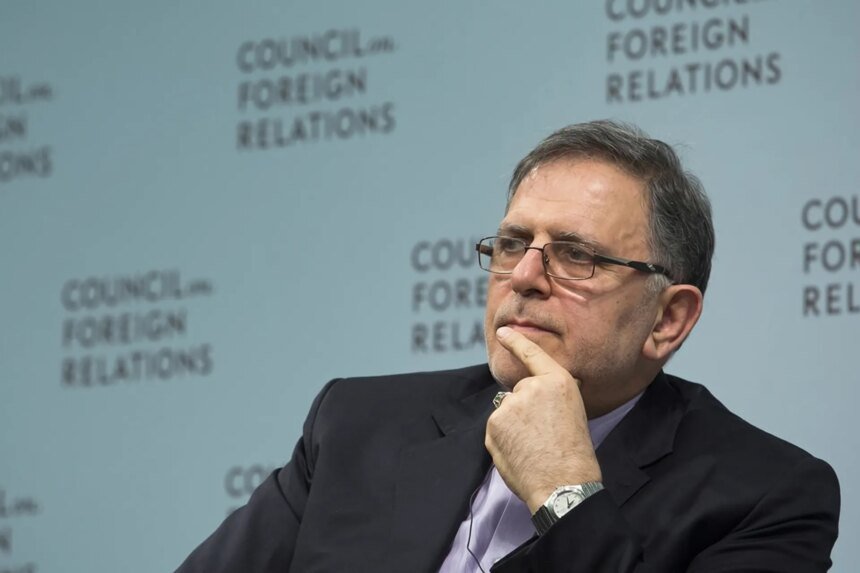
The former governor of the Central Bank of Iran, Valiollah Seif, warned that any mistake in managing the exchange rate policy during the reconstruction phase could confuse the entire economic path, considering that the Iranian economy needs a serious redefinition of its exchange policy after years of fluctuating currency rates, curbing the exchange rate, and relying on oil revenues.
In an editorial published in the Iranian newspaper Doniaye Eqtesad today, Saif believed that the exchange rate policy “will turn in the post-war period into one of the most important tools of economic policy, because it directly or indirectly affects inflation, foreign trade, investment, and market expectations.”
Saif – who served as governor of the Central Bank between 2013 and 2018 during the era of former Iranian President Hassan Rouhani – said that the traditional options before the decision-maker, which are to stabilize the exchange rate or leave it to float completely, do not suit Iran’s current conditions. In his opinion, stabilization is “unsustainable due to limited foreign reserves and external shocks, while complete flotation may lead to sharp fluctuations in the exchange market.”
Accordingly, the former governor called for adopting a “controlled real float” system, not a formal float, so that the currency price is determined through the market, with limited and purposeful intervention from the central bank only to prevent severe disturbances, and relying on indirect tools such as the interest rate and open market operations instead of broad intervention in the currency market.
Warning against exchange rate suppression
Saif stressed that one of the chronic mistakes in the Iranian economy was using the exchange rate as a tool to control inflation. In his opinion, this method may have a short-term effect by apparently lowering prices, but it later leads to weakening exports, encouraging imports, reducing the competitiveness of local production, and creating rents and corruption due to the gap between exchange rates.
He added that the danger of this approach doubles during the reconstruction phase, and the need to allocate resources efficiently becomes more urgent. He considered that “the exchange rate must be realistic and not administratively imposed by decision.”

Gradually standardize the price
Saif also considered the multiplicity of exchange rates to be one of the most prominent obstacles to the efficiency of the Iranian economy, warning that the continuation of this situation during the reconstruction phase may lead to misallocation of resources, expand corruption, and weaken transparency and investor confidence.
But on the other hand, he stressed that unifying the exchange rate must take place in a gradual and controlled manner, in conjunction with strengthening support networks for vulnerable groups, and with monetary and financial discipline, so that the measure does not turn into a price shock or a cause of social unrest.
The precaution is not to fix an imaginary price
Regarding foreign reserves, Saif believed that they represent a “stability shield” in the post-war phase, but their use should be to mitigate sharp fluctuations, ensure the provision of vital goods, and enhance market confidence, not to defend an unrealistic exchange rate.
He warned that the insistence of political officials on preventing an increase in the price of the currency, due to short-term sensitivities, may lead to the depletion of foreign reserves and a repetition of past crises, including emptying reserves and causing a severe shock to the economy.

Monetary policy is a condition for the success of exchange policy
Saif Najah linked any exchange rate system to monetary policy, stressing that no stable exchange rate system could be established if liquidity growth was not controlled. He called for controlling the monetary base, using interest rates to manage demand for foreign currency, and preventing financing the budget deficit through the central bank.
He also pointed out that the reconstruction phase will increase the demand for foreign currency to import equipment, raw materials, and technical services, which requires arranging import priorities, especially for capital and intermediate goods, the gradual cancellation of the preferential currency, and the use of targeted customs and non-tariff tools.
Three-stage roadmap
He proposed a three-stage roadmap for reforming exchange policy, the first of which begins within 6 months and focuses on achieving relative stability in the currency market, reducing the gap between the official and unofficial rates, and increasing the transparency of exchange transactions.
The second phase, which extends from one to two years, is based on moving towards unifying the exchange rate, strengthening monetary policy tools, and developing official exchange markets.
In the third phase, extending from 3 to 5 years, Saif calls for stabilizing the managed flotation system, deepening the currency market, and increasing the economy’s ability to resist external shocks.
The former governor of the Central Bank of Iran concluded that the exchange rate policy in the reconstruction phase is not just a technical tool, but rather represents an anchor for expectations and a compass for allocating resources. In his opinion, its success may lead to stability, increased investment, and export growth, while repeating the mistakes of the past, especially curbing the exchange rate and its multiple prices, may delay reconstruction and push the economy towards deeper crises.