Published On 4/27/2026
|
Last update: 18:07 (Mecca time)
At a complex regional moment, the repercussions of the closure of the Strait of Hormuz imposed a pressing economic reality on Iraq, a country that relies on oil as almost the sole source of financing its budget.
Between the decline in exports and the vibration of cash flows, fundamental questions have emerged related to the Baghdad government’s ability to manage the crisis, secure sustainable alternatives, and protect financial and social stability.
Read also
list of 4 itemsend of list
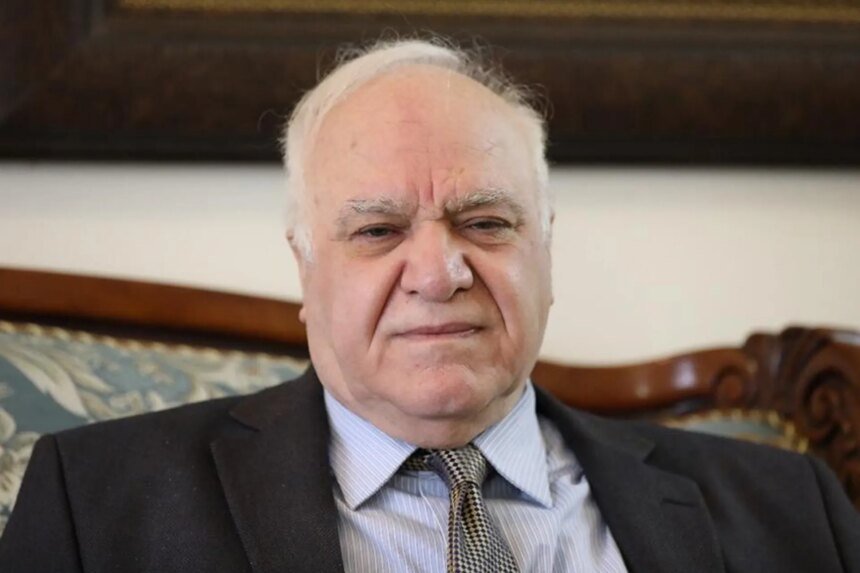
In this dialogue, Mazhar Muhammad Saleh – the financial advisor to the Iraqi Prime Minister – opens the files of the crisis from all angles, speaking about the extent of losses, emergency plans, and financing options, leading to the greatest challenge: breaking rentier dependence and building a more diversified economy.
- To what extent are Iraqi oil exports affected by regional tensions, and what measures have been taken to ensure their continued flow?
There is no doubt that the closure of the Strait of Hormuz was a major shock to the Iraqi economy, as the southern ports represent the main outlet for oil exports.
Exports declined by about 80% during March, and production fell from about 4 million barrels per day to approximately 1.1 million barrels. This decline was directly reflected in revenues, which fell by about 70%.
On the other hand, the government moved quickly within an emergency plan to ensure the continuation of minimal flows, by restarting the Kirkuk-Ceyhan line, activating temporary land transport, in addition to regional coordination to facilitate the passage of exports through alternative ports, thus alleviating the severity of the interruption.
- What scenarios has the government set in the event that exports continue to be disrupted or some sea lanes are closed?
There are 3 main scenarios, the first is short-term, based on managing the crisis through partial alternatives to exports and covering basic expenses from available reserves and liquidity.
The second, medium-term, includes expanding the use of land pipelines and increasing their operational capacity, while strengthening regional partnerships.
The third, and most challenging scenario, assumes that the disruption will continue for a longer period, and here a combination of internal and external financing is resorted to, with more conservative financial policies applied to ensure sustainability.
- Where have the plans to secure alternative ports or corridors for oil export reached?
There is clear progress in this file, as the Kirkuk-Ceyhan line has been activated with an initial capacity of 300 thousand barrels per day, with plans to increase it.
The Basra-Aqaba pipeline project is also being seriously studied, which represents a strategic option to secure an outlet on the Red Sea.
There are also technical dialogues to restart old lines such as the Iraqi-Saudi pipeline, which will enhance the diversification of ports and reduce dependence on sensitive sea lanes.

- How do you evaluate Iraq’s ability to manage this crisis compared to other oil-producing countries?
Iraq has significant oil resources, but faces challenges related to limited economic diversification. Compared to some Gulf countries that have huge financial reserves and multiple outlets, Iraq is more affected by shocks.
However, there is an ability to manage the crisis in the short term thanks to foreign reserves and stable monetary policies, but the real challenge lies in building economic resilience in the long term.
- Does Iraq have sufficient cash reserves to confront the decline in revenues, and what are the estimates of losses?
Foreign reserves amount to about $100 billion, which is a good level that provides an important monetary cover in the face of shocks.
But with monthly losses estimated at about $3.5 to $4 billion, reliance on this reserve cannot continue for a long period without parallel measures.
Therefore, the reserve is treated as a short-term stabilizing instrument, rather than a permanent substitute for revenues.
- Are there risks to the salaries of employees and retirees?
Salaries and pensions are a top priority, and are estimated at about $6 billion per month. So far, there are no signs of faltering in its payment, but the continuation of the crisis may impose increasing pressure.
Therefore, the government is moving to rationalize unnecessary spending and improve the efficiency of public money management, while examining financing options to ensure continuity without harming social stability.
- What are the government’s options to bridge the current liquidity gap?
There are two main paths, the first is internal financing through short-term debt instruments in coordination with the Central Bank, to provide urgent liquidity, and the second is resorting to external borrowing, whether through international institutions or financial markets, to support financial stability and enhance reserves.
The general trend is to combine the two options in order to achieve a balance between speed in financing and financial sustainability.

- What are the most important steps to diversify the economy and reduce dependence on oil?
Diversifying the economy has become a necessity, not an option. There is a tendency to strengthen the agricultural, industrial and tourism sectors, in addition to supporting strategic projects such as the “Development Road”.
Work is also underway to expand economic partnerships with Asian countries importing Iraqi oil, not only as buyers of crude, but also as partners in investment and technology transfer.
- How do you read the future of the Iraqi economy in light of this crisis?
The current crisis represents a real test, but at the same time it is an opportunity to rethink the economic model. If this moment is used to implement real structural reforms, Iraq can emerge stronger and more balanced.
Continuing to rely solely on oil will leave the economy vulnerable to similar shocks in the future.