Published On 4/26/2026
In recent months, the game “Roblox” introduced a new mechanism to verify the age of players, which relies mainly on artificial intelligence, which is able to guess the age of the player and thus place him in the appropriate age group for him. However, some users were able to deceive this mechanism through various methods.
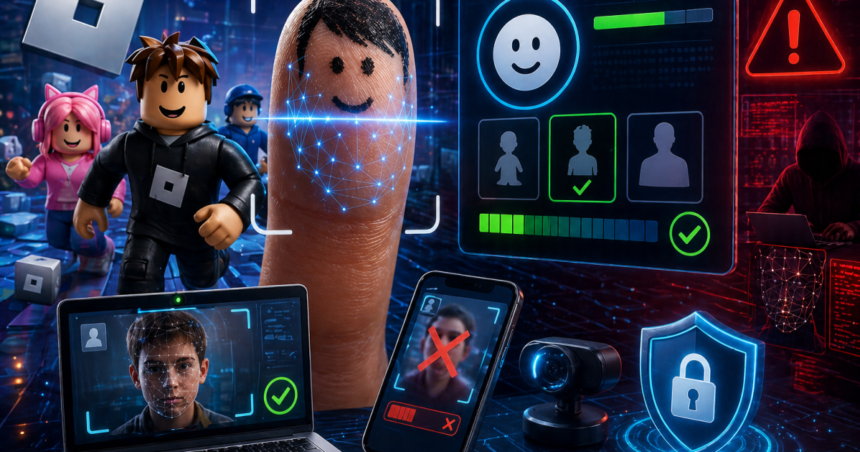
The latest method of deceiving the mechanism for recognizing the age of players in Roblox appeared in a clip that spread across social media platforms, where a user drew a face on his finger and displayed it in front of the camera. The system determined that this face was of a child aged between 13 and 15 years, allowing him to have conversations with children and other users of this age.
This clip reflects a clear crisis in the age verification system that the company used, because the main reason for developing and using this system is to undermine conversations between adults and children or teenagers on the platform to avoid the crisis of child abuse and inappropriate conversations.
For its part, “Roblox”, in a special statement to Al Jazeera Net, completely rejected the content of this clip, stressing that the “Persona” company responsible for the age verification mechanism is a partner it trusts, and added that this clip was generated using artificial intelligence and does not reflect the quality of the “Persona” system.
While this clip is the latest challenge facing the “Persona” and “Roblox” systems to verify users’ ages, it is not the only one, as a previous report published by the American technical website “Wired” reveals successive crises in the age verification system.
Various mechanisms to deceive the system
The “Wired” report indicates that there were several mechanisms that allowed users to deceive the age verification system used in the game “Roblox,” including drawing hair on a child’s face to suggest that he is older than his actual age.
The methods also included using photos of famous actors and public figures or even video clips showing adults, according to the Wired report.

The report also reveals the existence of some accounts that sell age verification services in “Roblox” for $4 on platforms such as “Ebay” and the “Facebook” store.
While these accounts do not mention the automated accounts they use to fool the AI system in “Persona,” they have achieved many sales, according to the report.
System errors
The report also referred to a group of user posts on social media platforms that reveal age assessment errors present in the new artificial intelligence system, as the system erred in estimating the age of users and placed adults in the category of young children, and vice versa.

For his part, independent researcher in the field of online extremism, Ray Teran, during his conversation with the “Wired” website, points out that the greatest danger from errors in the age recognition system comes from accounts that are incorrectly classified into the wrong age group, as these accounts place an additional burden on parents and in-game moderators to verify users’ ages.
“Roblox” justifies the errors in the system because the large number of users in the game makes such errors expected, according to what the head of the game’s safety department, Matt Kaufman, told the “Wired” website.
How does the age verification system work?
For its part, the website of the company “Persona”, which is responsible for age verification services in the game “Roblox”, indicates that it relies on a set of tools to verify the user’s age and place him in the appropriate age group for him.

These tools include estimating age and inferring it from facial features and details that indicate reaching certain age stages, as well as verifying age using government documents and other tools.
A report published by the American technical website “The Verge” raises a set of pivotal questions about the privacy of the data collected by these companies and the mechanisms to protect it from theft.
Roblox had resorted to using the age verification mechanism in order to restrict conversations that take place within the game, so that no one could assault children or prepare them in some way and lure them off the platform.
This raises a pivotal question about the feasibility of this mechanism and its use if it fails and faces technical challenges, whether by placing users in incorrect age groups without their intervention or even if it is fooled by tricks carried out by some.
It seems that Roblox will remain an unsafe environment for children even after the efforts and attempts it has made to implement age verification mechanisms.