Published On 4/27/2026
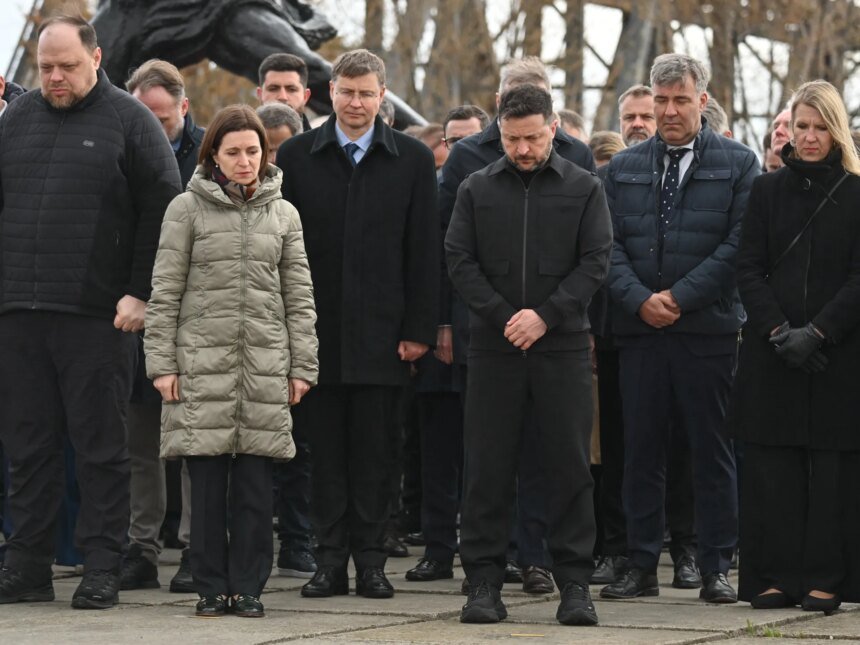
Yesterday, Sunday, Ukrainian President Volodymyr Zelensky accused Russia of practicing “nuclear terrorism”, coinciding with his country’s commemoration of the fortieth anniversary of the Chernobyl nuclear disaster.
Zelensky said that Moscow has pushed the world back to the “brink of a man-made disaster” through the war on Ukraine since 2022, noting that Russia has repeatedly launched missiles and drones near the Chernobyl plant, and that one of the drones hit its protective cover last year.
He called on the world not to allow what he described as “nuclear terrorism” to continue, considering that the best way to do so is to force Russia to stop its “reckless attacks.”
The Ukrainian president described the current risks as no less grave than the Chernobyl accident that occurred in 1986, attributing the reason to “what Russia is doing to the Zaporozhye nuclear power plant, and to our energy and our land in general.”

Fears of a repeat of the disaster
Foreign officials – including the European Union Energy Commissioner – arrived in Kiev to commemorate the disaster and pledge new support for Ukraine’s energy system.
Commenting on the damage to the casing of the nuclear reactor (Chernobyl), which Greenpeace, an environmental advocacy organization, says increases the risk of radioactive leakage; “Remedial work must begin as soon as possible,” said IAEA Director General Rafael Grossi, warning that delaying it would cause problems.
According to Greenpeace, repairing the external metal structure – which may take 4 years – will be “almost impossible” due to the war.

In February 2025, a Russian air strike – using a drone – caused a hole in a huge arc-shaped wall installed over part of the Chernobyl plant, and no radiation leaks were detected.
But the European Bank for Reconstruction and Development estimated that at least €500 million would be needed for more comprehensive repairs to prevent permanent damage.
The Russian nuclear agency Rosatom – which was managing the Chernobyl plant in its capacity at the time as the Ministry of Atomic Energy before the collapse of the Soviet Union – said, “Commemorating Chernobyl means remembering the people who bore the brunt of the disaster, and recalling that experience in every decision we make today to avoid a similar disaster.”
Rosatom took over the management of the Zaporozhye nuclear plant – which is currently parked in Ukraine and is the largest in Europe – after Russia took control of it at the beginning of the war four years ago, while Moscow and Kiev constantly exchange accusations of targeting it.
Ukraine has 4 nuclear plants that are vital to the country’s energy supply in light of frequent power outages, which are caused by continuing Russian attacks on infrastructure.
What is the Chernobyl disaster?
The Chernobyl explosion is the worst civilian nuclear disaster in history, and caused a profound change in the world’s approach to nuclear energy.
The disaster occurred at the Chernobyl nuclear power plant near the city of Pripyat in northern Ukraine, which was then part of the Soviet Union. The explosion resulted in the release of a large radioactive cloud that was carried by the wind, initially spreading within a highly polluted local area of about 30 kilometers around the reactor in the early hours of April 26, 1986, an area that was later known as the evacuation and isolation zone.
On April 26 and 27, 1986, the contamination expanded to include a broader regional scope within Ukraine, Belarus, and Russia, and high levels of radiation were recorded at a number of monitoring stations within the Soviet Union.
It is estimated that thousands have died from radiation-related diseases such as cancer, with precise estimates of human losses varying. About 600,000 people – who participated in the cleanup process – were exposed to high levels of radiation, while hundreds of thousands were forced to be displaced, and vast areas of land were contaminated.