


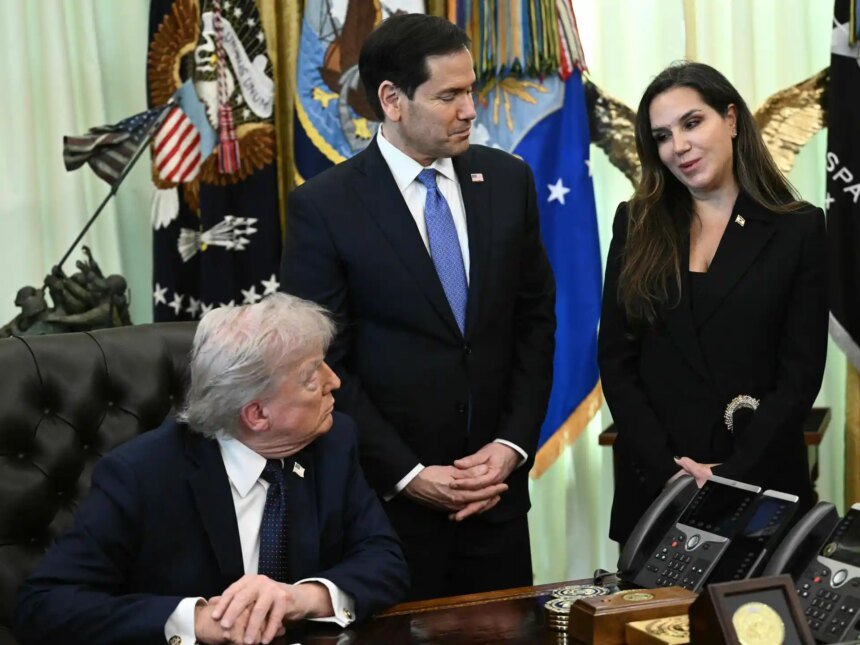
On April 23, 2026, a second round of talks was held in Washington between the delegations of Lebanon and Israel. It is practically complementary to the first, and aims to pave the way and frame the negotiating path between the two countries under the auspices of Washington.
The first round was held on April 14, 2026, and was the first of its kind since 1993. It led to a ten-day truce that Israel repeatedly violated, while Hezbollah responded to some of them, pledging to respond as it deems appropriate.
Read also
list of 2 itemsend of list
This commentary focuses on Lebanon’s goals for the negotiations and the contexts within them, in addition to the paths they could open, in light of the interpenetration of war and negotiation, and the interpenetration of internal and regional affairs, and what this reflects of the Lebanese balance between external pressures and internal fragility in managing this path.
Objectives and contexts
In the second round of negotiations, Lebanon requested an extension of the truce, provided that Israel seriously adheres to it, and during which it stops bombing and destruction operations in the areas where its army is present.
Following the tour, Trump announced the extension of the truce for three weeks, with his aspiration to host the Israeli Prime Minister, Benjamin Netanyahu, and the Lebanese President, Joseph Aoun, during this period in the White House. This round confirms Lebanon’s continuation of the negotiation process, with a tendency to raise its level of representation therein.
On the other hand, Israel has preserved what it considers its right to defend itself, which practically means freedom of movement, although Trump has indicated the need to exercise it “with caution.”
The Lebanese authority has always stressed that its goal in direct negotiations is to achieve a ceasefire, liberate the land and prisoners, and return to the armistice agreement signed between Lebanon and Israel in 1949.
However, these negotiations have not yet succeeded in establishing an actual ceasefire as Lebanon hopes, as their effect does not go beyond reducing the escalation, while the possibility of the explosion of the Lebanese front remains, without a clear strategic path for this negotiating process on the horizon.
However, Lebanon’s involvement in this path was not the result of a complete strategic choice as much as it was a response to pressures imposed by the war and its direct repercussions on the state and its institutions, as well as its connection to broader regional conditions, especially the war on Iran. The most prominent of these considerations can be stated in several points:
Firstly: It implicitly represents an effort by the Lebanese authority to protect the state’s infrastructure and prevent its official institutions from being targeted by Israel, especially since Israeli targeting still claims to focus on Hezbollah and its incubator areas, even if it exceeds that from time to time. It has not expanded, for example, to include the port, the airport, or the rest of the Lebanese state’s facilities, and so on under its rule.
secondlyIt is an effort by the authorities to avoid or reduce the increasing American and international pressure, demanding that Lebanon engage in direct negotiations, especially since Iran included the cessation of the war on Lebanon, as well as Israel’s withdrawal from it, in its negotiations with Washington in Islamabad.
Washington does not want to make concessions to Iran in Lebanon, so the Lebanese-Israeli negotiating table was a parallel table that in this sense integrated with the Islamabad negotiations, but produced an agreement or pledges independent of it.
Third: Regarding the Israeli intervention in Lebanese affairs and the reshaping of reality there; It seems that any end to the war from Israel’s point of view is linked to a change in the internal balance of power beyond simply stopping military operations.
If the Lebanese state does not take the initiative to negotiate, it will not be able to limit the Israeli efforts by other means.

From an analytical angle, Lebanon’s engagement in negotiations is not limited to being a response to these contexts, but rather opens up overlapping paths that go beyond its direct motives.
The first is: An internal path, through which the authority seeks to reproduce the relationship with Hezbollah within the state structure, and not merely control it, by transferring the file of war and peace to its institutions, and restricting its military role within the “sovereignty” equation.
This path is implicitly based on the authority’s assessment that the party’s position has witnessed a relative decline in the context of this war, allowing the margin of initiative to be expanded before the “state.”
Hence, engaging in negotiations aims not only to respond to external pressures, but also to restore the “war and peace” decision by opening a special negotiating path for the Lebanese authority, relatively separate from the regional paths, especially those linked to Iran, thus redefining its position vis-à-vis the party.
However, this path remains governed by limits that are not controlled by the authority alone, in light of the interference of external factors, most notably Israeli behavior, which imposes restrictions on how these balances are formed and their consequences.
Second: A regional path, linked to the possibility of including the Lebanese situation within a broader peace process that may include other Arab parties, making Lebanon part of regional arrangements that are being formed.
However, this engagement does not reflect a complete “sovereign” choice as much as it is a positioning imposed by the contexts, in light of the limited Lebanese ability to manage a balanced negotiation with Israel.
This path also reflects an accumulated awareness in the Lebanese experience, that any engagement in a peace process cannot take place in isolation from an Arab path or regional cover, which was established by previous experiences, most notably the May 17, 1983 agreement, which demonstrated the limits of the Lebanese ability to bear the cost of a single path.
Hence, the Lebanese move seems closer to an attempt to join a possible path, rather than to lead it.
However, these paths, although overlapping, do not necessarily guarantee stable results.
The internal track collides with the limits of the ability to transfer the decision on war and peace to state institutions in the absence of a broad internal political consensus. The regional track remains dependent on balances greater than Lebanon, and any attempt to reorganize internal reality remains fraught with risks that may reflect negatively on stability itself.
Thus, negotiation in the Lebanese case becomes a tool for managing the crisis and resetting balances, rather than a path to resolving it, which is directly reflected in its nature, limits, and outcomes.
Therefore, it can be said that Lebanon’s entry into negotiations reflects more interaction with the necessities of the stage than a complete strategic transformation.
It is a path open to multiple possibilities, ranging from limited progress in reorganizing the internal decision, or containing it within broader regional arrangements, or faltering due to internal and external contradictions.
In all cases, this path remains governed by the limits of the Lebanese ability to balance external pressures with the fragility of its internal structure. Which makes its results indefinite, and its outcomes open in more than one direction.
In this context, Lebanon’s move to direct negotiations raises serious questions about the ability of the Lebanese structure to bear its consequences.
The political system in Lebanon, which is based on delicate sectarian balances, was barely able to accommodate temporary truce agreements in previous stages, which makes the prospects for moving to a comprehensive peace process more complex.
This problem increases in light of a sharp internal division, which is not limited to the position on Israel, but extends to defining Lebanon’s position in the regional conflict, and the role of both the state and Hezbollah in it.

conclusion
In this sense, and if negotiation has appeared in its practical context as a tool for managing the crisis rather than a path to resolving it, Lebanon’s involvement in it cannot be seen as a path with a clear vision and complete steps, as much as it is a response to the pressures and coercions imposed by the contexts of war.
It is based on a balance between an urgent necessity and a deferred ability based on future bets.
On the one hand, it represents an attempt to protect the state and contain the cost of war; On the other hand, it opens the door to broader arrangements that may go beyond Lebanon and redefine its position within it. Between these two extremes, this path remains open to multiple possibilities, governed by fragile internal balances and changing regional and international pressures.
In light of the absence of Lebanese ability to resolve any negotiating path, and the internal lack of a comprehensive consensus, negotiation becomes closer to a tool for managing the stage than to a final path to a stable settlement, which makes its outcome dependent on developments that go beyond Lebanon’s borders and the framework of the existing negotiation path.
The study was published by Al Jazeera Center for Studies


