Published On 4/23/2026
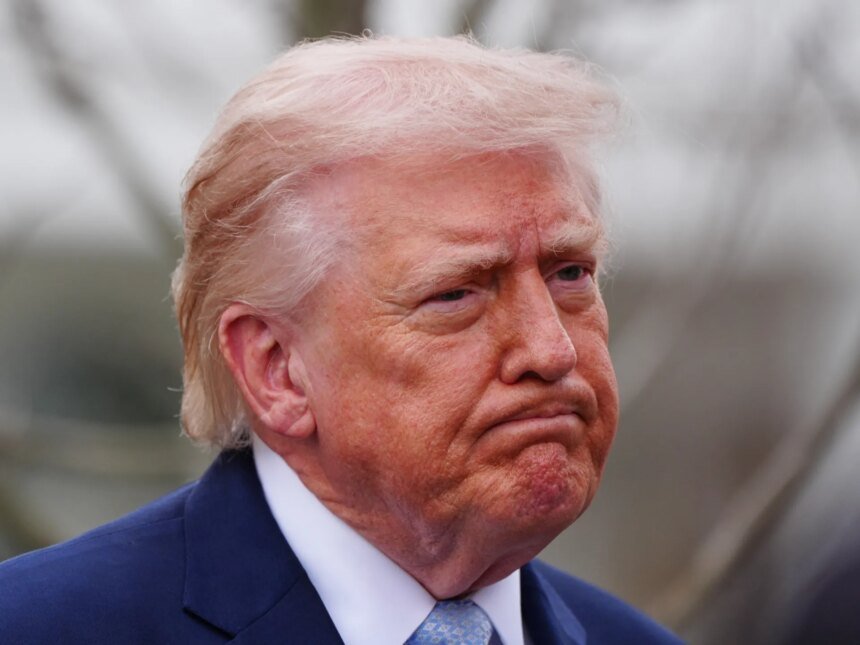
After US President Donald Trump announced the extension of the ceasefire indefinitely, Pakistan continues its intense efforts to reach a settlement between America and Iran, amid limited options ranging from an agreement between the two parties, a return to military escalation, or an American withdrawal from the confrontation without an agreement, according to expert estimates.
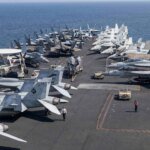
Trump is committed to maintaining the naval blockade imposed on Iran, at a time when Tehran refuses to enter into any negotiations before lifting it, and also refuses to negotiate under threat and pressure.
While the US President raised hopes of achieving progress in a second round of negotiations, Iran has not yet sent a delegation to Islamabad, where the negotiations are being held, while US Vice President J.D. Vance remains in Washington.
Shortly before the end of the two-week truce, Trump said that the extension of the ceasefire was due to the division within the Iranian leadership and its need for more time to present a proposal.

Not getting involved in the war
For his part, Alex Vatanka, a researcher at the Middle East Institute and an expert on Iranian affairs, said: “Trump could have escalated further and launched a more reckless military action, but so far he has refrained from getting more involved.”
Trump faces internal pressure and political repercussions, as he ran in the presidential elections on the basis of sparing the United States from military intervention, as his war on Iran is met with opposition even among Republicans.
On the other hand, Iran’s closure of the Strait of Hormuz, through which about a fifth of the world’s oil and liquefied gas supplies pass, led to a rise in fuel prices in the United States before the congressional elections.
On the other hand, analysts believe that the Iranian regime has not reached the point of collapse despite the strikes it has been subjected to, while Danny Citrinovic, the former Israeli intelligence official, confirms that Trump “is not seeking escalation, but is exhausting possible options.”
He added, “I think Trump is tired of this war, and he realizes that its cost will increase in Washington.”
In this context, Vatanka believes that the announcement of the naval blockade was aimed at strengthening political pressure and demonstrating strength, but in return it weakened the path of diplomacy, suggesting the possibility of reaching an unannounced formula that would keep the restrictions in place without strict implementation, allowing the negotiation channels to be reopened.
Despite this, the US President did not show signs of abating the blockade he imposed on Iran, and Republican Senator Lindsey Graham said that the blockade “may turn into a broader pressure tool and may extend globally.”
Meanwhile, Sina Toosi, a researcher at the Center for International Policy, said that Trump has two options regarding the blockade: either lift it in a way that enhances Iran’s sense of the strength of its influence, or maintain it while risking the collapse of the ceasefire.
He added that the prevailing opinion in Tehran believes that time is on its side, and that the continuation of the war will double the costs on the United States and on the global economy.