Published On 4/23/2026
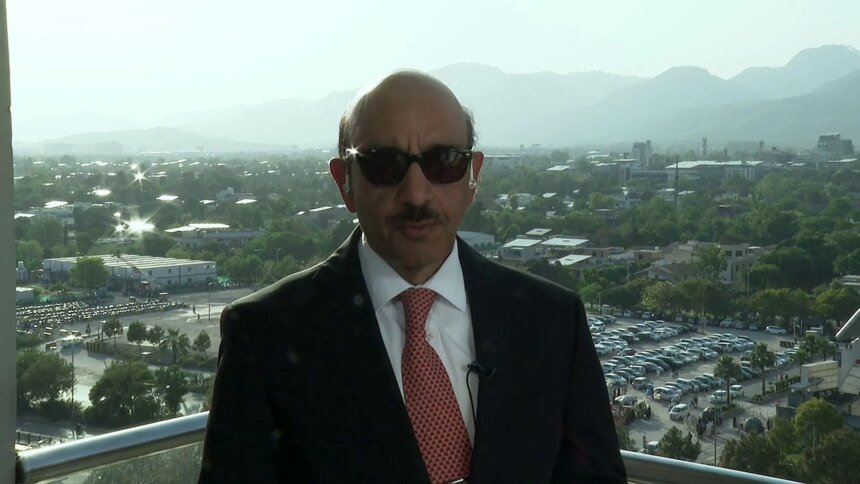
The former Pakistani ambassador to Washington and the United Nations, Masoud Khan, revealed that there has been no breakthrough or progress so far in the course of the ongoing diplomatic efforts, despite considering this issue a priority for Pakistan and continuing its movements in this direction.
On the 16th day of the truce, Pakistan is making unremitting efforts to persuade the Iranian side to return to the negotiating table, amid differing American and Iranian statements that reflect the size of the gap between the positions of the two parties.
Khan stressed in statements to Al Jazeera that decision-making in Iran requires a unified position within the leadership, indicating the need for a clear mandate from the various decision-making centers, to ensure the development of an unified position.
The US administration claims that there is a division between the major powers in Iran regarding the negotiations file and the issues they raise, and says that this division is what prevented the Iranian negotiating delegation from attending the second round of negotiations, which was scheduled for Tuesday.
He explained that the multiplicity of references within the Iranian leadership imposes the need for internal coordination and a collective voice, in light of the presence of red lines among the various parties, which makes the negotiation process more complex.
American officials say that the Iranian delegation that attended the first round of negotiations in Islamabad did not have sufficient powers to make a decision and thus make progress in the negotiations.
The former diplomat also revealed a direct and indirect role played by China as a mediator in an effort to end the crisis and reach a complete cessation of the war between the United States and Iran, along with support from the European Union and a number of other countries.
Khan stressed that building confidence between the two parties represents the basic gateway to any progress, stressing that showing mutual flexibility, especially in the Strait of Hormuz issue, may open the way to resuming direct negotiations.
He considered that the absence of international consensus among major powers, such as the United States, Russia, China, and the European Union, increases the complexity of the scene and delays reaching a peaceful solution to the crisis that threatens world peace.
Khan’s statements come in light of conflicting reports and news regarding the duration of the truce that US President Donald Trump extended – yesterday, Tuesday – to give Iranian negotiators more time, at the request of the Pakistani mediation, as he put it.
According to Axios and Fox News, citing American sources, Trump is ready to extend the ceasefire for an additional period of 3 to 5 days.
Khan pointed out that face-to-face negotiation would address thorny issues, including the nuclear file, releasing assets, and providing security guarantees.
He said that his country is communicating with both Tehran and Washington in an attempt to advance the negotiating path, “however, the field escalation, including targeting and arresting ships in the vicinity of the Strait of Hormuz, complicates the chances of calm.”