Published on 6/29/2026
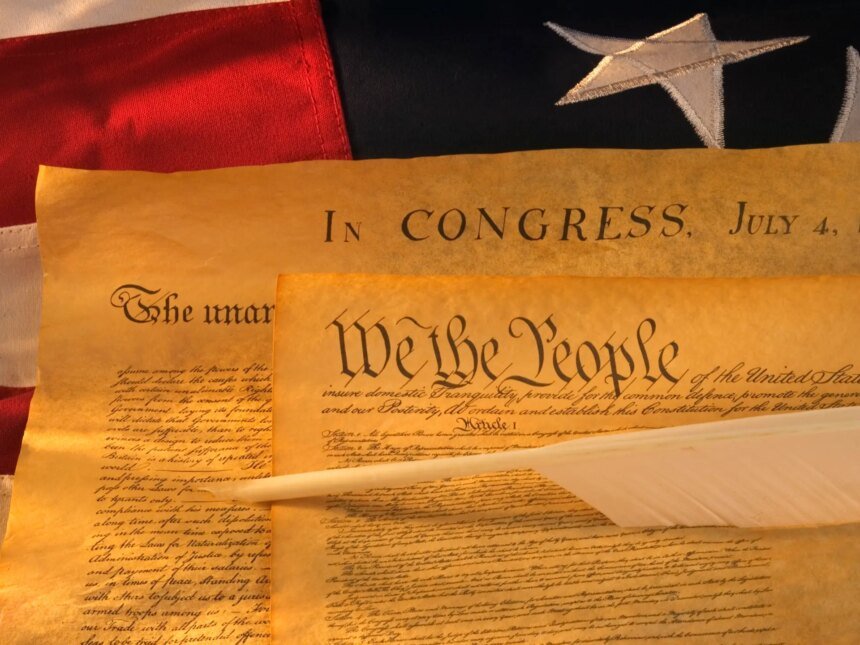
As the 250th anniversary of the Declaration of Independence of the United States of America approaches on July 4, 2026, controversy over the founding document of the American state is renewed, not only because of its deteriorating physical condition, but also because of the contradiction between the principles it declared and the reality that accompanied the country’s emergence.
A report published by the Washington Post notes that the American Declaration of Independence has transformed from being a mere historical document into the focus of an ongoing debate between those who consider it a symbol of freedom and democracy, and those who believe that it also embodies the paradoxes of the founding of the United States, as it declared equality while keeping millions of people outside its scope.
Read also
list of 2 itemsend of list
The newspaper indicates that more than a million visitors visit the National Archives building annually to view the original document, but they are surprised by its faded condition. The ink has faded to an extent that makes the signatures almost unreadable, and they are covered in folds, water stains and mysterious handprints, the source of which is still unknown.
However, according to the report, this deterioration is no longer just a matter of preserving documents, but rather has become part of the national narrative itself, as it reflects the conflicts and transformations that the United States has gone through, just as the principles of the document have remained tested over 250 years.

Contradiction of beginnings
The newspaper reviews one of the most prominent aspects of the controversy related to the Declaration, which is the contradiction between its famous phrase that affirms that “all people are created equal,” and the fact that about three-quarters of its signatories were slave owners, at a time when the right to vote was limited to men who owned property.
Despite this, historians believe that the strength of the Declaration did not lie in the application of its principles immediately after its issuance, but rather in its ability to push subsequent generations to demand their implementation. The abolitionist and women’s rights movements relied on it, and President Abraham Lincoln was inspired to redefine the Civil War as a battle for freedom and equality.
On the other hand, critics still believe that celebrating the declaration in isolation from these contradictions presents a selective reading of American history, especially with the escalation of political controversy over how to teach the country’s history and celebrate its national symbols.
The report examines the reasons that led the document to its current state, explaining that attempts to preserve it were often an additional reason for its destruction.

Decades of decline
The document was also exposed for many decades to direct sunlight and fluctuations in temperature and humidity, and then remained for years inside the Ministry of Foreign Affairs library, where it was affected by cigarette and cigar smoke and an open fireplace, before a handprint later appeared on it, and historians are still trying to determine its owner.
National Archives historian Jessie Kratz hopes to use the FBI database to uncover the identity of the fingerprint’s owner, but she acknowledges that its poor clarity may make solving this mystery impossible.
The report also highlights how the document was almost lost more than once during wars. In the War of 1812, the Declaration of Independence and other government documents were smuggled into an abandoned house in Virginia before British forces burned the State Department building.
The scenario was repeated during World War II, when the authorities secretly transferred the document to fortified warehouses for fear that Washington would be bombed, before it was later returned to its current headquarters inside the National Archives in a sealed container supplied with inert gases to ensure its preservation.
The Washington Post explains that the procedures for protecting the document today are subject to great secrecy, as it is transferred every evening to a safe whose location is not revealed, while archive officials refuse to talk about the details of the security system surrounding it.
America’s Declaration of Independence was almost lost more than once during wars. In the War of 1812, the Declaration of Independence and other government documents were smuggled into an abandoned house in Virginia before British forces burned the State Department building.
Growing up circumstances
The report rereads the circumstances in which the Declaration of Independence was written, noting that Thomas Jefferson was not seeking, when first drafting it, to invent new ideas as much as he wanted to provide “an expression of the American mind.” The document was inspired by several sources, including the Magna Carta, English law, the Virginia Declaration of Rights, and the ideas of philosopher John Locke.
But the final wording witnessed important amendments, most notably replacing the phrase “sacred and undeniable truths” with the phrase “self-evident truths,” and deleting an entire paragraph that condemned the British slave trade, even though Jefferson himself owned more than 600 slaves during his lifetime.
The newspaper concludes that the Declaration of Independence still represents the focus of an ongoing dispute between those who view it as the document that established the founding principles of American democracy, and those who believe that it also encapsulates the contradictions of a project founded on the slogans of freedom and equality, while many of them took centuries of struggle to achieve.