Published on 6/28/2026
The exchange of strikes between the United States and Iran about 10 days after the signing of a memorandum of understanding between them raised questions about the fact that both parties understood the texts of the memorandum, especially Article 5, which calls for the safe passage of commercial ships through the Strait of Hormuz.
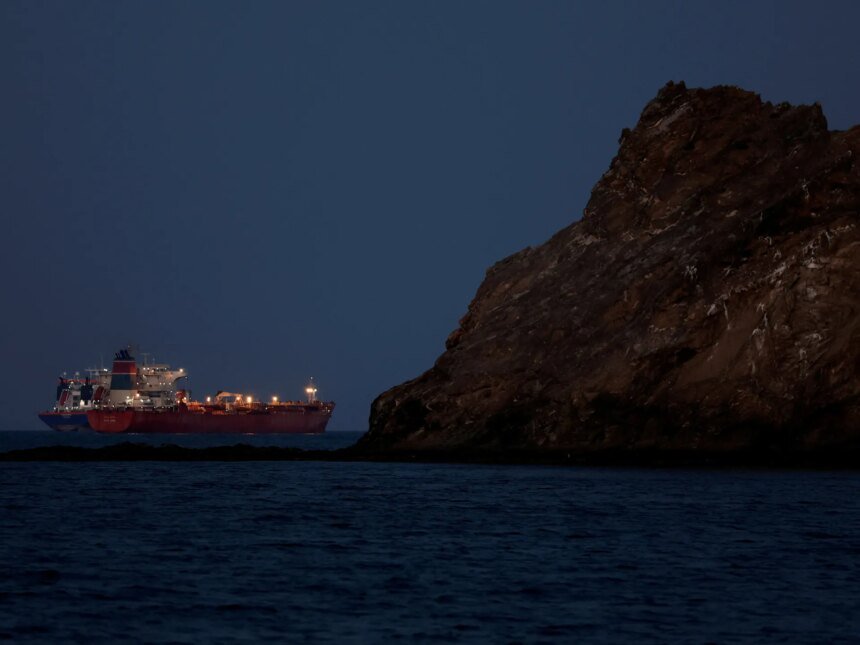
The latest escalation began – Friday – with Washington announcing that the commercial tanker “Kiko” had been attacked by a drone in the strait, holding Iran responsible for the “first breach” of the understanding, before launching raids targeting 10 Iranian military sites.
This attack required a response from Tehran, which rejected the American charges, and in return accused Washington of violating the agreement, which was signed between the two countries on June 17, before it launched strikes targeting 8 American facilities in Kuwait and Bahrain, according to what was announced by the Iranian Revolutionary Guard.
The memorandum of understanding stipulates the opening of Hormuz, but Iran opposed US efforts to establish alternative routes closer to the Omani side.

Article 5.. What does it stipulate?
According to the text of the memorandum published by the Associated Press and the Iranian News Agency, point 5 of it indicates the reopening of the strait and the resumption of commercial shipping traffic immediately.
In detail, Article 5 contains the following contents:
- Iran is committed to ensuring the passage of commercial ships without fees for a period of 60 days between the Gulf and the Sea of Oman.
- Movement begins immediately and is completed within 30 days after the removal of obstacles and mines.
- Opening a dialogue with Oman and the Gulf states to determine future management and maritime services in the Strait in accordance with international law.
Hundreds of ships were stranded following Tehran’s announcement of imposing a blockade on the vital artery through which about 20% of global energy trade passed before the start of the American-Israeli war on Iran at the end of last February.
The issue of control over the strait constituted a major point of contention in the negotiations between the two countries, and Iran also discussed imposing fees on ships, but the United States and the Gulf states, whose exports pass through Hormuz, rejected the proposal.
Today, Iranian Foreign Minister Abbas Araqchi confirmed during his visit to Baghdad that the Strait will remain under the full supervision and management of his country, during the next 30 days, adding that after removing the obstacles, things will return to how they were before, indicating that there is no responsibility for any party in the work of the Strait, and anything other than that violates the memorandum of understanding with Washington.

What preceded the latest escalation?
- Suspension of ship evacuation
The day before the latest escalation, the United Nations’ International Maritime Organization suspended efforts to evacuate hundreds of ships and thousands of sailors from the Strait of Hormuz, following a ship attack in the Gulf of Oman.
While the British Maritime Trade Operations Authority reported that a cargo ship was hit by an unknown projectile, while Bloomberg Network reported that a number of ships retreated from continuing to sail towards the strait from the Gulf of Oman.
- Welcome to the Omani Corridor
The aforementioned events were preceded by a welcome from Bahraini Foreign Minister Abdul Latif Al-Zayani, Muscat’s announcement of the establishment of a temporary corridor for ships in the Strait of Hormuz, during his presidency of the Gulf side in the meeting of foreign ministers of the Gulf Cooperation Council countries and the United States of America in Manama.
Before that welcome, the Iranian Revolutionary Guard Navy warned against ships sailing outside the routes determined by Iran in the Strait of Hormuz, noting that any new corridor announced without is considered “unacceptable and extremely dangerous.”
- Oman announces a new corridor
The Iranian warning came after the Sultanate of Oman announced that it would allow the use of a temporary sea lane for all ships wishing to cross the Strait of Hormuz in coordination with the International Maritime Organization, according to what was reported by the Omani News Agency.
The official account of the Maritime Security Center in the Sultanate of Oman on the X platform, on Wednesday evening, published a map of instructions for ships wishing to cross the Omani corridor in the strait.
Hormuz and the clash of wills
Professor of Middle East Studies at the University of Tehran, Hassan Ahmadian, believes that Washington is retracting the memorandum of understanding that it signed on June 15, adding that it is seeking to find a way out and impose arrangements different from the provisions stipulated.
He added to Al Jazeera that America did the same thing in Lebanon, by mediating a new framework agreement between Israel and the Lebanese government.
Tehran-based political analyst Abbas Aslani points out that Iran views the Strait of Hormuz as a deterrent against future American attacks.
“Iran sees Hormuz as a means of pressure, to stop the recurrence of any new round of aggression against the country,” Aslani told Al Jazeera, adding that any attempt to change the situation there “by force” is “unacceptable to Tehran.”
In his explanation of the recent escalation, security and political analyst Wolfgang Boztai said that Iran insists on managing the Strait of Hormuz, while the United States and Arab countries insist on freedom of navigation through the Strait.
Boztay added to Al Jazeera, “In order to confirm its point, Iran attacked the ships twice, and it is not really surprising that the United States responded.”
The Vienna-based analyst added, “But the scale of the Iranian response and the American attacks do not necessarily indicate that both sides are ready for full escalation. So it seems to me that there is an opportunity to settle the matter peacefully.”
Threats and attacks led to a decrease in traffic from 70 crossings last Wednesday to 54 crossings on Thursday, while on Saturday, the number decreased to 40 crossings, according to a report by Windward AI.
Through the interactive map of the island, Abdul Qader Aradah reviewed the most prominent field developments, noting that the Iranian army confirmed that its control over the Strait of Hormuz does not only aim to collect transit fees, but rather to demonstrate strength and impose influence in one of the most important global sea lanes.
He explained that Kepler platform data showed 27 ships crossing the strait during the previous day, including 15 ships that entered the strait and 12 left it, pointing out that 10 ships used the southern corridor near the Omani coast, a route that has become the focus of disagreement between Iran and other parties.