In light of the prolonged war on the Gaza Strip and the extremely complex field, security and political transformations that followed, a growing conviction is being strengthened within Israeli security circles that the future of the Strip is no longer measured by the possibility of overcoming the Islamic Resistance Movement (Hamas), but rather by the extent of recognition that it has become part of the equation that cannot be dropped from practical calculations.
This approach – according to what was reported by the Israeli “Wala” website, citing estimates by the Israeli security establishment – is based on a set of field indicators that are interpreted as reflecting the continued influence of the Hamas movement within the Gaza Strip.
The Israeli security establishment believes that the absence of any broad Palestinian popular movement against Hamas, even in light of the difficult humanitarian and living conditions, is an indication of the continued stability of the movement’s rule.
According to the Walla website, calls published on social media to organize protest demonstrations against the situation in the Gaza Strip the day before yesterday, Friday, did not translate into any significant response in the street, as no tangible mass movement was recorded.
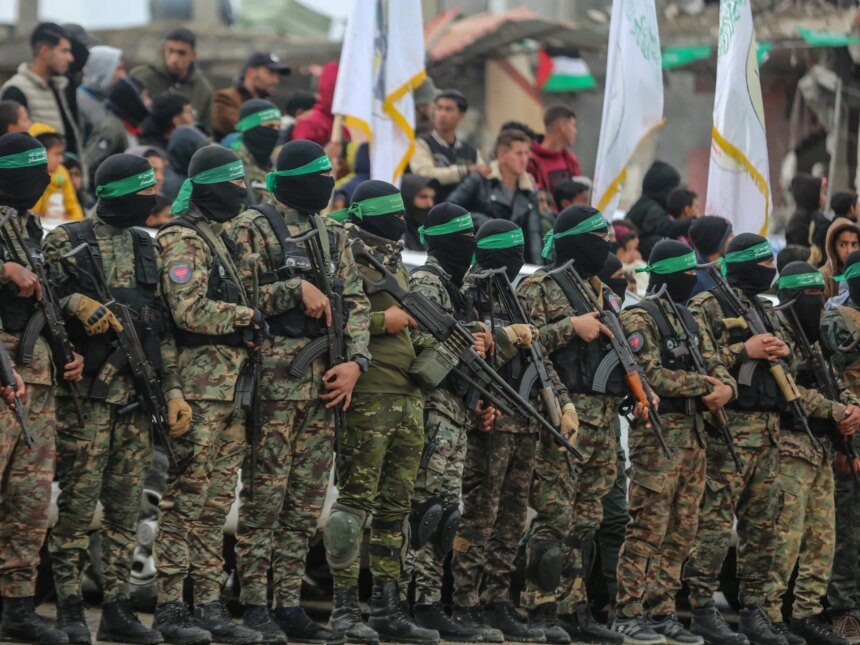
According to Israeli estimates, this absence is explained not only by the security situation, but also by “Hamas’ ability to impose field control through the spread of its armed members in the streets and intersections, creating a deterrent climate that limits any broad protest movement.”
Unrealistic solutions
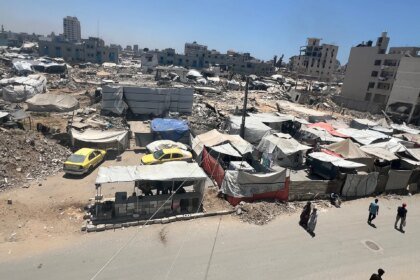
This scene – as described by Israeli security circles – reinforces the conviction that the Hamas movement has regained a high degree of organizational control after the war, and that it has been able to reproduce the tools of governance even in light of widespread destruction.
This reading goes so far as to consider that any international or regional plan aimed at managing Gaza without the participation of Hamas seems – according to the expression circulating in those circles – “unrealistic.”
According to what was reported by the “Wala” website, this is happening “despite attempts by armed groups to challenge this reality through precise attacks, in addition to ground and air operations by the Israeli army.” The website added: “Today, conclusive evidence has been confirmed that two million Palestinians outside the fence do not oppose Hamas’ rule.”
According to Walla, this approach is understood as a clear message to the technocratic government and the American parties working to reshape reality in the Gaza Strip by creating zones free of Hamas activity, that “they can put all their plans in the drawers, because as long as Hamas is in power, there is no chance to bring about change.”
Israeli analytical reports indicate that this conclusion is inseparable from a broader reading of the nature of the relationship between society in Gaza and the ruling movement.
In an article by military analyst Ron Ben Yishai in the Yedioth Ahronoth newspaper, a different approach was presented from the official Israeli political discourse, which raises the slogan of “overthrowing Hamas.”
In his article, which was published last year, Ben Yishai believes that the movement is not an entity imposed from outside, but rather an organizational expression of a broad part of the social and political structure in Gaza, which makes the separation between the two parties more complex than what is presented in political discourse. Ben Yishai criticized the Israeli government’s continued promotion of the concept of “complete victory.”
Among these overlapping scenarios, an inconclusive conclusion is crystallizing within Israel, which is that post-war Gaza is not an empty political space that can be easily reshaped, and that Hamas, whether as a direct ruling force or as an undeclared actor, remains a central element in the Gaza Strip’s equation.

Absence of alternative?
According to Israeli observers, this equation so far appears to be open to more complexity, rather than heading towards an imminent resolution.The problem is no longer about “overthrowing Hamas,” but rather about the limited alternatives capable of filling the void that might arise in its absence, which makes any vision of re-engineering governance in Gaza without it closer to a theoretical proposal than an implementable plan.
In addition, according to the official broadcaster, senior officials in the Israeli army warned Chief of Staff Eyal Zamir that Hamas is rebuilding its military capabilities and preparing for the possibility of a resumption of fighting.
The sources reported that the movement produces hundreds of anti-tank devices and missiles per month, and is working to recruit new elements and train elite units, in addition to attempts to smuggle drones and communications equipment and rehabilitate the tunnel network.
The officials were also quoted as saying that “Hamas is strong on the ground” and that no one poses a threat to it, and that the movement still maintains field control in the Gaza Strip, while the army recommends resuming fighting in exchange for American reservations on this path.
In turn, writer Mahmoud Sultan – in an article published on “Al Jazeera Net” – raises questions about who will take over the administration of Gaza after the war and the mechanisms for that, in the context of his description of a scene that appears very complex and confusing.
He believes that this question implicitly reflects fears of a possible vacuum in the absence of Hamas, which has experience in civil administration and a public presence inside and outside the Gaza Strip, despite the extensive human and material losses caused by the war.
He also points out the absence of acceptable alternatives, whether the Palestinian Authority, which he describes as having weak credibility, or the option of a multinational international police force, which faces Israeli rejection.