Published on 6/25/2026
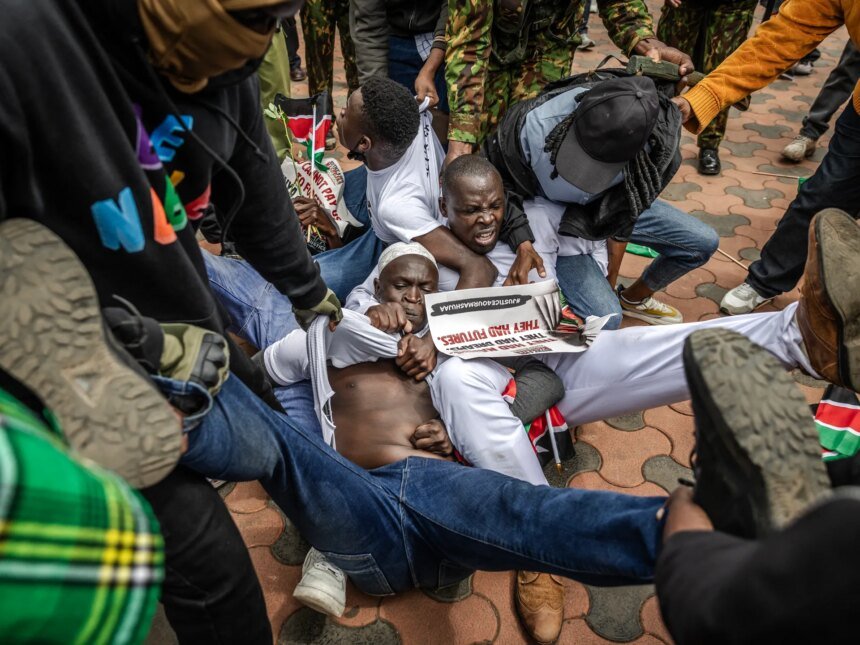
Today, Thursday, Kenyon went out in demonstrations in the capital, Nairobi, and other cities to commemorate the second anniversary of the protests led by young people from “Generation Z” in 2024, at a time when the authorities deployed intensive security forces and closed main roads leading to the center of the capital.
Al Jazeera Net correspondent stated that the police closed the entrances to Nairobi’s central business district and set up checkpoints on major axes. He added that the main axes leading to Parliament were cordoned off with barbed wire, and public transport buses and cars were prevented from entering, creating stifling congestion and leaving thousands of passengers stranded.
Central Nairobi seemed almost empty, with most shops closed on Moi and Tom Mboya Streets, despite the government confirming that today was a normal working day and calling on Kenyans to continue their activities, according to what was reported by the “Kenyans” website (Kenyans.co.ke).
The demonstrations come on the second anniversary of a protest movement that shook the government of President William Ruto, and in memory of more than 120 people killed during two years of protests.

Who is organizing and what are the demands?
The events were mainly organized by groups of “Generation Z” activists, civil society organizations, and families of the victims, who gave them names such as “Generation Z Liberation Day” or “Digital Day of Remembrance,” to demand transparency, justice, and commemoration of the dead. Human rights organizations are calling for June 25 to be declared a national day to commemorate those killed in anti-tax protests two years ago.
For his part, Interior Minister Kipchumba Murkomen confirmed on Wednesday evening that the authorities had received notification of the organization of peaceful protests, and pledged that the police would protect peaceful demonstrators, while the Deputy Inspector General of Police explained that the barriers were aimed at searching for “weapons and criminals.”
Kenyan media also reported that the Criminal Investigations Directorate carried out arrests and opened an investigation into politicians regarding alleged plans to disrupt the protests, amid declared security concerns about criminal groups infiltrating peaceful demonstrations.

Background of the protests
Protests erupted in 2024 in rejection of the finance bill, which aimed to collect $2.7 billion in new tax revenues. At its peak, protesters stormed the Parliament building and burned part of it after representatives approved the law on June 25, 2024, before Ruto returned the law to Parliament for amendments, according to Al Jazeera.
Protests returned in 2025 to commemorate the first anniversary, and expanded after the death of blogger Albert Ogwang in police custody, in an incident that reignited anger over police violence. The repression at the time resulted in the killing of more than 60 people and the injury of more than 500, according to human rights organizations.
Last week, Ruto called on Kenyans not to demonstrate, and described opposition to the 2026 Finance Bill, which his government is presenting as supportive of growth and investment, as “political propaganda.” On the other hand, Siaya County Governor and prominent opposition figure James Orengo called for participation in commemoration ceremonies and vigils across the country.
Earlier this month, Ruto announced a fund of about $15 million to compensate 1,100 people affected by acts of violence between 2017 and 2025, saying it was an “acknowledgment of harm” without apologizing, while the Kenyan press quoted the families of the victims criticizing this step. She noted that only three cases of protest deaths in 2024 and one from 2025 have reached the courts, without any officer having been convicted so far.
As of two o’clock this afternoon, local time, the Kenyan authorities or human rights organizations had not announced an official death toll among the demonstrators.