Published on 6/27/2026
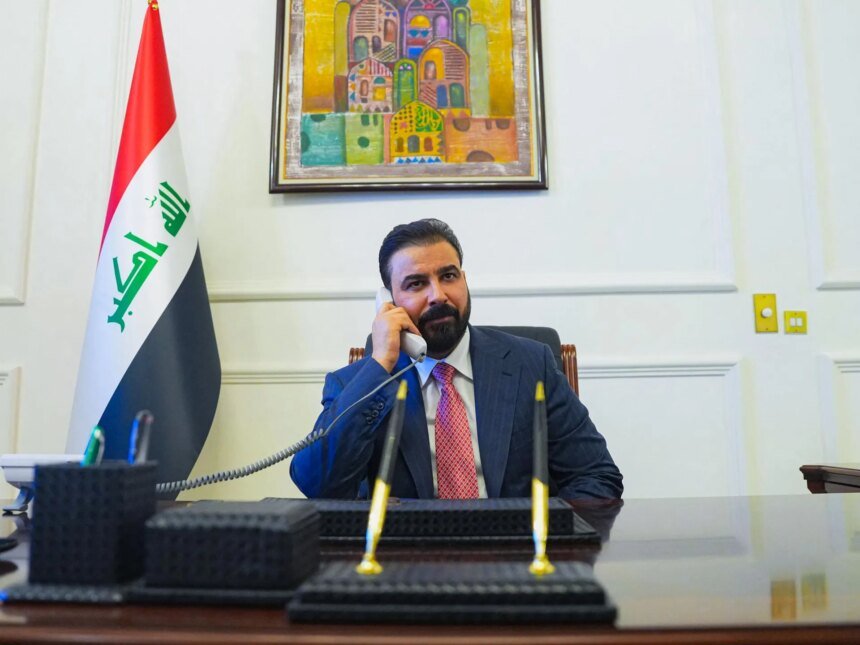
Iraqi Prime Minister Ali al-Zaidi said that his expected visit to Washington next July represents “an announcement of a new phase of the partnership between Iraq and the United States,” stressing that Baghdad is looking forward to moving from military cooperation to an economic, investment and development partnership.
He added, in an interview with Sky News, reported by the Iraqi News Agency (INA), that the government directed the Ministries of Oil, Electricity, and Communications to give priority to “reputable” American companies in the fields of energy, communications, and technology, noting that the Ministerial Council for the Economy had taken decisions related to major oil projects with international companies, including Chevron, Halliburton, and HKN, in addition to giving them opportunities to work in new fields and exploratory patches.
Read also
list of 4 itemsend of list
Al-Zaidi confirmed that his government aspires, over the next 3 years, to raise Iraq’s oil production to 7 million barrels per day, adding: “We informed American companies of this vision.”
He pointed out that the government is also working to restore full oil export capabilities, explaining that exports were affected during the last period as a result of regional crises.

A $400 billion energy fund
The Iraqi Prime Minister revealed a project for an energy and development fund that will be discussed with the American side, explaining that it will begin by allocating revenues equivalent to 500,000 barrels of oil per day, with the possibility of gradually raising it to two million barrels per day according to economic and production conditions, and perhaps outside the restrictions of OPEC quotas.
He added that the fund’s accounts will be opened in American banking institutions, and its resources will be used to finance agreements with American companies, including electricity and infrastructure projects.
He said that the Fund’s financing could reach about $400 billion over the course of three decades, with gradual growth linked to the performance of the projects and implementing companies, indicating that the goal is to rebuild the infrastructure by investing these resources in development projects.
Al-Zaidi explained that the government is working to build a “modern economy” based on production, saying: “There is an old economy that is trying to continue, and a modern economy that we are working to build, and we are continuing to move towards a productive and developed economy.”
He added that the government is proceeding with the establishment of a development fund with the participation of the Central Bank of Iraq and national funds, while opening the way for public subscription and regional and international partnerships, stressing that the fund will finance projects according to market needs in a way that contributes to moving the economy and creating job opportunities.

Financial and anti-corruption reforms
Within the framework of financial reforms, Al-Zaidi said that the government stopped a large part of the waste and recovered funds through legal frameworks, pointing to the formation of a central committee to review contracts worth more than 25 billion Iraqi dinars (about 19 million dollars), with the aim of auditing them, ensuring the soundness of its financial estimates, and preventing exaggeration of costs.
He added that the Council of Ministers referred to Parliament a draft law to form a tribal oversight and audit body in ministries and state institutions, in a way that enhances transparency and governance and raises the efficiency of public money management.
Iraq is the second largest oil producer in OPEC after Saudi Arabia, and its current production amounts to about 4 million barrels per day, according to the organization’s data, while production levels are subject to supply reduction agreements coordinated by the OPEC+ alliance.
The Iraqi economy depends heavily on oil, as oil revenues represent more than 90% of general budget revenues, which makes plans to increase production and diversify investments among the government’s most prominent priorities to promote growth and finance infrastructure projects.