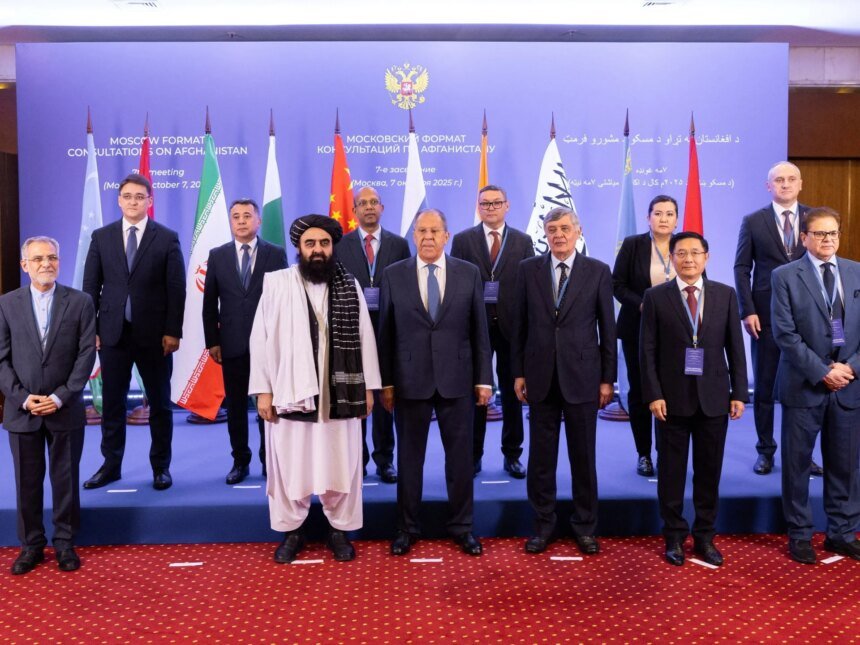
Cable/Brussels- For the first time since the Taliban returned to power in Afghanistan in 2021, the European Union hosted a delegation from the Afghan authorities in a closed technical meeting held in Brussels on June 23, in a move that reflects an increasing shift in Europe’s priorities from a policy of political estrangement to managing practical issues related to migration and return.
The European Commission confirmed, in the daily press briefing it held in Brussels on the eve of the meeting, that the meeting, in which representatives of 15 member states participated, falls within the framework of a technical meeting dedicated to discussing the issues of return and readmission of Afghans who do not have the right to remain in the Union, stressing that communicating with the Taliban “does not mean recognizing them or changing the Union’s position on them.”
Commission spokesman Markus Lammert said during the briefing that member states are “considering ways to return people who have committed serious crimes or may pose a security threat,” explaining that this comes in response to requests from a number of these countries, stressing that contacts with the Taliban authorities are limited to the practical aspects necessary to carry out return operations, and do not represent any political recognition of the movement.

Important station
On the other hand, Afghan Foreign Ministry spokesman Abdul Qahar Balkhi said, in statements published on his official account and through a statement by the ministry after the meeting, that the Taliban delegation held talks with the European Union and a number of European countries that dealt, in addition to the return file, resuming consular services, and strengthening the Afghan diplomatic presence in Europe.
For his part, the Director-General of the Second Political Department of the Afghan Ministry of Foreign Affairs, Zakir Jalali, told Al Jazeera Net that his country’s delegation’s visit to Brussels represents “an important milestone in relations between Afghanistan and the European Union,” noting that it is the first visit of a delegation from the Afghan government to the Union’s headquarters since 2021.
This step comes – according to Jalali – after the understandings that led to the resumption of the work of Afghan diplomats in Germany and Norway, considering that the existing experience there could constitute a practical model for other European countries in developing their dealings with Afghanistan.
He added that the delegation held a series of bilateral and multilateral meetings with representatives of a number of European countries, which dealt with:
- Resuming consular services for Afghans residing in Europe.
- Strengthening consular presence.
- Building trust.
- Discussing the situation of Afghans whose asylum applications have been rejected and who face difficulties in a number of European countries, expressing his hope that the visit will open new horizons for practical cooperation and addressing the issues of Afghan communities abroad.

Increasing pressures
The move comes at a time when Europe is moving towards tightening migration and return policies. According to the latest data from the European Asylum Agency (EUAA), Afghans remain one of the largest nationalities applying for asylum in Europe, with about 117,000 asylum applications registered in the European Union and Associated Countries (EU+) space during the year 2025.
In the latest monthly data, they also remained the top nationality among asylum seekers through April 2026, with about 6,300 applications during that month alone, while the initial protection recognition rate was about 73%.
However, repatriations remain very limited. According to Eurostat data, during the year 2024, about 22,870 departure decisions were issued against Afghan citizens within the European Union, but the number of those who actually returned to Kabul did not exceed only 435 people.
European countries, led by Germany and Austria, along with the Netherlands and Belgium, are leading increasing pressure to find a more effective mechanism to return some of the rejected Afghans, especially those convicted of crimes or classified as a security threat, at a time when internal pressure on European governments is increasing with the rise of right-wing parties and the tightening of immigration policies.
On the other hand, Brussels finds itself facing a legal and political dilemma. On the one hand, European governments want to show that the asylum system is capable of returning those who do not have the right to remain, and on the other hand they are committed to the principle of non-refoulement.
This coincides with an escalating debate within Germany. During a government questioning session in the German Parliament (Bundestag), German Chancellor Friedrich Merz confirmed that his government “does not recognize the Taliban government and does not seek to normalize relations with it,” stressing that contacts with Kabul are limited to the necessary arrangements for the deportation of those convicted of crimes.
an opportunity
The Brussels meeting sparked widespread criticism from human rights organizations, which fear that cooperation on the migration issue would undermine legal guarantees for the protection of refugees. Eve Guidi, director of the European Institutions Office at Amnesty International, said in statements reported by Reuters that “it is unreasonable for the European Union to try to return people to Afghanistan in light of the continuing violations there.”
On the other hand, the Taliban movement views the meeting as an opportunity to expand channels of communication with Europe and ease the international isolation imposed on it.
Nasrallah Estankazi, a former professor at the Faculty of Law and Political Science at Kabul University, told Al Jazeera Net that the movement is working to invest in the presence of its diplomats who manage consular affairs in some Afghan embassies in European countries, including Germany and the Netherlands, to gradually strengthen its diplomatic presence.
In his opinion, this path aims to build “practical legitimacy” by managing files related to Afghan citizens abroad, even in the absence of official political recognition, considering that the Taliban views this as an important achievement that enhances their ability to gradually impose themselves in international dealings.
For his part, international relations researcher Shuaib Safi told Al Jazeera Net that the Afghan delegation’s visit to Brussels reflects a gradual shift in the European Union’s approach towards Afghanistan, as priority is now given to practical files related to immigration and consular services more than the political debate over recognition.
He explained that the Union is dealing with the reality in Afghanistan from a pragmatic standpoint due to the increasing pressures related to the asylum issue, while the Taliban seeks to exploit this limited openness to enhance its external presence and expand the scope of its dealings with European institutions.
Direct communication channel
However, can this path develop into a broader relationship between the two sides, as happened with the new authorities in Syria?
Professor of International Relations at the University of Brussels, Kurt Debeuf, excludes this. He told Al Jazeera Net that the main difference between the two cases is that Europe has much broader interests in contributing to building a stable Syria, which makes European involvement there a candidate for gradual expansion.
He added: “In both cases, immigration remains a major priority, but with Damascus, cooperation will go beyond this issue to other areas, while I do not see that this will happen with the Taliban.” Debeuf believes that the way the European Union announced its contacts with the Taliban confirms that it will try to keep cooperation limited to the issue of migration and return, even if the movement seeks to achieve broader political or diplomatic gains.
On the other hand, German representative in the European Parliament, Hanna Neumann, a member of the Foreign Affairs Committee, believes that simply receiving the Taliban delegation carries a political significance, and she told Al Jazeera Net: “The Commission can call it a technical meeting, but when it invites the Taliban to Brussels, this is a political act. If technical discussions were the goal, they could be held in Kabul, and the European Union has done that previously.”
In its assessment, the movement sought to hold the meeting in the European capital because it wants to “show that it has returned to the international dialogue table,” noting that the Union has set clear standards for dealing with it since 2021, “however, none of them have been achieved, while the human rights situation, especially for women and girls, has worsened.” She stressed that “the Taliban should not be rewarded with the political legitimacy it has sought since seizing power.”
Newman warned that any practical cooperation on immigration issues must not turn into circumvention of human rights issues, considering that every concession leads to a new demand. She added: “This is what happened in Germany; it started with talks, then moved to consulates, and then additional demands emerged.”