Tehran The announcement of allowing the sale of Iranian oil in dollars and the release of part of the frozen Iranian assets did not affect the livelihood of Iranians as quickly as many expected.
While the signing of the memorandum of understanding between Tehran and Washington, with Pakistani-Qatari mediation, reinforced expectations of economic relief and improvement in the exchange market, consumers were surprised by the rise in bread prices in a number of provinces, which brought back to the forefront questions about the extent to which diplomatic developments are able to improve living conditions in the near term.
Read also
list of 2 itemsend of list
In front of a bakery in Tehran, Bahram (40 years old), a construction worker, said that the price of a loaf of lawash bread rose from 14,000 riyals (about 0.01 dollars) to 27,000 riyals (about 0.02 dollars) within one day, adding that the increase dispelled the state of optimism that accompanied the recent understandings between Iran and the United States.
He explained to Al Jazeera Net, “We hoped that the negotiations would lead to an alleviation of living pressures, but the first thing we noticed was the rise in bread prices,” considering that low-income segments face increasing difficulties in covering their basic needs.
While he was collecting loaves of bread in plastic bags, a fifty-year-old woman who was standing next to him intervened and said that bread prices, despite their rise, are still low compared to some neighboring countries, which encourages the smuggling of bread and flour or its use as livestock feed in some areas due to its low cost compared to imported feed.
Pre-negotiable decision
As for Reda (28 years old), who works in a bakery, he believes that the increase is not directly related to the ongoing negotiations, explaining that the decision was taken some time ago, but its implementation in government bakeries coincided with the first round of talks in Switzerland.

He added to Al Jazeera Net that bread prices in private bakeries have risen for months, at a time when bakeries are facing continuous increases in rent, energy and spare parts costs, despite continued government support for flour.
Reda said, “We implement the decisions issued to us, and we are not the party that sets prices. The state still provides subsidized flour, but most other costs have become linked to market prices.”
The rise in bread prices came at a time when Iran witnessed important economic developments, which included suspending some US restrictions on oil exports and allowing Iranian crude to be sold in dollars, in addition to freeing part of frozen Iranian assets. While these steps are theoretically supposed to support foreign reserves and improve market expectations in Iran, their direct impact on daily life is still limited.
From this contrast between diplomatic optimism and living pressures, Al Jazeera Net launched a tour of the capital’s markets to monitor the repercussions of recent developments on commodity prices, the exchange market, and the Tehran Stock Exchange.
Foodstuffs
In one of the major stores west of Tehran, Hajja Iftikhar (67 years old), a housewife, said that most food commodities have witnessed increases ranging between 20% and 100% since the beginning of the year, stressing that the Iranian consumer is not seeing any decline in prices despite the recent political developments.
Iftikhar added to Al Jazeera Net, “Prices here know one direction, which is rising. We have not seen a real decline in the prices of food or basic commodities.”
Dariush (48 years old), the store owner, says that prices have relatively stabilized in recent days, but the market has not witnessed any actual decline in prices.
He explained to Al Jazeera Net that the stability of the dollar price during the last period contributed to stopping a new wave of rise, but it is not enough to reduce the prices of imported goods, adding that the markets are still waiting for the political agreements to be translated into tangible economic results.
Currency market
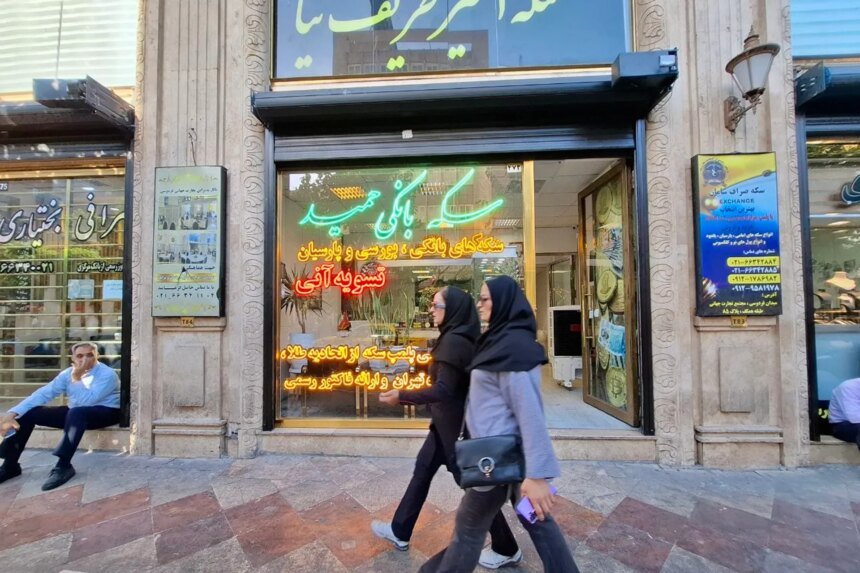
In the Ferdowsi currency market in central Tehran, Mahdi, a money changer who preferred not to reveal his full name, said that the dollar declined after the announcement of the initial understanding from about one million and 800 thousand riyals to one million and 540 thousand riyals, before recovering part of its losses and settling near the price of one million and 610 thousand riyals.

Mahdi explained to Al Jazeera Net that the initial state of optimism declined due to the different American statements regarding the mechanism for using the released Iranian funds, and the conditions for implementing the understandings.
He added that the exchange market is currently standing between two conflicting factors: The first is the possibility of an increase in the supply of foreign currencies as a result of freeing frozen assets and easing restrictions on oil exports, and the second is the continued public budget deficit and spending needs related to reconstruction.
He pointed out that the approaching weekend and its coincidence with Tasu`a and Ashura usually limits the demand for foreign currencies, and the markets have already absorbed part of the impact of positive news related to the Iranian-American negotiations.
He pointed to another seasonal factor, which is the high demand for the Iraqi dinar during the month of Muharram, as its value is currently about 13 thousand riyals per dinar, which withdraws part of the liquidity away from the dollar and limits the impact of political developments on the movement of the exchange rate.
According to Mahdi, the market is still in a waiting phase, as traders are awaiting the executive steps related to selling Iranian oil and freeing part of the frozen assets more than they are interested in political announcements alone.
Tehran Stock Exchange
As for the Tehran Stock Exchange, it was the most interactive with the results of the Swiss negotiations. The main index rose yesterday, Wednesday, by 1.91% to settle at the level of 5 million and 160 thousand points, ending a wave of decline that lasted for two consecutive days.
Masoud, a veteran stock market trader, said that the return of real liquidity to the stock market after three consecutive days of net outflows was an important signal of improved investor appetite.

He added to Al-Jazeera Net that the week ending the day before yesterday, Tuesday, before the market closed on the occasion of New Year, was characterized by sharp fluctuations, but the general index succeeded in ending it with a slight increase compared to the beginning of the week, after it rose from 5 million and 151 thousand points to 5 million and 160 thousand points.
He described Tuesday’s session as an important turning point in the market’s mood, explaining that buy orders clearly outnumbered sell orders, and the number of winning stocks increased significantly.
He pointed out that the market’s ability to maintain most of its gains despite the approaching three consecutive holiday days reflects an improvement in investor confidence, but it remains subject to the course of negotiations and economic and political developments during the coming period.
He explained that shares of companies related to the oil, petrochemical, and banking sectors were the most in demand, while shipping companies and oil refineries recorded notable gains after the announcement of the suspension of some sanctions on Iran.
Shares of automobile and heavy industry companies also witnessed increasing demand, driven by expectations of the resumption of cooperation with external suppliers, and the improvement of financing channels and banking transactions if the recent understandings enter into force.