Published on 6/25/2026
|
Last update: 11:05 (Mecca time)
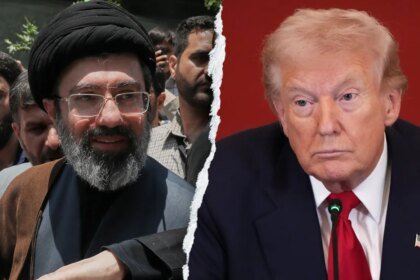
American writer Thomas Friedman believes that the essence of the ongoing negotiations between America and Iran is not only related to the nuclear file or ceasefire arrangements, but rather to a deeper conflict between two contradictory visions for the future of the Middle East, which he describes as “Kushnerism” and “Khomeiniism” in reference to Jared Kushner, the son-in-law of President Donald Trump and the founder of the Islamic Republic of Iran, Ayatollah Khomeini.
In a podcast on the New York Times website, Friedman considered that this intellectual and political confrontation will determine the outcome of the US-Iranian agreement more than the technical details related to enrichment or nuclear oversight.
Read also
list of 2 itemsend of list
Friedman says that US President Donald Trump did not end the war with Iran because of military success or diplomatic breakthrough, but rather as a result of internal economic and political pressures.
He explains that the rise in oil and fuel prices was a decisive factor in the decision to stop the escalation, as Trump feared the repercussions of the continuation of the war on the midterm elections and on the chances of Republicans in swing states such as Michigan, Pennsylvania, and Georgia.
Oil and financial markets
The writer recalls what he had previously written at the beginning of the war, stating that “the oil markets and financial markets will determine the end of the war as much as it will be determined by military developments,” considering that this assessment later proved correct. According to his vision, the US President needed to reduce energy prices quickly to avoid economic repercussions that might threaten his political future.
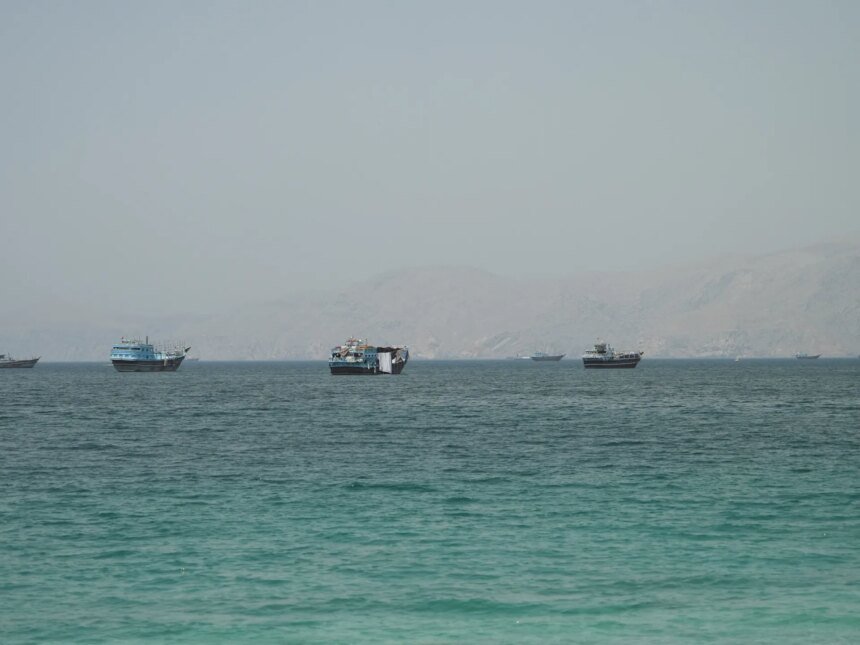
In his assessment of the current negotiations, Friedman points out that what has been achieved so far does not exceed a ceasefire memorandum of understanding that allows for the reopening of the Strait of Hormuz and the resumption of Iranian oil exports, while the fundamental issues, most notably the fate of fissile material close to the level of manufacturing a nuclear weapon, remain a matter of dispute.
He warns against exaggerating the interpretation of public statements issued by various parties, citing his long experience in the region, as he says that “the truth in the Middle East is often told in the local language and in public, not in private meetings.” He gives an example of the contrast between Vice President J.D. Vance’s statements about Iran’s acceptance of the return of International Atomic Energy Agency inspectors, and Iran’s public denial of this matter.
Friedman believes that the main parties are starting from contradictory calculations. Trump needs to end the war for internal political reasons, while Israeli Prime Minister Benjamin Netanyahu finds an interest in its continuation because it postpones the political and judicial dues that await him inside Israel.
As for Iran, the writer believes that there is a division between the Revolutionary Guard, which benefits from the ongoing tension, and a new political generation that may see the settlement as an opportunity to rebuild the economy and foreign relations.
Kushnerism and Khomeiniism
But the core of Friedman’s analysis revolves around what he calls the conflict between “Kushnerism” and “Khomeinism.” The first, attributed to Jared Kushner, Trump’s son-in-law, is based on the idea that economic development, investment projects, and urban prosperity can transcend conflicts of history, identities, and ideologies.
The writer cites Kushner’s vision to reconstruct Gaza and turn it into a tourist and investment center that includes residential towers, industrial complexes, and data centers.
On the other hand, “Khomeiniism” represents the intellectual legacy of Khomeini, who said after the revolution: “We did not carry out this revolution to reduce watermelon prices.” Friedman believes that this phrase summarizes the Iranian regime’s belief that the ideological and religious project takes precedence over economic considerations, and that its goal is not limited to improving living conditions, but rather includes spreading a political and religious model in the region.
The writer says that the real question today is: Will Trump succeed in pushing the new Iranian leadership towards adopting the logic of “Kushnerism,” or will “Khomeiniism” remain the dominant force?
In the context of his criticism of Trump, Friedman describes the war as a “war without a bid,” referring to Trump’s reliance on estimates by Netanyahu and the Mossad regarding the possibility of overthrowing the Iranian regime and igniting a popular uprising, without relying sufficiently on the American state institutions and its intelligence services.
He says that these bets did not materialize, and that Trump even ignored the warnings of some of his advisors who doubted the reality of those estimates.
Continuous pressure sheet
He also expresses his concern about linking the opening of the Strait of Hormuz to the fate of Hezbollah in Lebanon, considering that this gives Iran a continuous pressure card in any future confrontation. He believes that the Lebanese will be the ones who will pay the price for this connection, at a time when many of them are looking forward to getting out of the spiral of regional conflicts.
When comparing the nuclear agreement concluded by the administration of former President Barack Obama and the current path, Friedman defends Obama’s approach, which focused on preventing Iran from possessing a nuclear weapon through a strict inspection system, describing Iran as an “intractable problem” that cannot be solved easily or with slogans of force alone.
Despite his sharp criticism of Trump and his administration, Friedman stresses that he does not wish the negotiations to fail, but rather hopes that they will ultimately lead to reforming or changing the Iranian regime in a way that opens the door to a more stable Middle East. But he doubts the ability of Trump’s team to accomplish a mission of this magnitude, due to what he sees as a lack of experience and institutional cohesion.
The author concludes his analysis by emphasizing that the region has become filled with a large number of armed and competing players, from Israel and Hezbollah to the Iraqi and Yemeni militias and the Iranian Revolutionary Guard, which makes managing the current crisis very complex.
Therefore, he believes that the question is no longer just how wars start or end, but rather who will control the chaos they leave behind. In his view, much is broken in the Middle East, and no one today seems to have the capacity or patience to fix it.