Published on 6/24/2026
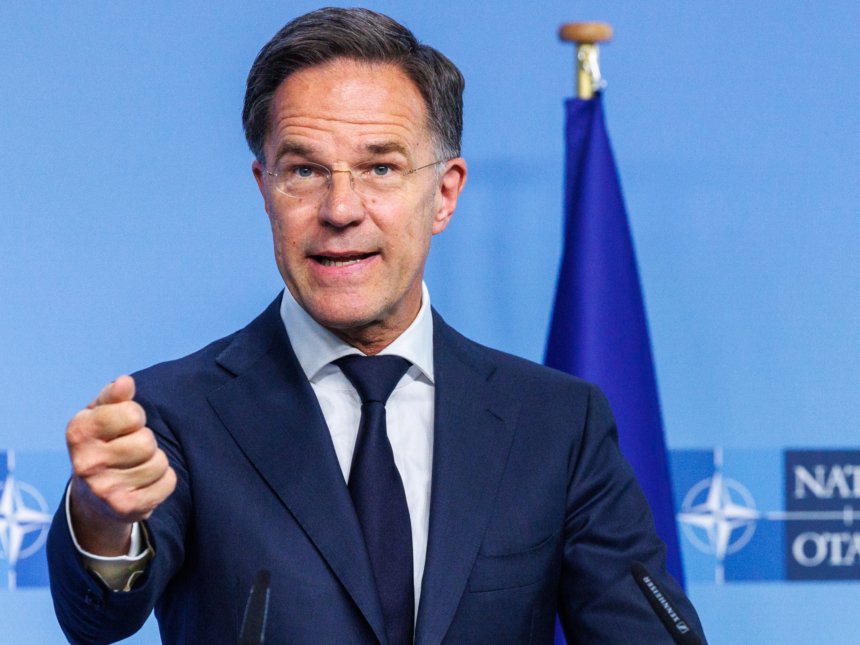
NATO Secretary-General Mark Rutte will meet with US President Donald Trump at the White House on Wednesday, seeking to calm tensions related to the Iran war and US threats to withdraw forces from Europe, before a summit of NATO leaders to be held next July in the Turkish capital, Ankara.
Rutte anticipated today’s meeting and told the American Fox News network yesterday: “With regard to NATO, I know that there is disappointment, but we must also see that these are isolated cases.”
According to Rutte, “thousands of take-offs and landings of American military aircraft took place at European bases during the conflict,” and he described the continent as a “platform for projecting power” for the benefit of the United States, indicating that European bases, by virtue of their geographical location, greatly facilitate American military operations in regions such as Africa and the Middle East.
One of the main roles that Rutte has played since Trump’s election in November 2024 is dealing with the US President’s “hostility” to the alliance and preventing tensions, including Trump’s efforts to annex the island of Greenland, and preventing the matter from turning into a permanent crisis. Wednesday’s meeting is likely to follow this pattern.
“I think he is trying to reach an agreement with Trump to make sure the NATO summit succeeds and does not fail,” said Steven Wertheim, a senior fellow at the Washington-based Carnegie Endowment for International Peace think tank.
Wertheim added: “The NATO summit carries the possibility of great dangers because Trump is upset and moody, and even if Rutte believes he has reached an understanding with Trump, who knows what will happen in two weeks.”
Trump is known to have been a long-time critic of NATO. He has described the alliance as a “paper tiger” and was angered by the alliance’s reluctance to support the United States in the war against Iran or to help open the Strait of Hormuz after the US-Israeli attack on Iran on February 28 disrupted the extremely important shipping route for oil.
For his part, US Defense Secretary Pete Hegseth last week criticized member states, describing them during a NATO meeting as “exploiters”, and announced a six-month review of the deployment of US forces in Europe, which may result in reducing the size of those forces to some extent.
This followed the United States’ decision to reduce the scope of its military capabilities available to the Alliance in crisis situations, leaving member states confused about how to fill the gaps resulting from this reduction.