Published on 6/21/2026
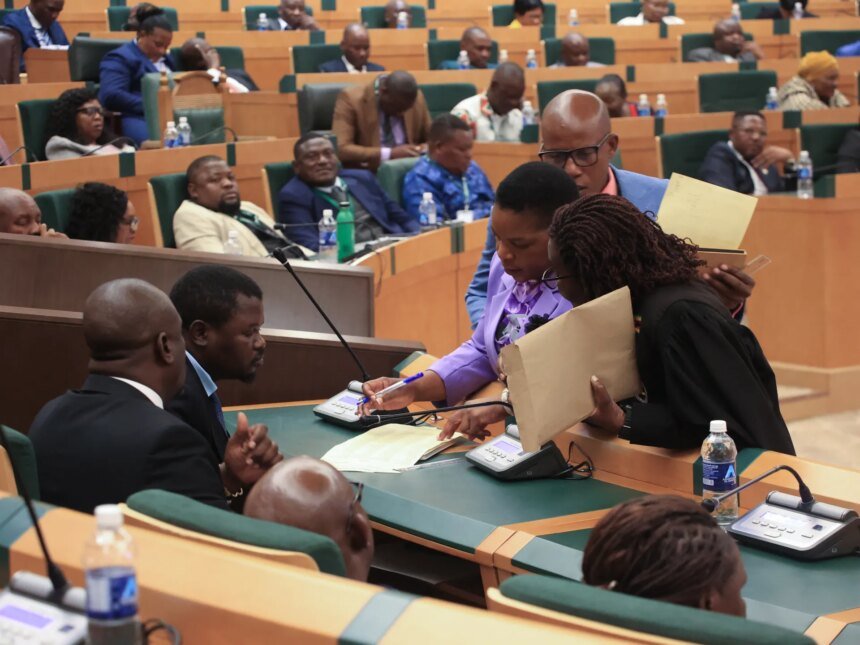
Last Thursday, the House of Representatives (National Assembly) in Zimbabwe approved “Draft Constitutional Amendment No. 3”, which replaces the direct election of the president with his election through a joint session of the Senate and the House of Representatives, after 216 representatives voted in favor and 42 against it. The draft now moves to the Senate, where it is expected to obtain the two-thirds majority necessary to amend the constitution.
The project amends the country’s constitution issued in 2013, so that the president is elected after the general elections or when the position becomes vacant, by representatives and senators instead of direct vote by citizens. The project also includes extending the terms of the president and representatives from five to seven years, which may keep President Emmerson Mnangagwa (83 years old) in office until 2030, that is, two years after the end of his current constitutional term in 2028.
Justice Minister Ziyambi Ziyambi, the sponsor of the project, rejected criticism that the amendments undermine the constitutional order. He told Parliament that the project “is not an abandonment of our constitutional system in any way, but rather a continuation of it,” adding that it “does not grant the president an extension of term or a third term, does not take away the right to vote, does not postpone elections, and does not concentrate power.”
On the other hand, opponents believe that the amendments will strengthen the influence of Mnangagwa, who took power in 2017 after the overthrow of former President Robert Mugabe, over the political system and may pave the way for him to remain in power after 2028. Human rights activist Bride Mkono told Al Jazeera English that the amendment will consolidate the dominance of the ruling party, which has ruled since the country’s independence in 1980. The head of the Rural Teachers Union, Obert Masaraure, also warned that the amendment “will severely weaken our democracy.” “Fragile.”

A report presented to a parliamentary committee this month stated that 99.4% of contributions during national consultations supported the amendments. But the operation was marred by accusations of intimidation and violence, as human rights groups said that members suspected of belonging to the security services kidnapped and tortured opponents of the project. In the Chiredzi region, young men suspected of belonging to the ruling party assaulted activist Gilbert Motibuki after he was prevented from speaking against the project at a public hearing late last March. Rawlings Magidi, of the Heal Zimbabwe Trust, also questioned the committee’s figures, saying the reported approval rating was “misleading” and did not reflect the views of many Zimbabweans.
As the project moves to the Senate, opponents are turning more to the judiciary. Several appeals were filed before the courts, including a lawsuit by activist Youngerson Mateti before the Supreme Court to stop the enactment of the law without a referendum. But many have lost confidence in the judiciary, which critics accuse of lacking independence, after the Constitutional Court began rejecting some cases for procedural reasons.