Published On 4/28/2026
|
Last update: 4/29/2026 12:54 (Mecca time)
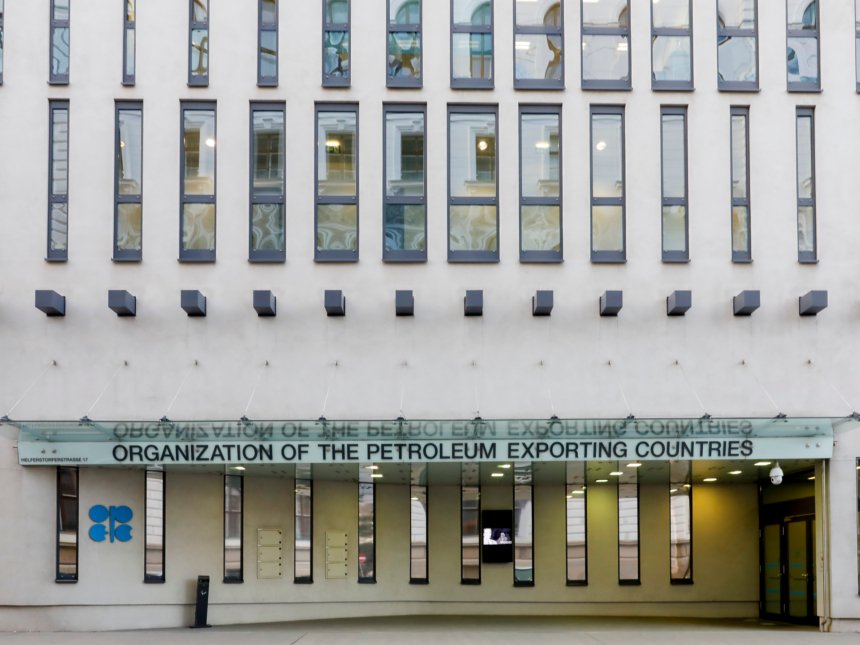
The United Arab Emirates announced today, Tuesday, its withdrawal from the Organization of the Petroleum Exporting Countries (OPEC) and the OPEC Plus alliance, starting on May 1, 2026, while the UAE Minister of Energy, Suhail bin Mohammed Faraj Al Mazrouei, said that the withdrawal will give his country more flexibility “to ensure that the world’s future requirements related to raw products and petrochemicals are met.”
The Emirates News Agency said that this decision “is in line with the country’s long-term strategic and economic vision” and the development of its energy sector, including accelerating investment in local energy production, and “consolidates its commitment to its role” as a “responsible and reliable producer anticipating the future of global energy markets.”
The agency added that the decision came “after an extensive review of the UAE’s production policy and its current and future capacity, and in view of what the national interest requires and the state’s commitment to contribute effectively to meeting the urgent needs of the market.”
Following the UAE decision, Reuters quoted Iraqi officials in the oil sector as saying that Baghdad does not intend to withdraw from OPEC or the OPEC Plus alliance.
The two officials added that Iraq prefers “a strong organization to ensure that oil prices remain at stable and acceptable levels.”
No change in commitments
The Emirates News Agency stated that the decision to withdraw from OPEC and OPEC Plus came at a time when “geopolitical fluctuations continue in the near term through disturbances in the Arabian Gulf and the Strait of Hormuz, which affect the dynamics of supply, as the basic trends indicate continued growth in global energy demand in the medium and long term.”
The agency notes that “the stability of the global energy system depends on the availability of flexible, reliable and affordable supplies,” stressing that the UAE “is investing to meet demand variables efficiently and responsibly, while giving priority to the stability of supplies, costs, and sustainability.”

The agency confirmed that the UAE – after its exit from OPEC – “will continue its responsible role by increasing production gradually and thoughtfully, in line with demand and market conditions,” and “will continue to work with partners to develop resources, in a way that supports economic growth and diversification.”
She stressed that the decision to withdraw “does not change the UAE’s commitment to the stability of global markets or its approach based on cooperation with producers and consumers, but rather enhances its ability to respond to changing market requirements.”
Greater flexibility
In the same context, Reuters quoted UAE Energy Minister Suhail bin Mohammed Faraj Al Mazrouei as saying that the decision to withdraw came at a time when “consumers need attention” from his country, adding that being “a country not bound by any obligations within the group will give it greater flexibility.”
Al Mazrouei continued, “We are facing an unprecedented situation, as strategic reserves of raw products are being depleted to a frightening level.”
He stressed that the UAE “did not consult any direct party before making the decision,” and said that it was “a sovereign national decision based on the long-term strategic and economic vision of the UAE.”
The minister pointed out that the decision will enable his country to work with its partners and investors “to ensure that the world’s future requirements for raw products, petrochemicals, etc., in addition to gas are met.”

The Emirati minister considered that “Abu Dhabi National Oil Company (ADNOC) today is not just a local producer, but rather a global company that produces across the value chain from various parts of the world.”
He stressed that the UAE withdrew “in a timely manner without significantly affecting the market due to the restrictions imposed on the Strait of Hormuz,” and that “the decision came after careful study” of the strategies related to the UAE in the energy and petroleum sectors and others.
ADNOC’s role
In a related context, the Managing Director and CEO of ADNOC, Sultan bin Ahmed Al Jaber, said that the UAE has taken “a sovereign decision that is in line with its long-term energy strategy, its real production capacity and its national interest, as well as the stability of global energy markets,” and he added.
ADNOC CEO: Our commitment to our partners is firm and unwavering.
The Emirati official added that ADNOC “will continue to focus on its role as a responsible and reliable supplier to meet the growing global energy needs.”
The UAE joined OPEC in 1967 through the Emirate of Abu Dhabi, and its membership continued after the establishment of the United Arab Emirates in 1971.
The UAE has proven oil reserves estimated at approximately 111 billion barrels, and it is among the six largest countries in the world in terms of oil reserves. ADNOC has raised the UAE’s production capacity to 4.85 million barrels per day, with a goal to reach 5 million barrels per day by 2027.
ADNOC invested about $150 billion as part of an expansion plan between 2023 and 2027 to increase production and develop gas and petrochemicals.