Published on 6/23/2026
|
Last update: 6/24/2026 01:29 (Mecca time)
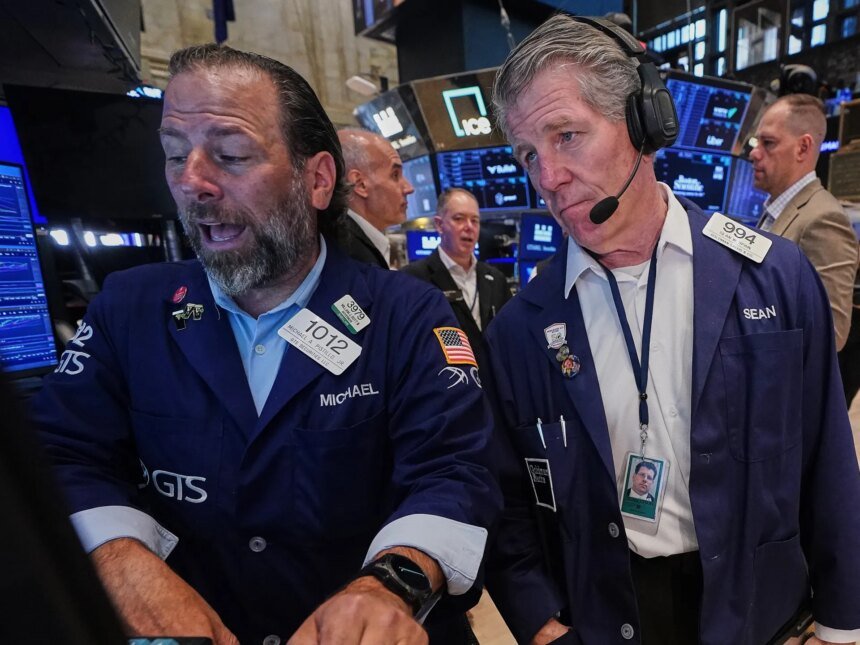
The Nasdaq index on the New York Stock Exchange and the European STOXX 600 index fell at the end of trading on Tuesday amid concerns about the high cost of investing in artificial intelligence and the possibility of a US interest rate hike.
Shares of chip manufacturing companies in the United States suffered losses on Tuesday, which led to a decline in the Nasdaq Composite Index by 1.4%, which meant a loss of about $680 billion from the market value of the companies listed on it during Tuesday’s trading.
Read also
list of 4 itemsend of list
The market value of SpaceX, run by American billionaire Elon Musk, briefly fell below $2 trillion for the first time since it went public this month before rising again.
Over the past few days, the technology sector witnessed its first sharp selling wave in weeks, with the Nasdaq index falling by about 5% from its highest closing level in early June.
Nvidia’s market value fell 2.6% to below $5 trillion. The decline in Nvidia and Tesla shares was among the biggest factors that negatively affected the Nasdaq index and contributed to its decline.

Losses of chip manufacturing companies
Chip manufacturing companies, which were among the biggest winners from the artificial intelligence sector this year, suffered heavy losses, as the Philadelphia semiconductor sector index declined 6.3%.
Micron shares also fell 9%, and it is among the largest profitable companies over the past few months. The company will announce its business results after the markets close on Wednesday.
Shares of memory chip manufacturers, which achieved the best performance on the Standard & Poor’s 500 index since the beginning of this year, also declined today, as SanDisk and Western Digital shares fell 12% and 11%, respectively.
Shares of memory chip manufacturers also fell sharply in South Korea.
On the other hand, SpaceX shares rose 1.7% to $157 after 10:40 AM EST (14:40 GMT), after it had fallen to $147.11, recording its first decline below the opening trading price of $150.
The performance of other major technology companies was mixed. Alphabet shares fell 0.4%, while Apple shares rose 0.8% and Microsoft shares rose by more than 2%.
Lauren Hislop, investment director at Mattioli Woods, told Reuters that among the reasons for the intense selling operations were dealing with economic conditions characterized by high or rapid fluctuation of borrowing costs, as well as concerns regarding the amount of capital required to finance the next phase of investment in artificial intelligence.
The record initial public offering of SpaceX shares led to an intense trading wave during the first week of the company’s listing, but the stock fell during the last trading sessions, leading to a decline in the company’s market value by more than $600 billion since last Wednesday.

European stocks fall
In Europe, the European STOXX 600 index closed lower on Tuesday amid the impact of expectations that the Federal Reserve (the US central bank) will raise interest rates soon and concerns about the negative impact of increased corporate spending on artificial intelligence on investor morale.
The European index closed 0.7% lower after dissipating some of its previous gains. The index recorded its lowest levels since June 12, with most sectors trading lower.
Stocks in Asia fell earlier today, the price of crude oil fell by about 1%, and the price of gold fell by more than 2%.
The technology sector topped the losses of the European STOXX 600 index, falling by 3.7%, recording the largest daily decline since February, in light of investors around the world reevaluating companies whose shares rose earlier this quarter, driven by enthusiasm for artificial intelligence.
The shares of the two chip manufacturing companies (Infineon) fell 6.3% and (ST Microelectronics) 8.5%, while the shares of the two semiconductor equipment manufacturers (ASML) fell 5.7% and (Extron) 8.3%.
In light of rising borrowing costs, companies that rely on debt-backed spending are likely to be exposed to financial pressure, which raises investor concerns.
In parallel, investors have increased their expectations regarding tightening monetary policy in the United States, and data from the London Stock Exchange Group indicates that investors are now betting on raising interest rates by 25 basis points, and they expect by more than 50% to make another similar increase by the end of 2026.
Markets continue to bet that the European Central Bank will raise borrowing costs by another 25 basis points later this year, despite European Central Bank President Christine Lagarde on Monday downplaying concerns about inflation.