Published on 6/23/2026
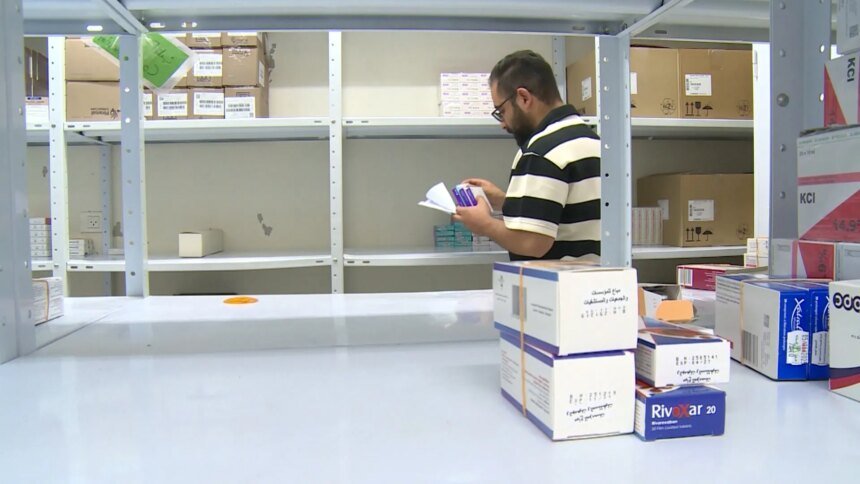
The medicine shelves inside the warehouses of a large number of West Bank hospitals ran out of special treatments and medical supplies due to Israel’s withholding of clearance funds, which represent about 68% of the Palestinian Authority’s revenues.
A report prepared by Muhammad Al-Atrash for Al-Jazeera monitored the dimensions of the health crisis, as Israel’s seizure of government funds led to the accumulation of debts on private hospitals and drug supply companies, and the Palestinian Ministry of Health alerted that hundreds of types of major medicines had completely run out of warehouses.
In 2025, the Palestinian Authority explained that Israel is withholding about $3 billion in clearance funds, which has led to the fragility of the Palestinian economy and deepening its crises, in light of the heavy reliance on it as a source of revenue.
The current crisis was not limited to government hospitals, but rather affected private ones. Although during previous crises they represented a health safety umbrella, today they stand before an existential challenge, as the Ministry of Health’s debts amounted to $1.3 billion, including $900 million to private and private hospitals.
Hospitals also ran out of 265 specialized products, and 726 medications were completely sold out of the Ministry of Health’s warehouses, in addition to 50 medications for cancer patients out of 97 items.
The head of the Federation of Private and Private Hospitals, Yousef Al-Takrouri, described the deteriorating health situation, as he confirmed that private and private hospitals had resorted to apologizing for receiving some patients’ cases to provide advanced services or to oncology patients. Due to the lack of medicines and medical supplies.
According to the report, one of the private hospitals has been unable to pay the salaries of its employees for a year and a half except partially due to the reduction in its services.

Shocking numbers
For his part, the head of the Federation of Pharmaceutical Supply Partners in the West Bank, Muhannad Habash, said that some of the supplying companies received only a very small amount during 6 months of this year, not exceeding 1% as a percentage of their debt.
Habash added that the strategic stock that the companies supplying for emergency cases or sudden supplies were holding was completely exhausted after being supplied to the Ministry of Health, without the companies being able to replace it with new stock as a result of the stifling financial crisis.
This sharp deterioration prompted the Palestinian Ministry of Health to announce shocking numbers that reflect the depth of the tragedy. The report revealed that about 11,000 scheduled surgical operations have been postponed since the beginning of this year, in light of the inability of some hospitals to provide even the most basic surgical requirements, such as the sutures needed to perform the operations.
The Ministry also warned of a real danger threatening the lives of 4,000 cancer patients, as a result of the shortage of specialized medicines and the complete depletion of hundreds of pharmaceutical items, medical supplies, and major consumables from central warehouses.
In a distress call, Mustafa Al-Qawasmi, Director General of the General Administration of Hospitals in the Palestinian Ministry of Health, warned that a comprehensive collapse threatens the health sector, whose services were previously respected, stressing that the financial crisis resulting from the withholding of clearing funds has made it difficult to continue localizing medical services, and calling for the need for all parties to intervene to support this vital sector to ensure that it continues to provide the lowest levels of service to citizens.
The report touched on the human and psychological dimension of the Palestinian citizen who suffers as a result of this financial crisis, as he begins to feel weak in the moments of his illness in the face of an unknown fate, in which he is forced to confront the disease with dilapidated medical capabilities that provide him with only the minimum level of care, while hospital corridors are crowded with patients struggling to survive.