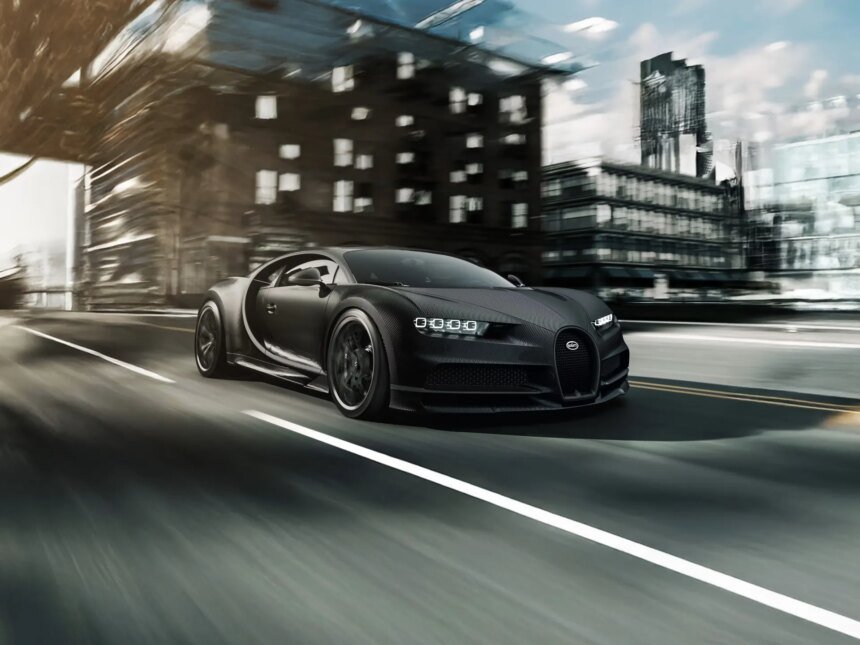
When a wealthy person pays between 3 and 5 million dollars to buy a hypercar such as a Bugatti Chiron or a Mercedes AMG One, he believes that he has the pinnacle of human engineering and that his spending journey has ended at the doorstep of the showroom.
But the truth that the owners of these “mechanical monsters” later realize is that the first check is nothing but an entry ticket to the unlimited spending club, where maintaining these super machines turns into a financial nightmare similar to financing a mini-space program and not just maintaining a car.
Read also
list of 4 itemsend of list
In this report, we uncover the dark side of supercar costs, and why these cars require regular maintenance budgets that can afford an all-new supercar every time they walk into the shop.
44 thousand dollars for only 185 kilometers!
In early 2026, car enthusiasts were shaken after the disclosure of official documents from RM Sotheby’s auction house for the sale of a rare copy of the iconic Mercedes AMG One inspired by Formula 1 cars, of which there are only 275 copies in the world. The shock was not in the price of the car, but in its first maintenance bill, known as (Service A).
The car only traveled 185 kilometers, yet its regular maintenance bill amounted to 44,100 US dollars. When this astronomical bill is broken down, numbers that do not make sense to the traditional automotive world appear:
- Air and transmission filtersThe air filter alone cost $2,195, while the transmission oil filter cost $2,696.
- Oil drain plug: A small piece of metal (Drain Plug) sold for $176.
- Labor wagesThe maintenance process took a full 80 hours of work (the equivalent of two weeks of continuous work by a specialized technician), at a cost of $463 per hour, bringing the cost of labor alone to $36,800.
The reason for this long time is not the laziness of the technicians, but rather the terrifying engineering complexity, as engineers are forced to dismantle huge parts of the car’s carbon body and the complex aerodynamic system just to reach the places to change the oils and filters.

Bugatti Chiron.. “Sacred Rituals”
If Mercedes is terrifying, Bugatti Chiron imposes its own rules in the world of wealth. The Chiron’s regular oil change process (which takes place between 14 and 16 months) is unlike any other car, as the car contains 16 oil drain points hidden under complex lower protection shields. The cost of this simple procedure reaches 25,000 US dollars.
As for tires, they are another story. The Michelin Pilot Sport Cup 2R TR tires are specially designed to withstand speeds exceeding 400 km/h. Their prices start at $8,450 for the standard packages, and reach $41,919 for the maximum performance packages.
What’s more, Bugatti recommends completely changing the alloy wheels (rims) every once in a while to ensure safety at high speeds, at a cost of up to $50,000.

Engines that breathe Formula 1’s breath
Supercar engineering imposes harsh judgments, and updated manufacturing data for 2026 reveals that the beating heart of the Mercedes-AMG One car, a hybrid engine straight from the Formula 1 track, has a very limited lifespan.
This superior engine is designed to operate for only 50,000 kilometers, after which the car will need an “open heart operation” that includes a comprehensive rebuild and complete disassembly within the corridors of the company’s specialized factory in Germany. The biggest shock lies in the bill for this operation, which touches the million-dollar mark, an amount sufficient to purchase a completely new supercar of a different category.
Many believe that keeping these artistic icons locked in luxury garages and away from the roads might protect them from the harshness of maintenance bills, but this concept is nothing but an illusion in the world of supercars. These machines are genetically designed to operate under pressure and extreme speeds, and stagnation is their first enemy, which triggers a series of underlying mechanical and chemical problems, including:
- Dryness of fillings and corksStagnant fluids lead to drying and corrosion of rubber gaskets, causing catastrophic leaks when the car is started suddenly.
- Time expiryThese car tires and their fluids (such as brake fluid and coolants) have a strict expiration date (usually 18 months) after which they must be replaced even if the car has traveled a distance of zero kilometers, because the deterioration of the efficiency of the rubber or oil at a speed of 400 km/h simply means a fatal accident.
- Batteries and hybrid systemsThese cars contain very complex lithium-ion battery packs to operate hybrid systems, and damage to these batteries due to lack of periodic charging requires their replacement for amounts that may reach $100,000.

Shadow costs: insurance and luxury transportation
The cost does not stop at the mechanics, as insurance companies view supercars with great horror. The annual insurance cost for a car like the McLaren P1 is about $18,000, with a one-time “deductible” in the event of an accident of up to $70,000.
In addition, these cars cannot be driven to the maintenance center on public roads to avoid increasing kilometers or being exposed to gravel scratches, which means permanent reliance on closed, air-conditioned and designated transport trailers for their shipment, which costs thousands of dollars per trip.
In the end, owning a supercar turns out to be not just a statement of instant wealth upon signing a check, but a sustainable financial commitment akin to owning a private jet. These amazing machines do not ask their owner if he has the money to buy them, but rather ask him with periodic rigor: Do you have enough wealth to continue to be worthy of my leadership?
So, unless you are a millionaire who can afford $40,000 bills for a short mileage, these cars will quickly turn from dream collectibles into mechanical nightmares parked under the silk covers.”