Published on 6/22/2026
|
Last update: 16:47 (Mecca time)
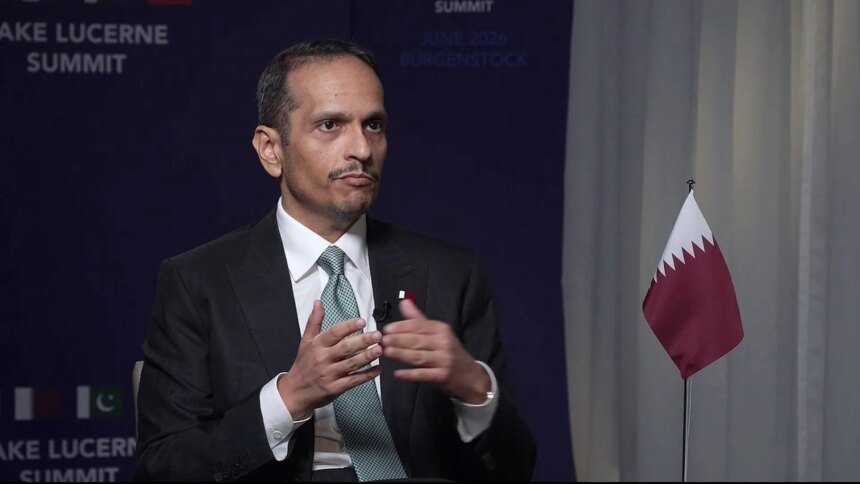
Qatari Prime Minister and Foreign Minister Sheikh Mohammed bin Abdul Rahman Al Thani said that the memorandum of understanding between the United States and Iran represents an institutional framework for the negotiating process, and contains technical and political elements, aiming to stop the war and establish successful negotiations that reach a final agreement between the two parties.
The Qatari Prime Minister and Foreign Minister added – in statements to Al Jazeera broadcast on Monday – that the memorandum took great efforts and continuous weeks of work with Qatar’s partners in Pakistan, with regional and international support, to create an appropriate environment for negotiations, noting that the memorandum establishes an institutional framework based on the commitment of the two parties to meet periodically and resolve dilemmas.
He explained that the memorandum addresses the nuclear file, in addition to other files that Iran will discuss with the region, within a regional security framework in coordination with the Gulf Cooperation Council countries, especially with regard to the Strait of Hormuz, for which a permanent solution must be found according to a unified Gulf vision.
Sheikh Mohammed bin Abdul Rahman Al Thani indicated that work was being done with Pakistan to develop a framework that would protect the negotiation process so that it would be more solid, noting that the current stage is the period of construction for the final agreement between Washington and Tehran, and that the memorandum laid the foundation for this construction, despite the presence of many controversial points that may emerge during the negotiating process.
The Qatari Prime Minister revealed that there have been problems facing the negotiating track since the signing of the memorandum, especially with regard to Lebanon and the Strait of Hormuz, but he stressed that mechanisms have been put in place to avoid such problems, so that the focus is on negotiations and reaching an agreement, indicating the need to be cautious despite the presence of political will from the negotiating parties, due to external influences on the negotiation environment.
The escalation in Lebanon has a negative impact
The Qatari Prime Minister indicated that escalation anywhere in the region, whether in Lebanon or elsewhere, will negatively affect the negotiations, considering that the actions of Israeli Prime Minister Benjamin Netanyahu increase the state of escalation, and that the continued occupation of Lebanese lands must end, and that respect for Lebanon’s sovereignty is necessary for the stability of the region.
He stressed that Israel’s killing of about 100 Lebanese in a few days during the ceasefire is unacceptable, explaining that the United States is playing the correct role regarding Israeli actions in Lebanon, and that Doha is working with its partners to put out the fires, prevent escalation, and put in place mechanisms to avoid any escalation in the region before it occurs.
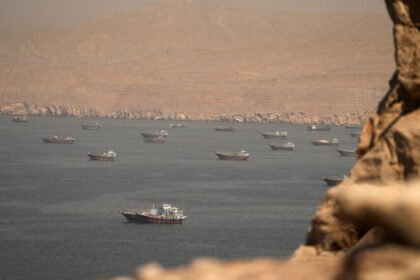
Regarding the Strait of Hormuz file, the Qatari Prime Minister confirmed that Qatar’s principled position is to refuse to change the status of the Strait from what it was before the war, and that the Qatari vision stipulates that the Strait be open and passage through it is free, with Iran’s commitment to providing safe passage through it within 60 days. It was also agreed to establish a hotline to resolve any dispute that may arise.
In the same context, Sheikh Mohammed bin Abdul Rahman Al Thani indicated that what happened from Iran towards Qatar and its brothers during the war is unacceptable, and pointed out that there is a Gulf consensus to achieve a common vision for dialogue with Iran to solve problems, and that Qatar looks forward to seeing Iran cooperate with the Gulf states according to a high level of trust, with preparations for Gulf meetings in the next stage to discuss regional security.
Regarding the position on the Palestinian issue, Sheikh Mohammed bin Abdul Rahman Al Thani expressed his hope that the negotiating momentum would include the Palestinians to achieve a Palestinian state, stressing that the outcomes of any agreement between Iran and the United States do not only affect the two parties, but rather the entire region, and that Qatar looks forward to a unified vision of the Gulf Cooperation Council for a security framework that guarantees stability.
The Qatari Prime Minister and Foreign Minister stressed that Qatar’s priority is to put out the fires in the region and reach a stage of calm, stressing that a diplomatic solution is the way to prevent the crisis from escalating out of control.
He pointed out that there are parties that want to sabotage the negotiation, but he said that both parties show their insistence on a solution, despite the complexities facing the negotiating environment.