Published 20.01

Toxic blue-green algae, or cyanobacteria, are now found in most of the Baltic Sea.
– We saw the first signs two weeks ago and since then it has gradually increased, says Jörgen Öberg, oceanographer at SMHI.
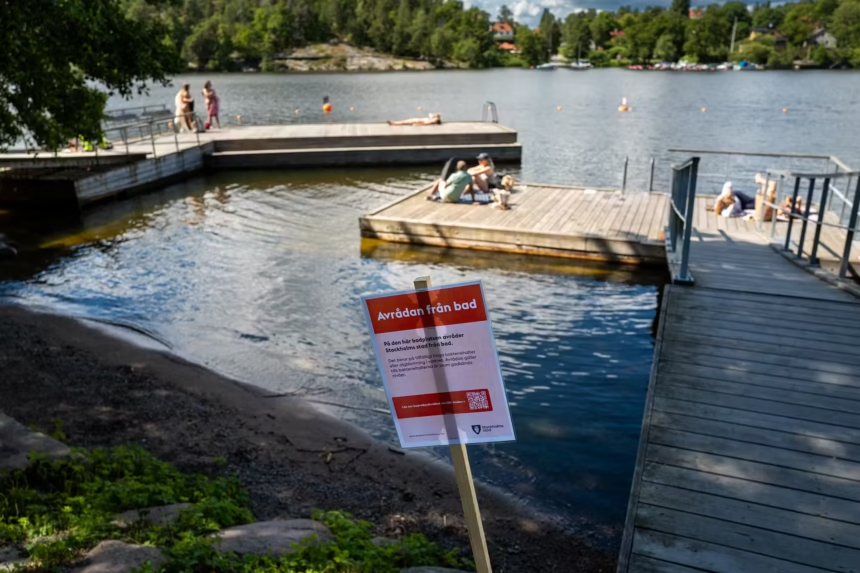
Right now there are large masses of cyanobacteria out at sea and, apart from Gotland’s west coast, smaller occurrences have been reported from several places in Stockholm’s middle archipelago, writes the WWF in a press release.
But according to SMHI, it is no worse than usual.
– On the contrary, it is exactly as it usually is, says Jörgen Öberg, oceanographer at SMHI.
The cyanobacteria can cause stomach problems, fever and muscle pain if ingested. Anyone who has bathed in water where algal blooms occur, and received cold soup, is recommended to call the Poison Information Centre.
The algal bloom, which is due to eutrophication in the Baltic Sea, eventually disappears naturally. But Jörgen Öberg says that there are many indications that the incidence will remain roughly the same now, at least in the coming days. The reason is that there is not enough wind.
– If it had started to blow and become really wavy, this would have sort of mixed into the water mass and not become as noticeable as it is now, says Jörgen Öberg.
Algal bloom
Algal blooms have different colors and appearances depending on how big they are and what species they are.
Blue-green algal blooms in the Baltic Sea often look like green-yellow soup or blue-green stringy mass. The toxicity varies between different species.
If you bathe in water with algal blooms, try not to swallow any water. It is also good to shower afterwards.
Algal bloom poisoning can cause symptoms such as nausea, vomiting, diarrhea and fever. You can also get skin irritations and eye problems. It is recommended to consult a doctor.
Children and animals can be particularly vulnerable during algae blooms.
Source: SMHI and the World Wide Fund for Nature