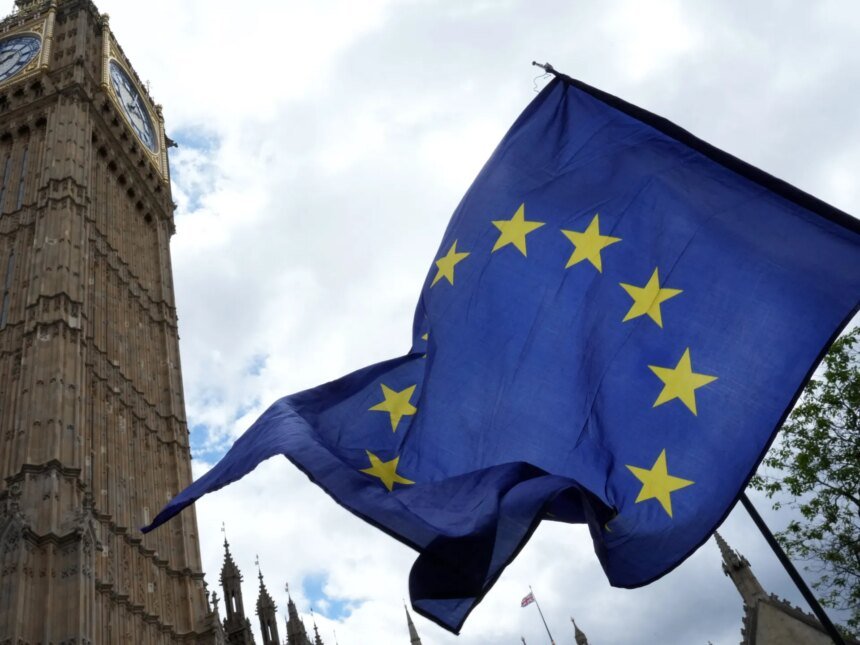
Ten years ago, an influential sector of the British population was talking enthusiastically about Brexit, or leaving the European Union, and saw it as the magic wand that would get Britain out of its problems, especially immigration. This sector chose to vote in favor of Brexit by a majority of 52% in a general referendum on June 23, 2016.
But the picture changed completely in 2026, and talk now became about “Brexit,” instead of “Brexit,” based on the word “regret” in the English language, or “Brionion,” meaning return to the union, after the majority of Britons realized that leaving the European bloc greatly harmed their standard of living and the interests of their country.
Read also
list of 4 itemsend of list
An opinion poll conducted by the European Council on Foreign Relations in Britain, as well as 15 member states of the European Union, and the British newspaper The Guardian published its results, showed that about 66% of the Britons surveyed believe that leaving the European Union has caused an increase in the cost of living, and 65% of them believe that it has harmed the British economy.
About 57% of the British who participated in the survey, and belong to various political parties, believe that leaving the European bloc has limited the opportunities available to young people, and about 58% believe that it has made the immigration problem worse, despite the fact that the immigration issue was one of the most important issues that Brexit supporters used to urge voters to choose it.

On the other hand, the most common answer among those surveyed about the benefits that Brexit brought to Britain was “I don’t know,” or “None of the above,” which indicates a general state of frustration toward Brexit among the British.
An opinion poll conducted by the European Council on Foreign Relations shows that 66% of its participants from 15 European countries said that they either “strongly support” or “tend to support” Britain’s return to membership in the European Union, which means that there is popular acceptance on both sides, Britain and the European Union, for the idea of Britain’s return to membership in the Union.
But there are economic and political obstacles that make Britain’s return to the European Union, if the government chooses this path, difficult, as the details of London’s relationship with the European bloc still raise many disagreements.
These are the most prominent obstacles to Britain’s rapid return to the European Union:
First: the strong opposition from right-wing parties
The far-right Reform Party led by Nigel Farage, who was one of the most prominent leaders of the Brexit campaign, refuses to return to European Union membership, and confirms that it will confront any attempts by the Labor government in this regard.
In turn, the leader of the Conservative Party, Kimi Badenoch, has repeatedly confirmed that she completely rejects the idea of Britain returning to the union, and will not accept any agreement with Brussels that contradicts the result of the referendum that took place in 2016.
An article published by the European Politics Journal, published by the London School of Economics, explained to researcher Ian Begg that Britain’s return to the Union politically requires holding another referendum, even if this is not legally necessary, which will deepen political differences in British society, and give an opportunity for right-wing parties to gain broader support among opponents of the European Union.

Second: Accepting the freedom of movement of labor
The European Union is based on member states accepting four basic freedoms, which are the freedom of movement of goods and services, capital and labour. Member states generally benefit from freedom of trade in goods and services through the European Common Market, which Britain is keen on given that the European Union is its largest trading partner.
European Union countries receive about 41% of British exports, while the percentage of British imports from EU countries amounts to about 50% of its total imports, according to data from the British House of Commons, which demonstrates the extreme importance of Britain’s trade relationship with the Union.
But the freedom of movement of labor remains the dilemma that prompted an important part of voters to vote in favor of Brexit, as they rejected the presence of large numbers of European workers, especially from Eastern Europe, in Britain and their competition with British workers for available job opportunities.
This problem still exists, according to what the Financial Times reported, citing Michel Barnier, who led the European Union negotiations with Britain after Brexit.
Barnier asserts that the European Union rejects the idea of “selectivity” on the part of London in the nature of its membership, meaning that it chooses the freedom of movement of goods, services and investment, and rejects the freedom of movement of European labour.
In his interview with the newspaper, Barnier believes that, if the Union agrees to Britain’s membership in it on the condition that it does not accept the freedom of labor movement, the far-right parties in France and Italy will demand the same thing, and therefore “there is no way to do that,” according to Barnier’s description.

Third: Weak European confidence in a “difficult partner”
In this context, the Financial Times pointed to another important element at the political level in London’s relationship with the European Commission in Brussels, which is the lack of confidence in London on the part of many European officials.
Diplomats, ministers and high-level European officials believe, according to what the newspaper reported, that any process for Britain’s re-accession to the European Union may take more than five years.
Among the most important reasons are “the long legacy of lack of trust,” according to the newspaper, during the negotiations that followed the vote in favor of Brexit, and the complex details of Britain’s relations with the Union, which includes 27 countries, in addition to the fact that Nigel Farage, the leader of the Reform Party, is popular among a sector of British voters according to opinion polls.
The possibility of the Reform Party winning the next general election in Britain means that Farage, who is hostile to the European Union, will become prime minister, a possibility that European officials take into account when considering the issue of London’s return to membership in the Union.
Many European countries believe, according to what was reported by Agence France-Presse, that the Union is better off since Brexit, while turning the page on the ongoing debates and discussions that accompanied Britain’s membership in the Union.
In this context, Ian Begg, in his article in the European Politics Journal, describes Britain as a “difficult partner” for many European politicians, especially with its refusal to join the single European currency (the euro) and its refusal to join the Schengen visa agreement, in addition to its exit from the European Union, which means the need to be patient in accepting its membership again in the Union.

Fourth: The quality of Britain’s relationship with the European Union
Although Andy Burnham, the candidate to lead the Labor Party and form the government after Prime Minister Keir Starmer resigned from his position, supports joining the European Union, he did not go into details, nor set a date for this return, due to political pressure from those who reject Britain’s membership in the Union, according to the Financial Times.
Wes Streeting, the former British Minister of Health and one of the aspirants to lead the Labor Party, had spoken of his support for the idea of returning to the European customs union, and not returning to the European common market, because the customs union does not include the freedom of movement of labor, and is limited to the freedom of movement of goods without customs duties.
However, the customs union does not guarantee the benefits that the financial services sector, one of the most prominent sectors of the British economy, can achieve by returning to the European common market without obstacles, which is what many workers in this sector support, especially since Britain achieves a surplus in it through its trade with European Union countries, in exchange for a deficit in trade in goods.
The Financial Times indicates that, according to the latest opinion polls, about 55-65% of British voters support withdrawing from Brexit and returning to membership in the European bloc, but without specifying the type of this return: is it to the European Customs Union, the European Common Market, or full membership in the European Union?
Britain’s relationship with the European Union remains thorny and complex, as the disappointment among most Britons after Brexit does not guarantee a quick return to European Union membership, and it is undoubtedly one of the most prominent issues that Andy Burnham will face when he assumes prime ministership.
Source: French + Reuters + Guardian + Financial Times