Published on 6/21/2026
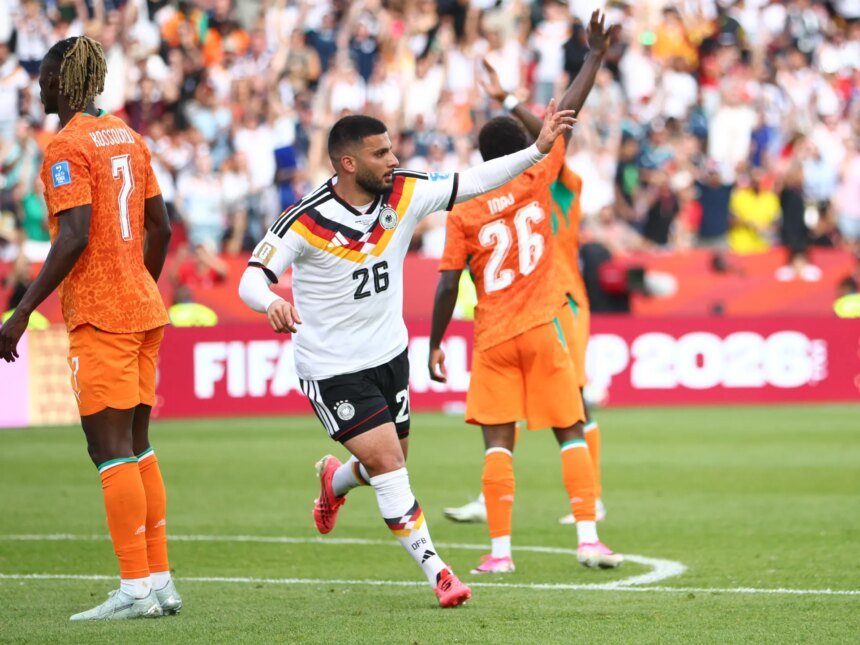
Germany reached the elimination rounds of the World Cup for the first time since 2014, after beating Côte d’Ivoire 2-1 on Saturday in Toronto.
Mixed numbers for the Germans
The German national team achieved three consecutive victories in the World Cup for the first time since winning five matches between the group stage and the final in 2014; This is the first time it has qualified for the playoffs since that edition.
Read also
list of 2 itemsend of list
The German national team achieved victory in its first two World Cup matches for the first time since 2006, after failing to achieve this in each of the previous four editions.
Germany have conceded goals in each of their last eight World Cup matches, while they have only suffered a longer streak once in the tournament’s history – having conceded goals in each of their first nine matches between 1934 and 1954.
German goalkeeper Manuel Neuer has become the most participating goalkeeper in the history of the World Cup, by reaching the 21st match in his World Cup career, surpassing the previous record of Frenchman Hugo Lloris.
Côte d’Ivoire have lost their last two World Cup matches against European teams (also against Greece in 2014) – having lost only one of their first three matches against teams from the Old Continent in the tournament.
At 29 years and 183 days, Franck Kesé is the second-oldest scorer for Côte d’Ivoire in a World Cup, after Didier Drogba in 2010 (32 years and 101 days); Kesé is also the oldest African player to score a goal against Germany in the tournament.

The most successful alternative
At 93:32, Deniz Undav scored Germany’s second late winner in regular time at a World Cup after Toni Kroos scored the winner at 94:44 against Sweden in 2018, according to Opta.
Deniz Undav was directly involved in five goals as a substitute in the 2026 World Cup (3 goals, 2 assists) – the most in a single edition of the tournament since 1966 (alongside Roger Milla in 1990).
Deniz Undav is the first player to score in his first two World Cup matches for Germany since Miroslav Klose in 2002.