Published on 6/20/2026
|
Last update: 16:37 (Mecca time)
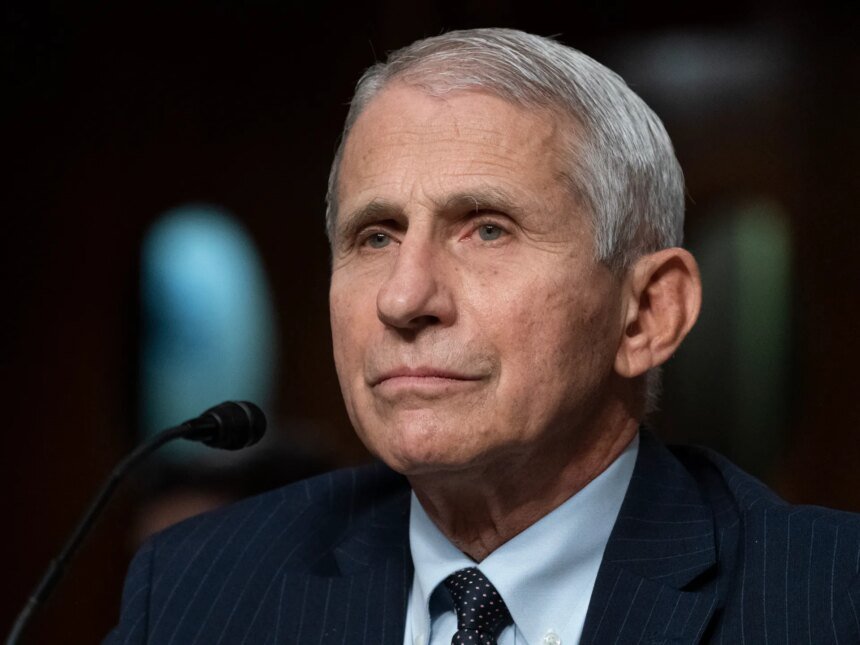
An American doctor specializing in immunology, he held the position of chief medical advisor to the White House and director of the National Institute of Allergy and Infectious Diseases for 38 years. He lived with seven American presidents in 11 presidential terms, and was responsible for supervising the fight against and dealing with many viruses and epidemics.
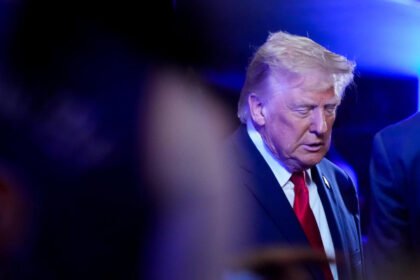
Anthony Fauci was part of the government team to deal with the Covid-19 pandemic, which claimed the lives of about 1.2 million in the United States, and he contributed to building its strategies, and his name appeared widely during it, thanks to his frequent appearances on screens and in press conferences, but that also made him vulnerable to harsh criticism, as well as repeated quarrels with at that time President Donald Trump.
On June 20, 2026, outgoing Intelligence Director Tulsi Gabbard revealed declassified documents and correspondence, which she said shed light on Fauci’s role in financing dangerous genetic research in the Chinese Wuhan laboratory, which is accused of leaking the Corona virus to the world. She stated that Fauci later colluded with American intelligence agents to obscure facts related to the origin of the virus and that the pandemic arose due to a laboratory leak, and that he lied in his testimony before Congress in 2017. 2024, and provided incorrect information.
Generator and configuration
Anthony Stephen Fauci was born on December 24, 1940, in Brooklyn, New York City, to a small immigrant family from Italy, and he has one sister.
Fauci spent his childhood in the Brooklyn neighborhood, in an area dominated by an Italian environment. He lived with his family in an apartment above his father’s pharmacy, which he used to deliver medications and prescriptions on his bicycle to patients in the neighborhood. He also used his sister to serve customers inside the pharmacy.
He attended the prestigious Regis High School in Manhattan, then continued his studies at Holy Cross College for Men in Massachusetts, where he received pre-med education and graduated in 1962. He then joined Cornell Medical College in New York, where he graduated first in his class in 1966, and then completed his residency at Cornell Medical Center in New York Hospital in 1968.

His working life
In 1968, he joined the National Institutes of Health, where he focused on studying infectious diseases. There he began working at the National Institute of Allergy and Infectious Diseases, and rose through the ranks until he served as head of the Immune Regulation Laboratory in 1980, before reaching the presidency of the institute itself.
But the year 1981 was a turning point in Fauci’s life. While he was working as a researcher in autoimmune diseases at the National Institutes of Health, an unknown infectious disease appeared in the United States that destroyed the immune system. It quickly became the center of his attention, and prompted him to change the course of his research, in which he was achieving clear professional success, which brought him criticism from his professors and colleagues.
Fauci began his research on this unknown disease, which would be known a year later as “Acquired Immunodeficiency Syndrome” (known as “AIDS”). His efforts contributed to understanding and treating this deadly disease, especially with his assumption of the presidency of the Institute of Allergy and Infectious Diseases, and his supervision of research and programs related to the treatment of AIDS. Therefore, he was praised for his interaction with advocates for the fight against AIDS, and his help in making experimental treatments more accessible. He also sought to increase funding for research AIDS, and later was the chief architect of President George W. Bush’s Emergency Plan for AIDS Relief (2003) that helped save millions of people in developing countries.
He was appointed Director of the National Institute of Allergy and Infectious Diseases in 1984, during the spread of the AIDS virus, and continued in the same position under seven US presidents, over the course of 11 presidential terms, beginning with Republican Ronald Reagan, and ending with Democrat Joe Biden.
During his more than 40 years in public service, Fauci contributed to the fight against many diseases, and had a prominent role in dealing with the outbreak of the West Nile virus and Ebola. He also contributed to efforts to deal with Zika viruses, pandemic influenza, tuberculosis, and others, as well as his efforts to combat AIDS. He played a leading medical role in dealing with the anthrax letters in 2001.
In 2022, Fauci retired from his position as Chief Medical Advisor to the White House and Director of the National Institute of Allergy and Infectious Diseases, after about 38 years of work there, saying that he left his positions in pursuit of a new chapter in his profession.

Covid 19 pandemic
At the end of 2019, the world witnessed a widespread outbreak of a new strain of the Corona virus, and it soon became a pandemic that spread throughout the world, and it was the last major test that Fauci dealt with, during which his name emerged and he became a widely known figure, especially thanks to his frequent appearances on television and his attendance at press conferences, but this also exposed him to harsh criticism, as well as a quarrel with Republican President Donald Trump at the time.
The tasks that Fauci assumed at the National Institute of Health and his efforts in dealing with and combating many epidemic viruses made him the right person to confront the Corona pandemic. Therefore, he was part of President Trump’s work team that contributed to building the government’s plan to deal with this pandemic, and he repeatedly called for imposing strict restrictions that would reduce the speed of the spread of the virus.
Not all of the strategies adopted by Fauci were satisfied with Trump, who was trying to reduce the seriousness of the disease, especially with the increasing politicization of the pandemic, but Fauci repeatedly opposed him and accused him of making a mistake, which angered the president more than once, and led to Fauci being largely marginalized at the end of his term.
Regarding his relationship with Trump, Fauci told National Geographic magazine: “Trump and I appreciated each other, but every time we entered the press conferences, I had to modify something he said… However, when I saw him two days later in the Oval Office, it seemed as if we had become comrades again.” However, in the first press conference after Joe Biden’s inauguration as President of the United States, Fauci alluded to his differences with Trump, noting that speaking freely about science was “liberating.”
Fauci was criticized for his handling of the Covid-19 pandemic. It was noted that his advice changed, such as his position on wearing masks. Although he acknowledged the existence of problems, he agreed to change the policies for dealing with the pandemic. Republicans also criticized him, and he entered into heated debates with some female senators, until Fauci claimed that misinformation led to him receiving death threats.
As Trump sought to return to power in the 2024 presidential elections, the Republican candidate pledged “revenge” on those he considered his “enemies,” so many believed that Fauci would be on the list of targets for the new Trump administration after winning the elections.
For this reason, Biden – on Monday, January 20, 2025, and a few hours before the end of his presidential term and handing over power to the president-elect – issued a pre-emptive pardon to a number of people, fearing that his successor Trump would target them with revenge, according to what he said. These included former White House Chief Medical Advisor Anthony Fauci, former Chairman of the Joint Chiefs of Staff Mark Milley, all lawmakers who were members of the congressional committee investigating the storming of the Capitol building in 2021, police officers who testified before the committee, and others whom it is believed that Trump will “retaliate” against.
Biden commented on this pardon, saying: “Issuing this pardon should not be construed as an admission of wrongdoing by any individual, nor should accepting it be construed as an admission of guilt for any crime. Our nation owes these public servants a debt of gratitude for their tireless dedication to serving our country.”

Secret documents scandal
On June 20, 2026, outgoing US Director of National Intelligence Tulsi Gabbard revealed declassified documents and correspondence, which she said shed light on Fauci’s role in financing dangerous genetic research in the Chinese Wuhan laboratory, which is accused of being the main source of leaking the Corona virus and causing the Covid-19 pandemic that invaded the world, and that Fauci later colluded with politicized elements within the American intelligence community; To obscure facts related to the origin of the virus and support the hypothesis that the pandemic arose due to a laboratory leak.
Gabbard said in a post on the Scientific experiments based on genetic modifications to microorganisms, such as viruses, with the aim of enhancing or changing some of their biological properties. These modifications may include increasing the virus’s ability to cause disease, increasing its efficiency in transmitting and spreading between organisms, or expanding the scope of infection to new species that it was not previously able to infect, according to the definitions provided by the US National Institutes of Health.
She added that the documents also include what she considered evidence that Fauci lied in his testimony before Congress in 2024, and provided incorrect information, and called on the public to view the materials published on the Office of the Director of National Intelligence website.
Gabbard also accused senior officials within the intelligence community of pressuring analysts who disagreed with the prevailing conclusions regarding the origins of the pandemic, and referred to testimonies that spoke of professional marginalization and threats of denial of promotion against those who adopted the laboratory leak hypothesis or put forward dissenting opinions, and she considered that Fauci’s close ties to the intelligence community enabled him to fulfill three key roles:
- Funding research to “increase viral function” associated with, as it describes it, large-scale vaccine development projects.
- Influencing the adoption of the hypothesis of the natural origin of the virus, through experts and advisors close to it.
- Using his public influence to defend this narrative and confront dissenting opinions.

Awards and honors
During his long career, Fauci received many awards and honors, most notably:
- Robert Koch Gold Medal (2013).
- Presidential Medal of Freedom (2008), awarded by President George W. Bush for his efforts to combat AIDS.
- Mary Woodard Lasker Public Service Award (2007).
- National Medal of Science (2005).
- Albany Medical Center Award in Medicine and Biomedical Research (2002).
- Golden Plaque Award (2003).
Anthony Fauci wrote his memoirs and published them in 2024 under the title “On Standby: The Journey of a Doctor in Public Service“.