Published on 6/18/2026
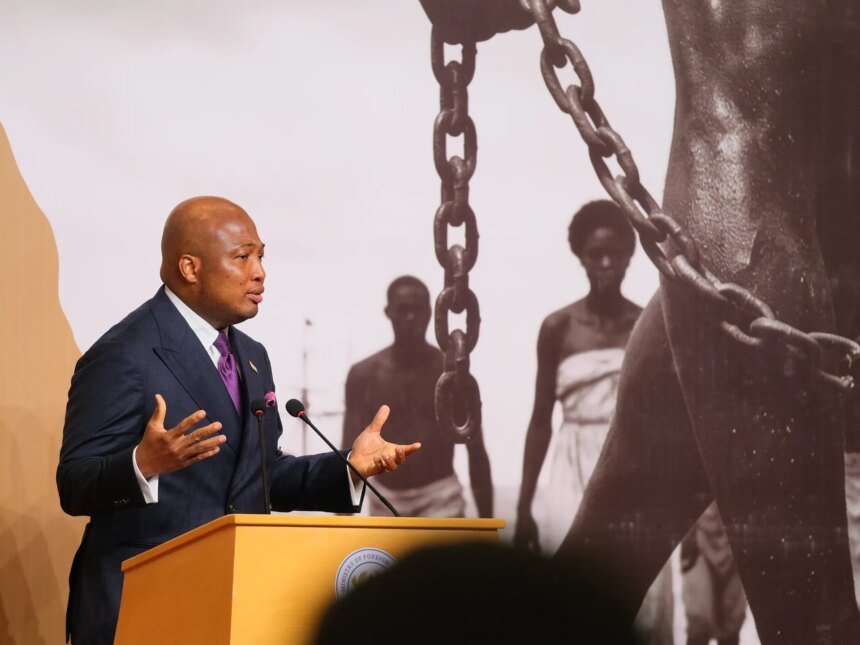
A high-level consultative conference on “next steps” for the United Nations resolution on trafficking in enslaved Africans began yesterday, Wednesday, in the Ghanaian capital, Accra, in an attempt to move the issue of reparations for slavery and colonialism from UN resolutions to concrete frameworks. The conference will continue for 3 days.
The conference is being held under the auspices of Ghanaian President John Dramani Mahama, in his capacity as “the champion of the African Union to advance the cause of justice and reparations,” who believes that “compensatory justice will not be granted to us, but rather, like political independence, it must be seized, pursued, and secured with determination and unity,” according to what was published by the conference’s official website.
The path of reparations reached a turning point last March, when the United Nations General Assembly adopted a resolution with a majority of 123 votes, the first resolution in the organization’s 80-year history devoted exclusively to slavery and the transatlantic slave trade.
The resolution described trafficking in enslaved Africans and racial slavery as “the most serious crime against humanity” and called for a good faith dialogue on reparative justice and the return of looted cultural property without compensation. The adoption of the resolution sparked widespread “international division and popular reaction.”

Beyond financial compensation
The organizers stressed that the issue of compensation is not limited to the financial dimension, but rather includes addressing the ongoing effects of slavery and colonialism, such as economic disparities and structural racism, in addition to restoring cultural monuments and official apologies.
The conference intends to establish three international committees: an advisory committee for reparative justice, an expert committee for the restoration of cultural relics, and a legal committee for reparative justice, in addition to an annual consultative forum aimed at maintaining political momentum and accountability, according to the summit’s official website.
The summit is attended by heads of state and government, including the President of Senegal, Bassero Diomai Faye, the President of Liberia, Joseph Boakai, the President of Namibia, Nitumbo Nandi Ndayetwah, and the Prime Minister of Barbados, Mia Mottley, along with the Chairman of the African Union Commission, Mahmoud Ali Yusuf, and representatives of UNESCO, the United Nations Development Programme, the Caribbean “CARICOM” group, and organizations from the African diaspora, according to the official website, which indicates the representation of more than 80 people. State. The Ghana Broadcasting Corporation announced that French President Emmanuel Macron will deliver a speech at the conference.
A geopolitical dimension
The stakes of the file go beyond its historical dimension to geopolitical dimensions, as the Ghanaian president links the issue of compensation to rebalancing Africa’s position in the international system. He had called for the continent to be given a permanent seat in the UN Security Council, considering the current arrangement to be “excessive and unfair,” in a call that has resonated since the late leader Nelson Mandela’s speech in 1995, according to the News Ghana website.
It is expected that the final document of the conference will constitute an additional input to the report of the Secretary-General of the United Nations scheduled to be submitted to the 82nd session of the General Assembly, while the translation of these frameworks into actual commitments remains subject to what comes after the summit.