Published 20.01

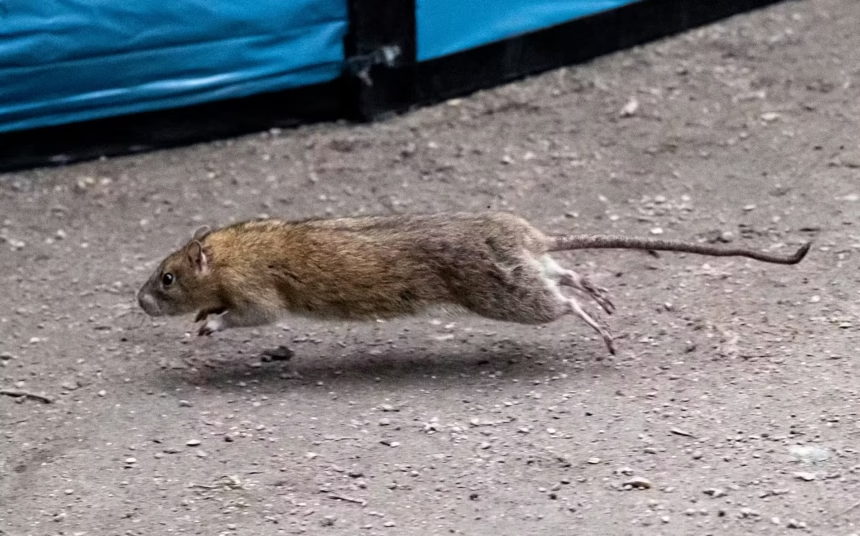
When brown rats and house mice spread into residential areas, researchers have tried to find out why rat poison does not bite them. The answer may be a mutation.
Despite effective means, pest controllers in the United States have reported that they are finding it increasingly difficult to exterminate rodents. Now researchers at Rutgers University have found a possible explanation.
They captured 147 house mice and 143 brown rats and found that 84 percent of the mice and 35 percent of the rats carried at least one mutation linked to resistance to the poison.
According to the researchers, the fact that house mice seem to adapt faster than rats may be due to the fact that mice are curious and more likely to eat unfamiliar food, including poison baits. Rats tend to be wary and suspicious of new objects.
The study is published in Pest Management Science.