Over the past four years, Elvira S. Nabiullina, the head of Russia’s central bank, has emerged as the linchpin of the country’s relative economic stability, viewed by many as a technocratic voice of reason navigating the challenges and chaos of a wartime economy facing severe Western sanctions.
So when she called in sick and skipped a high-profile economic panel in early June, a wave of anxiety rippled through Russia’s economic and political elite.
In a system where transparency is elusive, the rumor mill immediately went into overdrive. Some speculated that Ms. Nabiullina had strenuously opposed President Vladimir V. Putin’s moves to push the country onto total, irreversible war footing. Others claimed she had fallen from favor, speculating that the Kremlin had abruptly stripped the security detail from her Moscow home.
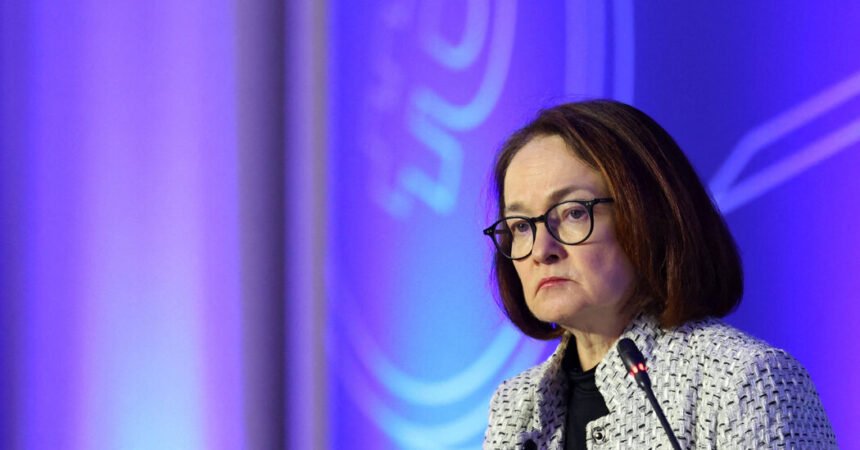
When Ms. Nabiullina finally re-emerged at a news conference on Friday after a public absence of more than two weeks, she did what she does best: She projected a veneer of calm. She announced the central bank was cutting the key interest rate to 14 percent from 14.25 percent, despite an economy overheated by war expenditures.
Dressed in a black jacket and coughing slightly, Ms. Nabiullina said little about the rumors surrounding her brief absence.
“I can only confirm that I had a cold and lost my voice for a while,” she said. “And the only thing I can say is to thank those who were sincerely concerned about my health.”
Ms. Nabiullina, who never mentions war as a reason that Russia’s expenditures have been ballooning over the past four years, tacitly admitted that the Kremlin had decided to spend more on the military than expected. That, in turn, had forced the central bank to adopt a stricter interest-rate policy.
“The contribution of fiscal policy to the expansion of the money supply remains elevated,” she said. “And given the revision of budget parameters, it will continue to be greater than we previously anticipated.”
The whirlwind surrounding her absence had raised a tense question among the Russian elite: Can a banker seen as a responsible steward of the national economy operate independently while under pressure from the Kremlin and its allies?
And, in a broader sense, can the semblance of relatively peaceful, prosperous life in Russia be sustained if the structural cracks widen and the war grinds relentlessly into another year?
“There is a clear sense that the situation is critical and severe, and that even the recent return to decent indicators is temporary and unsustainable,” said Yevgeny Nadorshin, an economist in Moscow who advises companies and banks. “The answers are essentially clear,” Mr. Nadorshin said. “But you actually have to gather your thoughts, articulate them and possess the strength and readiness to do so. And who is up for that?”
Early this year, the Russian government faced a dilemma: slash planned expenditures to cool down the overheating, or override the central bank’s moves to defend against inflation. According to Oleg V. Vyugin, whose former roles include first deputy finance minister and deputy governor of the central bank, the political mandate from the top ultimately overwhelmed fiscal guardrails.
“The choice has been made: to cut the interest rate and increase budget spending” by widening the budget deficit, said Mr. Vyugin, estimating that the budget would increase by about 15 percent over the 2026 plan. He noted that this deficit would need to be funded by “monetary means,” pushing inflation above the target this year and next.
“Elvira Nabiullina was against this maneuver, and it carries major consequences for markets that had been operating based on the previous plan,” Mr. Vyugin added in an interview. “That is where the nervousness comes from.”
From January through May, Russian federal budgetary expenditures increased by 17 percent over the same period a year before, according to the country’s Finance Ministry, reflecting the growing appetites of the war machine. The deficit has almost doubled, reaching almost $82 billion. The situation has become more urgent in some Russian regions. In one Siberian town, for instance, the local government began to turn off streetlights to save money.
To give the government more leeway, the lower house of the Russian Parliament passed a law last week allowing the Finance Ministry to increase the debt ceiling and state spending this year without lawmakers’ approval.
In 2025, Russia’s overall plan appeared to be different. For the first time since the full-scale invasion of Ukraine in 2022, Russia planned to cut defense expenditures in 2026 in real terms, signaling perhaps that Moscow was preparing for the war to come to an end. In June of last year, Mr. Putin said that Russia planned to “cut the defense expenses next year and the year after,” and during the next three years.
But the war went on, demanding more and more state money. According to Janis Kluge, an expert on Russian finances at the German Institute for International and Security Affairs in Berlin, the country’s military spending increased by 30 percent in the first quarter of this year alone.
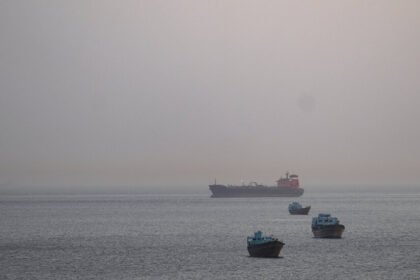
Higher oil prices resulting from the American-Israeli attack on Iran gave Russia, an oil producer, some temporary relief. But as tensions have eased in the Middle East, the price of Russian oil has already gone down by about a third from its peaks. And the benefit Russia received from oil prices was offset by a strong ruble and Ukrainian attacks against refineries and other energy infrastructure.
This situation put Ms. Nabiullina under more pressure. It is the central bank’s job to keep inflation under control without breaking the economy under the weight of high interest rates.
Mr. Putin added to the pressure. Last week, speaking at an economic meeting where Ms. Nabiullina and other central bank representatives were conspicuously absent, he said that because inflation had been going down, “We can expect a lower key interest rate and to be able to achieve other key indicators.” But according to Rosstat, Russia’s state statistics service, inflation accelerated again in the middle of June after a period of relative decline.
The comment at the meeting was a clear sign of which direction Mr. Putin wanted interest rates to go, and the latest example of the delicate path Ms. Nabiullina must navigate between Kremlin preferences and responsible supervision of the economy. Her term expires next June, and under law cannot be extended.
A leading Russian economist who had advised the government and requested anonymity to speak freely said that the country faced a difficult choice, but that Mr. Putin had a sort of illusion “that everything he does is always right.”