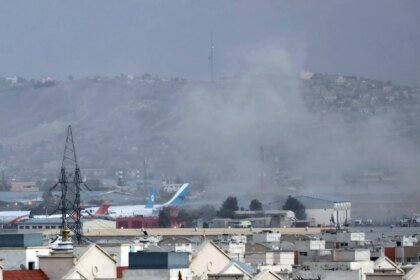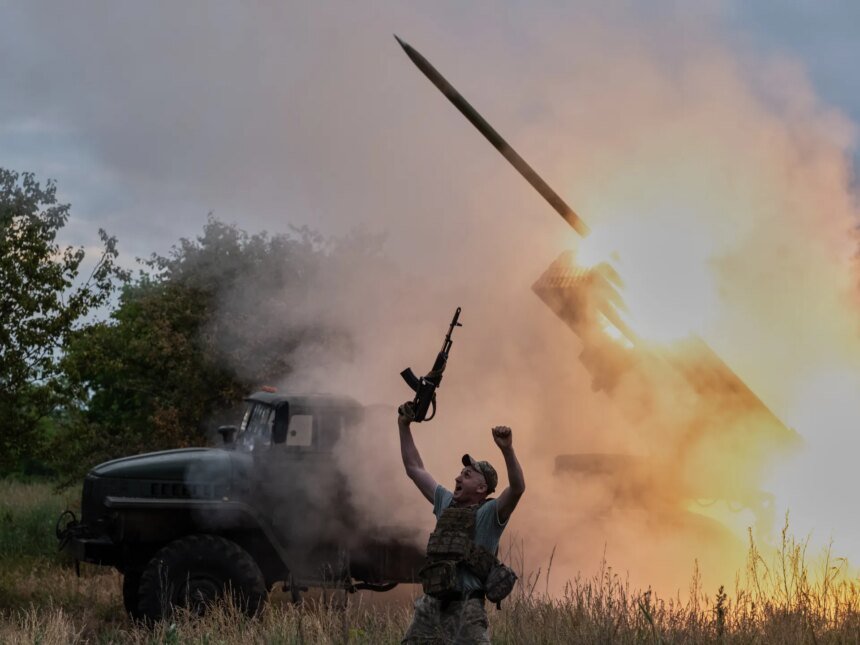
Since its start in February 2022, the Russian-Ukrainian war has not been this level of bloody intensity, nor has the military map extended to swallow both countries together. While Kiev’s drones infiltrate deep into Russian territory, targeting the ports of Krasnodar, the refineries of St. Petersburg, and the land bridge leading to the Crimean Peninsula, Moscow responds with the most ferocious waves of missile bombardment on Ukrainian infrastructure, targeting the suburbs of Chernobyl and Zaporozhye, and the power plants in Kiev, Dnipro, and Kharkiv.
In just one month, the number of Ukrainian civilian casualties jumped by 93% compared to the same period last year, with 274 dead and about 1,763 wounded, while the war toll exceeded 16,000 civilian deaths and 46,000 injured since the start of the war.
In the background of this escalation, the file for Ukraine’s accession to the European Union is progressing after the fall of the Hungarian veto, and successive summits are being held in London, Tallinn, and Evian with the participation of the leaders of Britain, France, Germany, and Ukrainian President Volodymyr Zelensky, while Washington is preoccupied with the war on Iran, and officially informs the Europeans of its intention to withdraw a third of its fighters from NATO operations on the European continent.
Messages between the capitals involved in this war are no longer written by the fire of marches and bombers; But they turned into political messages that were picked up by the radars of European capitals and Washington alike, even if the reaction and translation of what each message carried differed.
In a reading by analysts who spoke to Al Jazeera Net, one group of them believes that what is happening is the result of a Russian “inability” to resolve, which pushes the Kremlin to retaliate against the civilian infrastructure after faltering progress in the field, while the opposite group believes that the escalation is only a logical response to Kiev’s expansion in striking the Russian depths with long-range Western weapons, and it also comes within a broader path to reshaping the international system and drawing new borders for European security.
The two teams meet at one conclusion: the negotiating path is almost absent in the foreseeable future, Europe is advancing from the position of financier to the position of the first player, and Washington is retreating from the locomotive of the decision to a witness managing the file from afar through back channels.

Why escalation now?
Analysts’ readings converge on the fact that the recent escalation is not a sudden explosion as much as it is a natural result of the blockage of the negotiating path and the change in the balance on the ground.
Maximilian Hess, a researcher in the Eurasia Program at the Foreign Policy Research Institute, believes that the war is in a “hazy phase,” as everyone is busy arranging their next steps while awaiting what the balance of power will turn out to be.
Meanwhile, former Ukrainian diplomat Volodymyr Chumakov believes that the reasons for the current escalation are due to what he describes as “the complex of Russian inability” to achieve field and military achievement at Ukraine’s expense.
Chumakov added – in statements to Al Jazeera Net – that Russia is intensifying the bombing of cities because its army is facing difficulties in the face of the marching systems, and that Ukraine – according to his account – regained within one month a large part of what it lost in Zaporozhye, and liberated 65 square kilometers in one day in Donbass, while he describes targeting energy facilities as “revenge without military benefit.”
On the other hand, former Russian political analyst and diplomat Vyacheslav Matuzov offers an opposite reading, based on the fact that the war was essentially born to form a “new world order” and to stop NATO’s expansion to the east.
In his statements to Al Jazeera Net, Matuzov describes this escalation as a “direct response” to Ukrainian strikes that targeted civilians, including children in a school in Starobelsk, and to Kiev Bank expanding its targets inside the Russian interior with Western missiles and drones with a range of up to two thousand kilometers.
Matuzov relies on statements by Russian President Vladimir Putin in which he threatened to strike “decision-making centers” in Kiev, and on Foreign Minister Sergei Lavrov’s warning to Western embassies to leave the Ukrainian capital.
But Hess puts the two images in their context, noting that what the fronts are witnessing are “small tactical battles without decisive strategic breakthroughs for either side,” and that what is striking is the symbolic coincidence of the strikes with sensitive political moments: the strike on the oil port in St. Petersburg on the eve of Putin’s opening of his annual economic forum, and the strike on the Crimean Bridge prior to the London meeting; Indicating that Kiev has negotiating leverage in isolation from Washington.
Messages from fire in political language
What the field does not say explicitly, the escalation messages say clearly, and the essence of the analyzes intersects with the conclusion that the strikes are not only military actions, but rather carry political language directed at three axes: the direct opponent, Europe, and Washington.
From the Russian side, Matuzov clearly defines the destination of Moscow’s messages: the European countries that have adopted anti-Russian positions and are seeking to militarize their industries to become one of their economic engines, adding that Zelensky is nothing but “a tool that carries out Europe’s orders.”
In contrast, Hess summarizes the Ukrainian message as Kiev trying to show “that Ukraine remains committed to and interested in diplomacy, especially at a time when Putin shows no interest.
This intersects with Chumakov’s reading, who believes that “Putin cannot end the war because his exit from it represents a threat to the existing ruling system,” and that Russia, which signed the friendship agreement in 1997 and recognized Ukraine’s sovereignty over Crimea and Donbass, later put forward regional demands that were not included in its previous speech.

Why does negotiation not mature at the dialogue table?
The extended gap between military operations and attempts to bring the dialogue to a square on which it can be built later occupies a large area that the two parties have not been able to take a step towards bridging it or formulate a clear vision for negotiation.
Here, Hess and Chumakov put two main reasons behind this disparity:
- US President Donald Trump is preoccupied with the war on Iran and its continuation since February 2026.
- The nature of the Russian political system, which believes that the political cost of peace is high.
While the former Russian diplomat presents the opposite story: “Putin expressed more than once his willingness to meet with Zelensky, but the conditions are clear: that Ukraine does not join NATO, and that Donbass and Lugansk are guaranteed to be under Russian control.”
Between the two previous points of view, the negotiating table remains empty because each party links the moment of sitting with field gains. Ukraine believes that the continuation of drone strikes on refineries and on the Crimean land bridge will weaken the Russian negotiating position, while Moscow is betting that draining the Ukrainian infrastructure and striking the energy network will push Kiev to accept Russian conditions.

The European position…on silence to the role of heroism
Analysts’ reading of European positions starts from one field fact: the war is no longer far from the Union’s borders; The violation of the airspace of Latvia and Moldova by Russian marches, and the holding of the summit of the Nordic and Baltic countries in Tallinn with the participation of Zelensky, are all indications that European capitals are now acting as a direct party and not just a financier from afar.
In his statements to Al Jazeera, the researcher at the Foreign Policy Research Institute captures the fundamental shift in the financing equation, as “Ukraine now depends almost entirely on European financing after the American role declined by more than 90% since the previous administration,” and European leaders led the process of providing two huge loans to Kiev during the past 18 months that will enable it financially to get through next year.
Beyond the financing issue, the European step is gaining unprecedented strategic weight in terms of resuming Ukraine’s accession negotiations to the European Union after all member states announced their approval and overturned the Hungarian veto at the beginning of this month.
This is precisely what prompted the Russian diplomat to offer the opposite reading, as he considers that “Europe has become a hostile camp for Russia,” and that Moscow “sees the militarization of European industries as a direct threat to its national security.”
The American position between presence and absence
Analysts are almost unanimous – despite their different starting points – that Washington is no longer the locomotive in front of the West’s train standing behind Ukraine. On the one hand, Hess attributes the reasons for this to Trump’s preoccupation with the war against Iran, and dealing with the ongoing repercussions resulting from it. He expects “a possible slight American re-engagement next month,” and his preference is that the war against Ukraine does not occupy a top priority on Trump’s agenda now.
On the other hand, the Ukrainian diplomat puts Trump in a similar picture to Putin, as he believes that both of them “find themselves in a quagmire from which they cannot get out easily.”
On the other hand, Matuzov is inspired by a different American image. He believes that “there is a difference between the positions of the United States and Europe,” and that Washington is closer to appeasement, while the European Union remains “a major adversary to Russia’s national security.”
This distinction between the two different positions on both sides of the Atlantic partly coincides with previous analyzes that described Trump as viewing Russia as the stronger party in this war.
In conclusion: the Russian-Ukrainian war today stands on the threshold of a fundamental transformation: a volatile field in which no party achieves a decisive breakthrough, there is a negotiating path in which no voice is heard, Europe is advancing towards the position of the first player financially and politically, America is withdrawing tactically without officially giving up, and Russia continues to display force to stabilize its negotiating conditions.
Therefore, all indications indicate that the coming months will not witness a negotiating breakthrough or a military resolution, but rather there will continue to be a gradual expansion of the scope of the war and its tools, until a moment matures in which the international equations and positions change, so that we can sit at the table with bags full of serious papers to reach a decision that will stop the current escalation.