

Published On 9/7/2026
|
Last update: 13:00 (Mecca time)
The return of US military strikes on Iran, and the latter’s response by targeting what it considers to be US bases in the Gulf states, raises questions about whether this military escalation will lead to the return of all-out war, or is it just another round of skirmishes that coincide with the negotiations between Washington and Tehran.
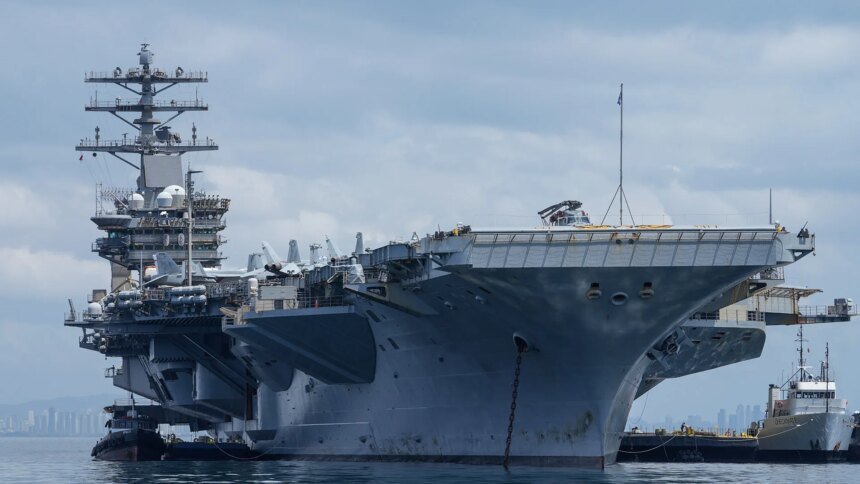
The US Central Command (Centcom) announced that it had completed another round of strikes against Iran, confirming the targeting of about 90 military targets, which included air defense systems and coastal surveillance assets, in addition to sites for storing missiles and drones, naval capabilities, and military services infrastructure along the Iranian coast.
She added, “The strikes came to make Iran pay a heavy price for violating the ceasefire by targeting 3 commercial ships in the Strait of Hormuz.”
For its part, the Iranian Revolutionary Guard announced the targeting of what it considered the important infrastructure and facilities of the Arifjan and Ali Al-Salem bases in Kuwait, and the Juffair and Sheikh Issa bases in Bahrain. The Revolutionary Guard warned the US Army that “if any attack is repeated, our overwhelming responses will expand to include other US bases in the region.”
The American and Iranian sides are exchanging accusations of violating the memorandum of understanding signed between them, which US President Donald Trump said had “ended” in light of the current atmosphere of tension between the two parties.
An upward trend
In a military reading of the American strikes and Washington’s messages behind them, the military and strategic expert, Colonel Nidal Abu Zeid, says that the strikes launched the day before yesterday hit 80 targets and were carried out with 4 planes and in 4 hours.
But what is striking about the strikes launched yesterday is that they affected 90 military targets and the operation took 6 hours, which means – Colonel Abu Zeid continues – that there is an upward curve in the form of the American military strikes, and that there is a convergence in time in the operation and a single geographical scope.
It is clear that the American side does not want “conventional military operations” like those that were before the ceasefire, but rather focuses – as Colonel Abu Zaid said – on what is described as “comfortable hunting”, a tactic that focuses on quality rather than quantity, and whose cost bill is not high.
Abu Zeid confirms that the American side called the recent escalation “attacks” and not “an operation,” because considering it an operation requires the US Department of War to secure congressional approval first before proceeding with the escalation, and this is what the American administration is avoiding at the present time.
From the nature of the high-value targets that the American side focused on, it is clear that it seeks to strip the Revolutionary Guard of its naval capabilities, which it uses to disrupt the movement of ships in the Strait of Hormuz.
According to Colonel Abu Zeid’s reading, the United States does not intend to return to the previous traditional air and naval operations, because these operations cost it greatly politically and financially, and it does not want to slide into a direct confrontation with Iran.
On the other hand, the Iranian side, in turn, does not want to return to all-out war, but seeks to show equality with Washington, focusing on the same traditional goals and using the same method and means.
Colonel Abu Zeid points out that the US Central Command statement yesterday confirmed that the attack on Iran was carried out by US naval vessels and with precise missiles, but Iran chooses to strike Kuwait and Bahrain instead of striking US vessels in the region.
It is believed that the Iranian side knows that the cost bill will be high if it targets American military assets, and therefore it goes to the easier option, which is to strike the Gulf countries.
Negotiate with fire
From the point of view of the military and strategic expert, Brigadier General Elias Hanna, the American strikes this time expanded in scope, reaching very important areas, such as the city of Bushehr, where the Asalawiyah station is located, which provides 70% of the natural gas for electricity production.
He pointed out that the Iranian response depends on controlling the Strait of Hormuz and on horizontal escalation against the countries of the region, which is a very dangerous matter, according to the military and strategic expert.
He explained that the destruction of the Revolutionary Guards military system in the Strait of Hormuz may allow navigation to return to the Strait, anticipating the return of the US naval blockade on Iran if the US President wants to escalate.
He also saw, in a previous analysis on Al Jazeera, about the current military developments in the region, that the American military system remains ready for the worst scenario.
Although it is preferable For the return of war, the military and strategic expert says that the American and Iranian sides are playing in the gray zone, and will not go to attack the idea. Memorandum of Understanding signed between the two sides. He says that the two countries are negotiating under fire, due to the ambiguity surrounding the terms of the memorandum of understanding, pointing out that the Strait of Hormuz is the scene of this negotiation by fire.