

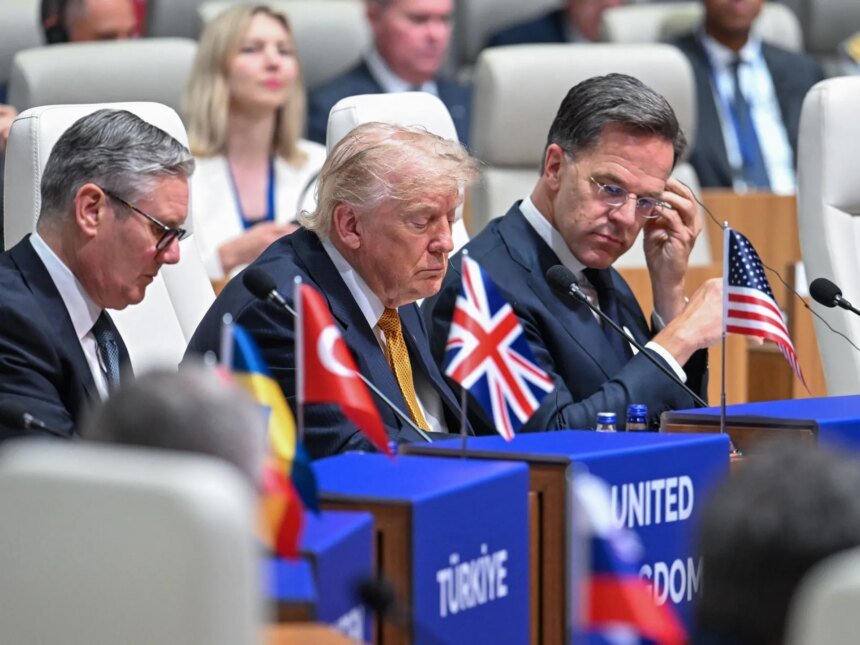
The European member states of the North Atlantic Treaty Organization (NATO) participated in the alliance’s summit in the Turkish capital, Ankara, in light of widespread pressure from US President Donald Trump to increase defense expenditures, and sharp criticism on his part of these countries’ position on the war against Iran.
Trump calls on his allies in Europe to increase military spending to reach 5% of each country’s gross domestic product by 2035, with the aim of reducing its dependence on the United States for its defense.
Read also
list of 4 itemsend of list
The matter is not limited to Trump, as Ukrainian President Volodymyr Zelensky, in turn, makes the same request to his supporters among European leaders, and seeks to obtain more weapons and money so that he can continue the war with Russia that began in 2022, and there is no quick end in sight.
In a speech before the Defense Industries Forum in Ankara, Zelensky called on NATO to provide more air defense systems to his country, explaining that “this is our top priority currently, and we are able to do everything else ourselves.”
Zelensky indicated, according to what was reported by the Associated Press, that Europe needs to “build a strong defense against Russian ballistic missiles,” explaining that the war in the Middle East highlighted the importance of this matter.
With Trump’s pressure to raise defense expenditures on the one hand, and Zelensky’s pressure to increase financial and military support for Kiev on the other hand, European leaders face difficult choices to provide the necessary funding for their country’s armies.
The matter appears difficult given that Europe is still far from achieving military self-sufficiency, and lacks the ability to produce modern combat tools, such as drones and advanced air defense systems, according to Bloomberg, which means it will need large military expenditures for many years to come.
NATO Secretary General Mark Rutte revealed military deals worth $12 billion during a defense industries forum in Ankara. These deals include the purchase of drones, reconnaissance aircraft, and air defense systems, in an effort to convince Trump that Europe is responding to his demands to increase military spending.

Impact of increased defense expenditures
The Economist magazine indicates that European NATO member states are seeking to raise defense expenditures to 3.5% of GDP, in addition to 1.5% for defense infrastructure, which means a total of 5% of their output, as Trump wants.
These expenses are mainly aimed at purchasing new weapons, including drones, air defense systems, and tanks, so that European countries will be able to confront a Russian attack, perhaps without support from the United States.
The Economist explains that this increase in military expenditures has an impact on European economies from two aspects. The first is that it will lead to increased production in European defense industries and the creation of more jobs in them, which is the positive side of these expenditures.
The second aspect, according to The Economist, is the negative aspect, which is that providing the necessary funds for military expenditures requires more public loans, increasing taxes, reducing spending on social welfare programs, or for governments to resort to a combination of these.
But the financial conditions of Europe’s largest military powers show that many of them, including Britain and France, may not be able to raise military expenditures in the way Trump wants.

Different situations
European countries differ in their positions and their ability to meet the required increase in military expenditures, so they can be divided into 3 groups, according to The Economist, as follows:
- First groupIt includes countries that are on the path to achieving the goal of increasing military spending to the required level. These are countries that see themselves as facing a greater threat than Russia, and they include Poland and the Baltic countries. These countries have provided the necessary funds for armies, either by sharply reducing expenditures on social services, as Finland did, or by increasing taxes, as Lithuania did.
Fitch Ratings estimates show that 11 European countries have financed at least half of the increase in their defense expenditures by raising taxes or reducing spending on social welfare programs.
In this context, an opinion poll conducted by the European Council on Foreign Relations, an independent research center, showed that the majority of citizens of these countries support reducing social expenditures to finance armies, as they feel threatened by Russia, and therefore the governments’ task was easier to reduce these expenditures and convince voters of them. - The second groupCountries that have a low level of public debt, and therefore their government can borrow more money without major risks, including Germany, Denmark, and Sweden. These countries aim to raise military expenditures to about 3.7% of GDP by 2030.
- The third groupThey are countries in a more difficult position to achieve the required increase in defense expenditures, and they include Britain and France, the two nuclear powers in Europe, in addition to Italy, Spain, and Portugal.
The problem in these countries is the significant increase in government debt and interest rates, in a way that limits the government’s ability to obtain new loans.

The most prominent example of the difficulty of increasing European defense expenditures was in Britain, where former Defense Minister John Healey resigned from his position in protest against the refusal to increase military expenditures. Prime Minister Keir Starmer was accused of not doing what was necessary to preserve the country’s security in the face of existing challenges, especially from Russia, which increased pressure on Starmer until he announced his resignation from his position.
In this context, the Office for Budget Responsibility in Britain, an independent research body, stated that under current policies, British public debt would be heading towards an “unsustainable and ever-rising path” in almost all scenarios, according to the Financial Times.
This situation means that the next British Prime Minister, Andy Burnham, will face the same financial difficulties that Starmer faced, and he did not succeed in overcoming them, and the growth of the British economy remained very slow, which in turn limits the growth of public revenues that could be used to finance the increase in defense expenditures.
The matter is no less difficult in France, which announced that it seeks to raise defense expenditures by 2.5% by 2030, which is half the percentage that Trump wants.
Financing this increase in military expenditures remains a problem in France, as it requires a “large trade-off,” according to what The Economist quoted from a memo by the French Court of Accounts, between defense expenditures on the one hand, and reducing social expenditures or raising taxes on the other.
This represents a major challenge for the government of Sebastien Le Cornu, which faced great difficulty in approving France’s latest general budget, while reducing its deficit, and it will not be easy for it to reduce expenditures on social services or increase taxes.

Political difficulties
As for Spain, it originally refused to commit to a 5% increase in defense expenditures as Trump wanted during the NATO conference last year, and said that it had set a ceiling for defense expenditures not to exceed 2.1% of the gross domestic product.
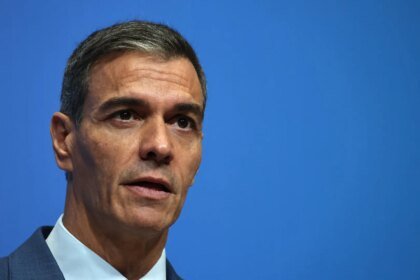
The dispute between Trump and Spanish Prime Minister Pedro Sanchez worsened, especially after his criticism of the US war on Iran, until Trump announced on Wednesday the severing of trade relations with it.
Similar to Spain, Portugal spends about 2% of its gross domestic product on defense, and has not explicitly declared its refusal to adhere to the rate set by Trump, but the government in Lisbon remains without a clear plan to raise military expenditures.
As for Italy, it changed the method of calculating its defense expenditures to reach 2% of GDP, according to the Economist, while the real increase in defense expenditures was 7%, and the rest was “manipulation of accounts,” according to the Economist’s description.
In this context, disagreement remains between political parties in several European countries, including France, Spain, Italy, and Britain, over the required large increase in military expenditures.
The socialist parties refuse to make a significant reduction in social welfare expenditures to finance the increase in defense expenditures, and fear the wrath of their electoral bases if they retract their promises to them to provide them with a long list of support and aid programmes.
On the other hand, some right-wing parties in Europe believe that Russia does not pose a threat to their country, and that Washington bears responsibility for the outbreak of this war during the rule of former President Joe Biden, which is what Trump always repeats.
It is clear that most of the large European countries are not on the path that enables them to raise their military expenditures in the way that Trump wants, and the internal disputes in Europe over ways to finance military spending will remain for a long time, and it will not be easy for European leaders to overcome them.
Source: Economist + Bloomberg + Financial Times