

Published On 9/7/2026
|
Last update: 17:46 (Mecca time)
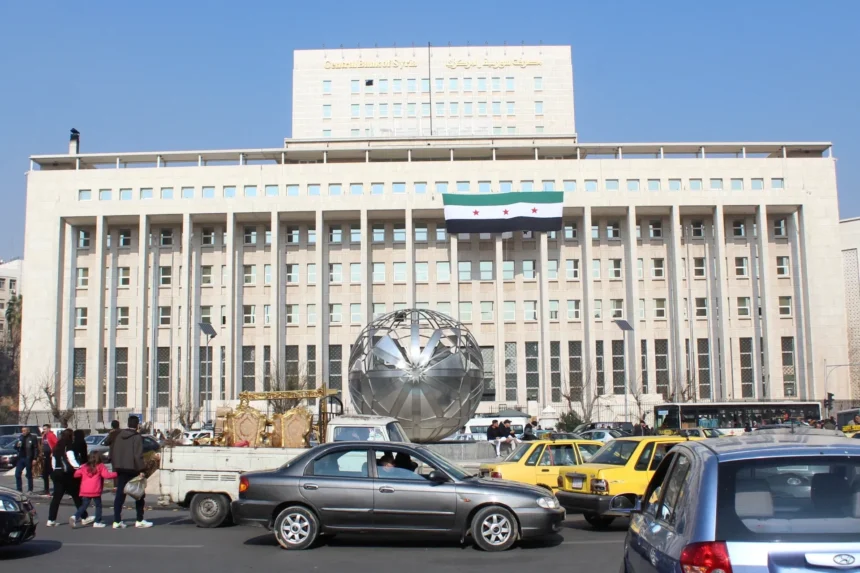
The exchange rate of the Syrian pound stabilized during this July at around 13,000 pounds against the US dollar, after witnessing a state of sharp fluctuation during last June, when it reached 14,500 pounds per dollar in the middle of the month.
The problem of the rise and fall of the price within a few weeks raises questions about the reasons for the turmoil in the price of the local currency, at a time when the Central Bank is moving to enhance reliance on it in various Syrian markets.
Improvement or new gap?
Economic academic Dr. Ziad Ayoub Arabsh believes that this scene “does not reflect a uniform improvement,” but rather reveals a widening gap between the official and parallel prices, as the lira has improved in the parallel market due to several factors, the most important of which is the pricing of oil derivatives exclusively in the Syrian pound at all stations, which created a huge demand for the national currency and forced many to exchange dollars to secure daily living requirements.
Arbash added to “Syria Now” that the Central Bank’s circular about two weeks ago, with the approaching end of the deadline for exchanging the old currency, prompted large amounts of previously stored financial masses to go out into circulation and increase the supply of the lira.
The visit of the new governor of the Central Bank to the city of Idlib, and his talk about a plan to gradually withdraw the Turkish lira from the markets, in addition to the recent opening of a branch of the bank in Raqqa, also contributed to integrating parts of the economy of the eastern region with the national economy, which was reflected positively on the price of the lira, according to Arabsh.
Other factors, according to the Syrian academic, include trade policy measures aimed at combating fictitious imports, which reduced the demand for the dollar in import operations, in addition to exchanging the value of the wheat crop in Syrian pounds. Arbash did not ignore the role of the decline in global energy prices, which reduced the import bill.
Market ‘sensitive to events’
For his part, economic researcher Molham Al-Jazmati warns against treating the recent improvement in the value of the lira as an indicator of economic recovery, considering that it is linked to temporary monetary and administrative measures, such as the process of replacing the old currency with the new, tightening dealing with the new currency, adjusting the official price, and allowing more flexibility in receiving remittances.
He believes that these measures “may temporarily increase demand for the new lira and reduce speculation in the short term, but they do not necessarily mean that the economy has begun to produce more dollars, or that exports have increased, or that foreign reserves have become sufficient to defend a specific exchange rate.”
Al-Jazmati points out to “Syria Now” that the Syrian market today is “very sensitive to events, as any security tension, protests, rumors, or change in people’s expectations towards the government and the central bank can quickly be reflected in the demand for the dollar.” He attributes this to “chronic weakness of confidence, a high degree of dependence on imports, and the failure of local production and exports to recover sufficiently yet.”
Incomplete monetary policy
Al-Jazmati concludes that the current fluctuation in the lira’s exchange rate is the result of two interconnected factors: a monetary policy whose tools are not yet complete, and a highly sensitive political, security, and economic environment.
For her part, the economic expert and former Syrian Minister of Economy, Lamia Assi, rules out attributing the resulting fluctuation to clear monetary or economic policies, stressing that “the issue is complex and multi-linked to the gross domestic product and its structure, exports and imports, and other economic and political indicators that cannot be separated from each other.”
Assi explains to “Syria Now” that despite the central bank’s primary and direct role through monetary tools that affect the exchange rate, such as the interest rate, controlling the money supply and selling foreign currency reserves, the situation in Syria has different characteristics, the most notable of which is “mainly weak foreign exchange reserves.”
Fixing the exchange rate?
In her speech, Assi ruled out “the Syrian government’s ability to fix the exchange rate through an administrative decision,” noting that this requires capabilities to meet the market’s needs for foreign currencies necessary for import operations, which is not available in light of insufficient foreign currency reserves.
She pointed out that Lebanon’s previous experience in stabilizing the exchange rate was different, as it was based on a strong banking system that attracted deposits from all countries, but she stressed that “any country today cannot stabilize the exchange rate of its national currency except by possessing a strong banking system and reserves that cover imports, in addition to sufficient exports to refinance those reserves.”
The researcher Al-Jazmati agrees with her opinion, explaining that the stabilization is not only an advertising decision, but rather requires sufficient foreign reserves, the ability to sell dollars when needed, financial discipline, confidence in the announced price, and the ability to prevent the return of the black market.
What are the scenarios for the lira?
The change in the lira’s exchange rate raises questions about the possibility of the price improving or declining in the near future. Arabsh expresses his hope that the first scenario will come true, but he points out the absence of internal and regional economic indicators for this, with the exception of the continued decline in oil prices linked to the outcome of the US-Iranian agreement.
Symptoms do not treat the roots
In turn, Lamia Assi warned that paying attention to the exchange rate alone is a wrong approach, because it is merely “one of the symptoms and not the root of the problem,” stressing that sustainable treatment requires attention to the productive aspects that contribute to creating sustainable economic cycles, which cannot be achieved “in light of the policy of withholding liquidity used by the Central Bank,” which she believes contributes to the stagnation of economic activities and the stifling of small and medium enterprises.
While Al-Jazmati believes that the priority “is not choosing between reserves, production, or unifying the market, but rather arranging these priorities within one path.” In the short term, he considers that “the most important thing is to unify the exchange market as much as possible and reduce the gap between the official rate and the market, because the presence of two prices creates speculation and weakens confidence.”
In parallel, it emphasizes building usable foreign reserves, and not just announcing investment commitments or promises. As for the medium term, Al-Jazmati confirms that the stability of the lira remains dependent on local production, real exports, and a gradual return to external financing and actual investment.