

Published On 9/7/2026
|
Last update: 17:43 (Mecca time)
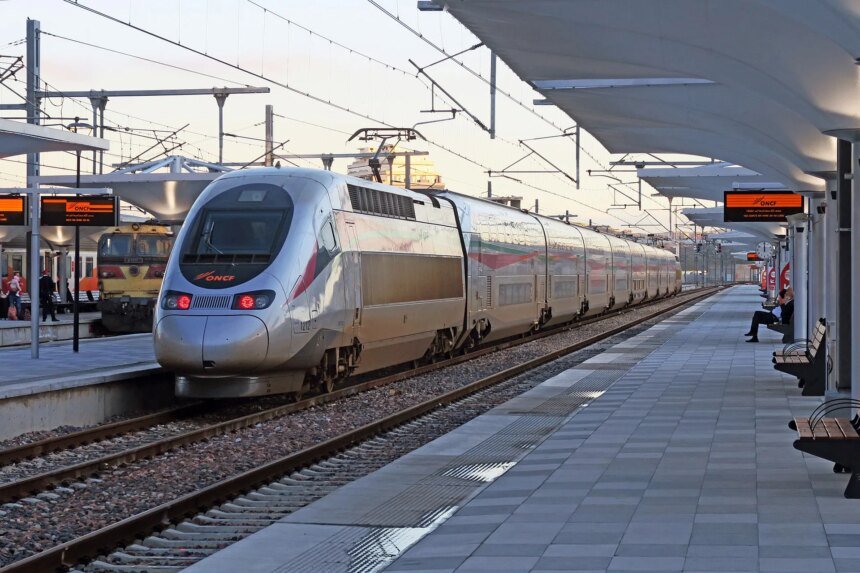
Today, Thursday, the African Development Bank agreed to grant Morocco a loan worth 205 million euros (about 234 million dollars), to support the project to expand the high-speed railway network and develop the infrastructure of one of the busiest transport corridors in the Kingdom, as part of preparations for hosting the 2030 World Cup.
The bank said, in a statement, that the loan aims to “enhance the capacity and operational performance on the railway line between Kenitra and Marrakesh, which accounts for a large share of passenger and freight traffic in Morocco.”
Read also
list of 4 itemsend of list
The funding comes as part of a broader Moroccan plan to invest about $10 billion in developing railway networks between and within cities, including the construction of a high-speed line reaching the city of Marrakesh, in preparation for hosting the 2030 World Cup finals in partnership with Spain and Portugal.
The new line extends for a distance of 430 kilometers, starting from Kenitra on the Atlantic coast, passing through Rabat and Casablanca, all the way to Marrakesh, thus enhancing the connection between the most important economic and tourist centers in the country.

10 billion dollars
According to official data issued by the National Railways Office and the Ministry of Transport and Logistics, the total cost of the project is about 96 billion dirhams (about 9.6 billion dollars), while the operational speed of the line will reach 320 kilometers per hour.
The project includes the construction of a 3-kilometre-long tunnel under the capital, Rabat, and a direct link to the Grand Stadium in Benslimane and Mohammed V International Airport in Casablanca, as part of the infrastructure development plan for the 2030 World Cup.
It is expected that the new line will contribute to reducing the travel time between Tangier and Marrakesh to two hours and 40 minutes instead of five hours, while the travel time between Rabat and Mohammed V Airport will decrease to about 35 minutes.
In parallel, the Kingdom is continuing to modernize its railway fleet through deals to acquire 168 new trains, including high-speed trains, with the requirement of technology transfer and raising the rate of local industrial integration to more than 40%, in a step aimed at strengthening the local railway industry and expanding its operational capabilities.