

Published On 5/7/2026
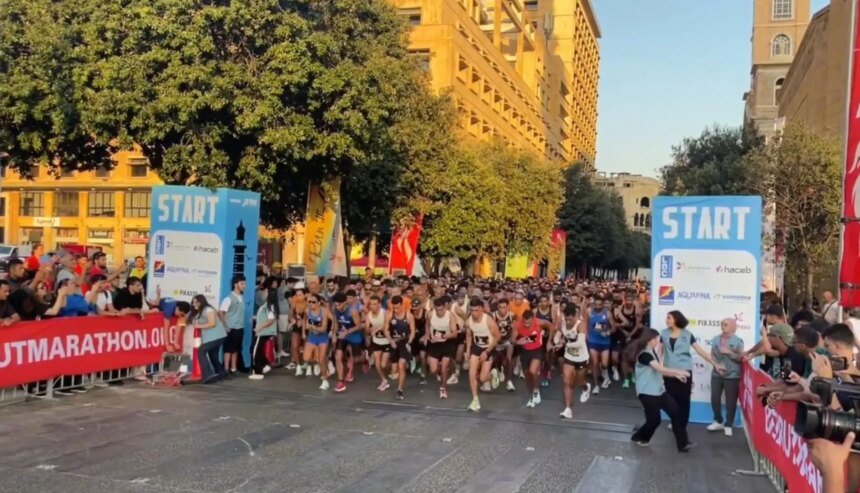
The activities of the 23rd edition of the Beirut Marathon began today, Sunday, in the first major sporting event held after the war, with the participation of more than 1,850 runners, male and female, who came from various Lebanese regions, in a scene that carried messages that go beyond sports competition to confirm the desire of the Lebanese to restore life, revive tourism and economic activity, and restore the psychological and social effects left by the war.
Minister of Social Affairs, Haneen Al-Sayed, said that the Beirut Marathon is one of the most prominent annual activities in Lebanon, noting that its true value lies in its ability to bring together Lebanese from different regions and sects in one place, far from divisions, and under a common goal that brings them together.
The Minister said that she was one day ago in the cities of Nabatieh and Tyre, in the south of the country, where she saw the extent of the destruction and human losses caused by the war, stressing that holding events of this kind gives the Lebanese people the motivation to continue and confirms that their human ties are stronger than the effects of the war, adding that sport represents an essential factor in enhancing mental and physical health, and praising the efforts of the marathon organizers in bringing the Lebanese together again.
In response to a question about the race being the first marathon activity after the war, Haneen Al-Sayyed considered that the government supports all initiatives that unite the Lebanese and push them to persevere, noting the participation of more than a thousand young men and women in the event, and stressing that youth solidarity represents a basic foundation for the continuation of such events year after year.
From the heart of the capital, one of the race organizers said that Beirut, which had cried a lot over the past months and had suffered through years of security and economic crises and displacement, opened its arms again to its people coming from various Lebanese regions, stressing that every runner participating in the race carries a cause represented by love for the city and homeland and hope for the future.
He added that the number carried by each participant is not just a competition number, but rather represents an ambassador of love and peace, explaining that every step taken by the runners means restoring Beirut to some of its health.
He stressed that this message has accompanied the marathon since its launch in 2003, and is based on the fact that sport remains the most important means of bringing people together, pointing out that participants came from the far south of Lebanon after leaving their homes at three in the morning to reach the starting line, as evidence of their commitment to participating despite the circumstances.
The presence of the participants coming from southern Lebanon was one of the most prominent scenes of the race, as one of them said that the people of the south, despite the destruction of homes and loss of lives they were exposed to, still cling to the will to live, stressing that their participation in the race is a message that the Lebanese are “students of life, not students of death.”
Facing psychological crises
Another participant believed that the difficult circumstances that followed the war make such events more important, because they give people an opportunity to confront their psychological crises as they face race distances, explaining that every runner does not only seek to finish ten kilometers, but also tries to overcome the worries and effects left by the war that he carries inside him.
The artistic community was also present at the event, as one of the participants from the artistic community confirmed that the basic message of the marathon is that the Lebanese are still alive and clinging to life regardless of the challenges, noting the participation of a large number of artists and musicians alongside runners to confirm that the various components of society have come together to declare adherence to life.
In turn, a number of participating young people stressed that sports activities have become a means to reunite the Lebanese after the war, considering that sports give society an opportunity to forget part of the tragedies and build a new, more cohesive generation. It also helps promote a healthy lifestyle and consolidate the idea that society cannot rise if it remains divided.
Other participants stressed that the message they wanted to convey through the race was that the Lebanese people love life and wars will not prevent them from continuing their activities and holding their events, expressing their hope that the country will witness better days and that the south will regain its health and be reconstructed in a stronger way.
The scene looked like more than a sports race; The streets of Beirut turned into a unifying space that carried messages of recovery and unity, at a time when Lebanon seeks to restore its tourism and economic activity and prove that life is capable of returning even after the harshest wars.