

Published On 7/3/2026
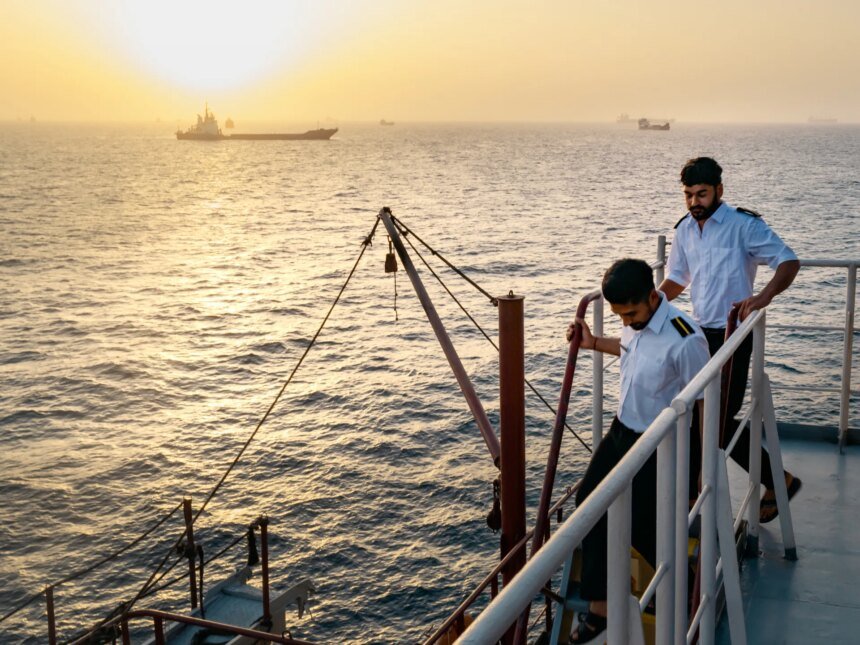
Thousands of sailors are racing against time to exit the Strait of Hormuz, at a time when the International Maritime Organization continues its efforts to evacuate about 11,000 of them, after their commercial ships turned into “floating prisons” lacking food, potable water, and medicines.
According to data published by the organization on its website, the sailors’ evacuation plan has so far resulted in the evacuation of 136 ships and the rescue of about 2,900 sailors, some of whom were under siege for more than four months, while about 8,000 sailors remained stranded in the water.
On June 23, the organization began implementing the evacuation plan over a period of three days about a week after the signing of the memorandum of understanding between the United States and Iran to stop the war that broke out on February 28, and prompted Tehran to close the Strait of Hormuz.

The stranded sailors are impatiently waiting for an opportunity to rescue them, but the plan to evacuate them has been temporarily halted until the necessary security guarantees are obtained from all parties, according to what Bloomberg reported, citing International Maritime Organization spokeswoman Natasha Brown.
The suspension of the International Maritime Organization’s plan to evacuate stranded ships comes after a ship was attacked in the Gulf of Oman and crossed the Strait of Hormuz. It did not sail within the evacuation framework organized by the organization and published its details for all stranded ships on its website.
The US-Iranian memorandum of understanding signed on June 17 revived optimism about the return of shipping traffic in the Strait of Hormuz for a period of 60 days, pending the completion of negotiations between the two parties on the nuclear file, which may allow for a final agreement to be reached.
The stranded sailors are pinning their hopes on the current negotiations to end the crisis, although the road to concluding a final agreement to stop the war is still long, despite progress in indirect talks between the United States and Iran through Qatari and Pakistani mediators in Doha.
Sailors who have spent at least more than three months in harsh conditions fear that they will be forced to stay for longer periods away from their families, which may increase their psychological suffering, at a time when they depend on foreign aid to obtain fuel, food, and medical supplies.

In this context, Bloomberg reported, citing some sailors stranded in the Gulf waters, that while they were stranded as a result of the war, they were forced to abstain from consuming food and water, for fear of their inability to resupply and the difficulty of aid reaching them.
The crisis does not stop at the limits of austerity in eating and drinking, but rather it is exacerbated with noticeable violations in respect for the rights of sailors on board ships owned by small companies, where sailors find themselves deprived of basic rights, according to Bloomberg Agency.
The agency also reports that many of the stranded sailors’ work contracts are about to expire, which imposes the need to replace them with new crews. However, the disruption of navigation traffic and the difficulty of rotation operations in light of the current security situation complicate this procedure.

On the other hand, some countries in the Gulf, including Iraq and Kuwait, stopped issuing visas for short periods as the security situation deteriorated, which prevented sailors wishing to disembark to return home from leaving their ships, according to Bloomberg.
These difficulties are exacerbated in light of fears of renewed fighting, after the conflict resulted in the deaths of at least 14 sailors and the attacks on more than 40 commercial ships, according to what the head of the International Maritime Organization, Arsenio Dominguez, confirmed in a statement published by the organization.