

Published On 7/3/2026
Nearly 250 years after its independence, the United States still sits at the top of the global economy, innovation, and military superiority, but the gap that separated it from the rest of the major powers is gradually narrowing.
According to an analysis conducted by the British newspaper The Economist on the occasion of the 250th anniversary of the founding of the United States, the country has not entered a stage of comprehensive decline as some politicians claim, but it has moved to a new reality in which it has become less dominant in the global economy, despite retaining the greatest elements of economic, military and technological power.
The newspaper points out that the distinction between “power” and “hegemony” has become necessary to understand the current position of the United States. It is still stronger than ever in terms of the size of its economy, military capabilities, and technical leadership, but the rise of other economies, most notably China, has made this power less unique compared to what it was after World War II.
Economy: Leadership continues and the gap is shrinking
The United States remains the largest economy in the world according to current exchange rates, with its gross domestic product reaching about 32.4 trillion dollars in 2025, about 55% ahead of the Chinese economy. It is also the largest producer of crude oil and natural gas, and leads the race in generative artificial intelligence, while the dollar remains the most widely used currency in international trade and about half of cross-border payments.

Also, 5 of the 10 largest companies in the world have left the United States over the past four decades, 4 of which were founded or co-founded by immigrants, according to The Economist.
But this status no longer means the hegemony that the world knew in the middle of the last century. China has become the world’s largest economy when calculating purchasing power parity, and has surpassed the United States in the volume of industrial production and commodity exports, while the dollar’s share of global reserves has declined to about 57% after decades of gradual decline.
The Economist believes that this transformation reflects the success of the global economic system led by Washington after World War II in enabling other economies to grow, and not necessarily an absolute decline in American capabilities.
Military superiority…increasing competition
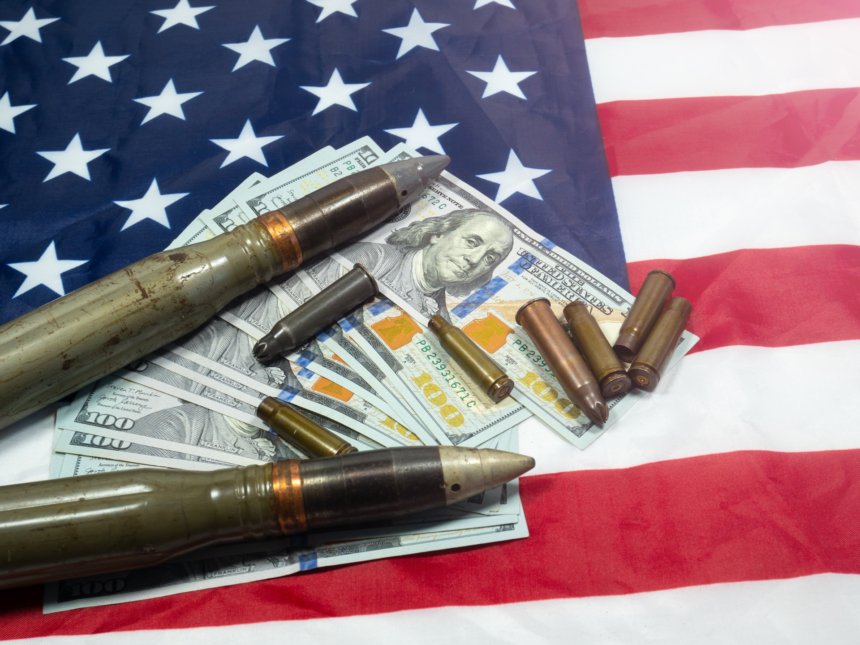
On the military front, the United States still spends more on defense than any other country, and possesses the most advanced military technology and the largest fleet of aircraft carriers, as well as an extensive network of military alliances that it has built over the past decades. However, the Economist points out that recent wars, from Iraq and Afghanistan to the recent tensions in the Middle East, have shown that military superiority alone is not enough to achieve political goals or protect economic interests.
In technology, American universities and their companies still lead many areas of innovation, but China is rapidly closing the gap. Its spending on research and development has exceeded its American counterpart, and Chinese researchers have now published more than a third of the world’s leading scientific research, while the share of American universities has declined in international rankings, and thousands of federal research projects have been subjected to freezing or cancellation during President Donald Trump’s second term, according to the report.
The newspaper adds that tightening immigration policies represents another challenge, as immigration has for decades been one of the most important sources of American economic strength by attracting talent and entrepreneurs, while opinion polls indicate a decline in the attractiveness of the United States as a preferred destination for immigrants compared to what it was less than two decades ago.

Continuing power and declining dominance
The Economist concludes that talk of “America’s decline” is not supported by numbers so much as by relative shifts in the global balance of power. The United States is still the richest and most innovative major economy and has the greatest military influence, but the expansion of competing economies, most notably China, has narrowed the gap that made it almost absolutely dominant during the decades following World War II.
Thus, the challenge facing Washington is no longer just maintaining the position of first power, but rather managing a world in which the centers of economic and technological influence are more widely distributed, at a time when investment decisions in scientific research, immigration, innovation, and international alliances will determine whether the United States will succeed in maintaining its superiority during the coming decades, or whether its relative dominance will continue to decline despite its continued absolute power.