
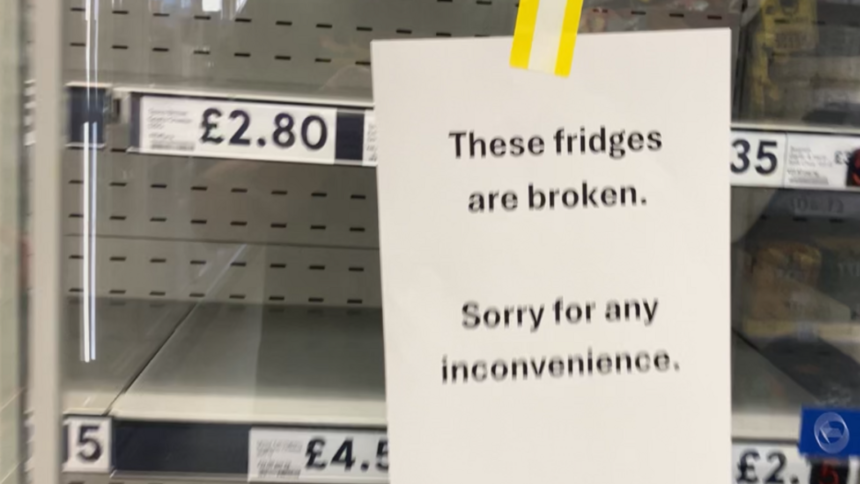

Broken fridges in a Somerset supermarket were photographed when temperatures soared over 36C
Broken fridges in a Somerset supermarket were photographed when temperatures soared over 36C
As Britain braces itself for another hot week, experts are warning that many fridges in UK homes and supermarkets are unable to cope with the sort of record-breaking temperatures we have been experiencing.
Bristol-based refrigeration expert Dr Alan Foster said the appliances were “designed decades ago in a much cooler world”.
Fridges are typically designed to operate in air temperatures up to about 32C. When temperatures rise above that – as they did last week and may again next week – they can struggle to stay cool or fail completely.
Shoppers in Somerset and Bristol reported supermarket fridges switched off and empty, while engineers in Wiltshire reported record call-outs to home fridges that have “given up the ghost”.
As the Met Office warns that heatwaves are becoming more common in the UK, the question is whether the nation’s fridges can keep up.
More from Bristol
Festival for women creatives launches in beauty spot
CPS considering charges against MP after rape arrest
Identical twin dies weeks after setting up leukaemia fundraiser
Why do fridges struggle in hot weather?
In a testing lab in Lower Langford, Somerset, Foster runs experiments to see how fridges cope with rising temperatures.
Inside a climate-controlled chamber, a standard fridge is fitted with sensors and filled with gel blocks to measure how evenly it cools.
“We can test the temperature across different parts of the fridge,” he explained. Crucially, they can also make the room warmer or cooler, to see how the fridge survives in a warming world.
His team at Refrigeration Developments and Testing, (RD&T) work for many of the big retailers, advising them how to cope with climate change.
“In most of the supermarkets out there, the fridges were designed for 32C, which obviously isn’t enough, because these were designed decades ago.
“It was a much cooler world.”
He said once temperatures go beyond what the system was designed for, the compressor works continually to keep things cold – eventually leading to breakdown.

Dr Alan Foster tests fridges with high-tech temperature probes to see how they cope with a hotter climate
Dr Alan Foster tests fridges with high-tech temperature probes to see how they cope with a hotter climate
Why are supermarket fridges switching off?
When systems are under pressure, supermarkets may reduce the number of chilled cabinets in use to keep others working.
The systems run on central refrigeration units, so by closing some cabinets they can keep enough crucial ones cool.
A study commissioned by, external the UK Climate Change Commission found that the food industry was badly hit by the UK heatwave of 2022, which saw a maximum temperature of 40.3C for the first time.
The study noted increased energy costs, and failure of refrigeration systems in numerous retail facilities.
At that time, they noted, supermarkets were forced to empty shelves as chillers stopped working.
Shoppers noticed the same thing in the high temperatures last week.
As the Somerset village of Merryfield recorded a record high of 36,7C, shoppers in the nearby town of Cheddar spotted empty fridges in the shops.

Many shops had fridges that stopped working altogether in the recent heatwave
Many shops had fridges that stopped working altogether in the recent heatwave
David Morris, who was shopping in Cheddar, said the situation was worrying.
“It reiterates the fact we’re entirely unprepared for this climate situation.”
He said people need to “pull together” to help resolve issues for the next generation.
Another shopper said a local express store had “hiked up prices yet they can’t keep the fridges going”.
But surely, I wonder, don’t they have fridges in hot countries that cope just fine?
“It’s just down to money,” Dr Foster smiled.
Supermarkets are already designing fridges for 35C, even 38C, he said.
But to replace all the older supermarket fridges overnight is “impossible”, he warned.
“It’s very expensive, there are lots of systems out there, they’ve got a life of 20 years and they can’t just replace them all now, because the investment is too expensive.”

Empty fridges in a supermarket in Cheddar, Somerset, photographed during the record temperatures of late June 2026.
Empty fridges in a supermarket in Cheddar, Somerset, photographed during the record temperatures of late June 2026.
What about fridges in home kitchens?
The problem isn’t limited to supermarkets. Engineers repairing domestic appliances said demand has surged during hot weather.
“The phones were ringing off the hook,” said Cindy Nellis, from Bath Domestic Appliances.
“High temperatures in the fridges, compressors being ever so noisy, or completely packing up altogether.”
For Nellis and her colleagues at their base in Westbury, Wiltshire, the problem is simple- old fridges can’t take the heat.
“The older ones are set between 18 and 25C,” she explained. “Compared to the new ones, which work at 35C.
“So therefore when you hit 35, which we’ve been having, the compressor goes into overdrive. They really just give up the ghost, poor things!”

“The phones rang off the hook,” said Cindy Nellis, from a fridge repair business in Wiltshire.
“The phones rang off the hook,” said Cindy Nellis, from a fridge repair business in Wiltshire.
What are supermarkets doing?
The food industry has recognised that heatwaves are causing it a problem.
Rupert Ashby, from the British Frozen Food Federation, said freezers are breaking down or being switched off in supermarkets in the extreme heat because the systems find it hard to deal with the high temperatures.
“The way the fridges work is to cool everything down and expel the hot air,” which normally works well in the ambient air in the UK.
“[However,] with heat like this, trying to expel that air is very difficult,” he added.
He said older stores tend to have a remote compressor on refrigeration units with the condensers outside. Because the system is on the outside, it is finding it hard to expel that hot air.
A spokesperson for Tesco said: “There were a few isolated issues affecting our refrigeration units in stores; however, these were not indicative of any broader issue across our estate.”
They said they had maintenance teams working hard to resolve any isolated issues “as quickly as possible… with customers still able to access fresh and frozen products across the vast majority of our stores”.
Next week, the Met Office is predicting another hot spell, with temperatures in the “low to mid 30s” across much of the UK.
Back at his research lab, Dr Foster’s team is working with many of the supermarkets to redesign fridges for a warmer world. But, he warned, there is no magic wand.
“It could take 20 years before all the refrigeration systems out there are at the maximum temperature they are being designed for today. And by then that will be too low.”
Top tips for a cool fridge
The Food Standards Agency have given the following advice for buying and storing food:
Keep your fridge at 5°C or below and avoid overfilling it so cold air can circulate
Keep chilled foods out of the fridge for as little time as possible to stop bacteria growing and making you ill.
Meanwhile Cindy Nellis and her team at Bath Domestic Appliances have their own tips for keeping your fridge cool in the heat.
Make sure the back of the fridge is clear of dirt and debris, so air can circulate round the coils that cool the refrigerant liquid
Put a bag of ice in the top of the fridge on hot days to help it stay cool
Above all, think what you want before you open the door, so you reduce the amount of hot air you let into the fridge.

The coils on the back of the fridge cool the refrigerant liquid, so if they are dirty or blocked the fridge will not work as well in hot weather.
The coils on the back of the fridge cool the refrigerant liquid, so if they are dirty or blocked the fridge will not work as well in hot weather.
Get in touch
Tell us which stories we should cover in Bristol
Follow BBC Bristol on Facebook, external, X, external and Instagram, external. Send your story ideas to us on email or via WhatsApp on 0800 313 4630.
Related topics
Third UK heatwave increasingly likely as 30C temperatures forecast
How do heat health alerts work?
What does hot weather do to the body?