Published on 6/30/2026
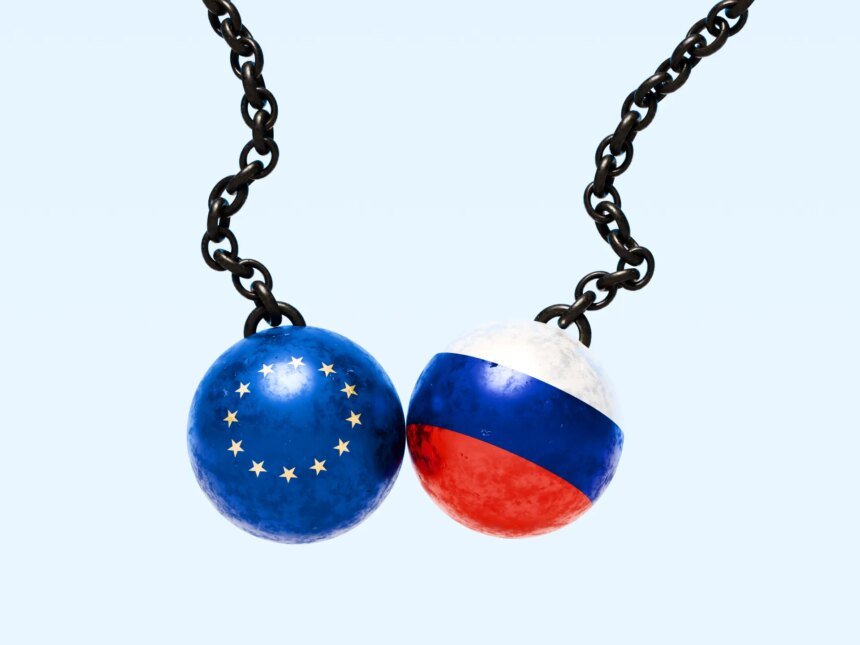
Writer Ricardo Martins considered that Europe, which was built on the promise of peace, and is today led by its leaders towards competition, an arms race, and confrontation, is endangering its founding values.
In an article on the New East Magazine website, the writer explained that European integration was based on a fundamental promise, which was that the continent would not slide again into a disastrous war, because the European project was born from the womb of destruction, with the aim of replacing power politics with cooperation, deterrence with diplomacy, and military competition with economic interdependence.
Read also
list of 2 itemsend of list
But many in the European political class today – as the author points out – seem ready to abandon those ideals in favor of a new discourse of confrontation and preparation for war against Russia.
The writer adds that the discussion about Russia is no longer limited to defending Ukraine only, but influential European voices, from both the right and the left, have increased in portraying direct conflict with Russia as not only possible, but inevitable.

Dangerous slip
The writer sees in talk of an imminent war, military spending, and huge budgets, a shift from what was previously known as “deterrence” to an ambitious and wide-ranging geopolitical project.
Hence, the author poses a fundamental question: Is Europe acting according to rational strategic calculations, or has it entered a dangerous zone in which ideological convictions and Russophobia have increasingly overtaken geopolitical realities?
The writer answers this by saying that the security dilemma emerges when defensive measures on one side are interpreted as offensive preparations on the other, as Europe claims that its rearmament is defensive, while Russia interprets it as preparation for a future confrontation, and the result is a vicious circle of escalation instead of diplomacy.
In his view, the greatest danger lies not in European leaders’ deliberate pursuit of war, but in their belief in its inevitability, as is the case with NATO Secretary General Mark Rutte, in his campaign to urge Europeans to buy more weapons from the United States.

History memory
Martins says that no country in modern history has witnessed invasions like Russia and the Soviet Union, recalling the entry of Napoleon’s Grand Army into Russia in 1812, where it was defeated. Then Hitler launched Operation Barbarossa in 1941, which was the largest military invasion in history, and ended with the defeat of Germany.
The author believes that these experiences continue to shape Russian perceptions of security, and as a result, when Moscow observes European military rearmament, the deployment of long-range missiles, discussions about strategically defeating Russia, and rhetoric about preparing for war by 2030, it does not interpret these developments from the perspective of European intentions, but rather from the perspective of historical memory.
In the author’s opinion, these historical data are considered a warning that Russia is increasingly viewing Europe not as a security partner, but rather as a hostile bloc preparing for a long-term confrontation.
If the Russians are convinced that Europe is preparing for a potential conflict, their response will be appropriate. In this sense, the danger lies not only in whether Europe intends to repeat Operation Barbarossa, but also in the fact that Russia increasingly believes that some European elites are moving in this direction.
The European continent still lacks many of the capabilities needed to fight a large-scale war in which the United States does not participate
Military ambition and strategic contradictions
The author points out that the current wave of European rearmament is being justified by the need to prepare for a future without American protection guarantees. Germany’s massive defense investments, Polish military expansion, and European Union initiatives to boost defense industries all reflect growing doubts about the reliability of the United States.
However, fundamental contradictions remain: Europe together has a larger population and economic output than Russia, and its military power depends not only on resources, but also on integration, industrial capacity, logistics, command structures, and political cohesion.
Europe continues to operate in a fragmented defense environment characterized by multiple weapons systems, competing supply programmes, and overlapping national priorities.
The irony is clear and unambiguous: while European leaders talk increasingly boldly about confronting Russia, the continent still lacks many of the capabilities necessary to fight a large-scale war in which the United States does not participate, especially since military recruitment is suffering, the defense industries are fragmented, and “strategic independence” is closer to wishful thinking than reality.
This gap between rhetoric and real capacity calls for caution, and yet, in many quarters, it appears to only lead to more rhetoric, another indication of Europe’s growing disconnect from reality.
History shows that major wars rarely start because leaders consciously seek disaster, but rather because political elites convince themselves that escalation can be controlled, that opponents will retreat, or that victory is easier than it actually is.
The writer considers that the current European leadership lacks a strategic vision, and that what is most worrying about the current debate is the emergence of a discourse suggesting the possibility of defeating Russia through continued pressure and escalation.
According to the writer, this assumption seems risky, as Russia is still a nuclear superpower that possesses enormous military and industrial capabilities, great strategic depth, and a political leadership that views the conflict with the West from an existential perspective.
Also, the tough European rhetoric regarding confronting Russia seems hollow, and it may soon discover that the most dangerous threat facing it is not Russia, but rather betraying its founding principles, because that may end its existence.