Published on 6/30/2026
|
Last update: 20:50 (Mecca time)
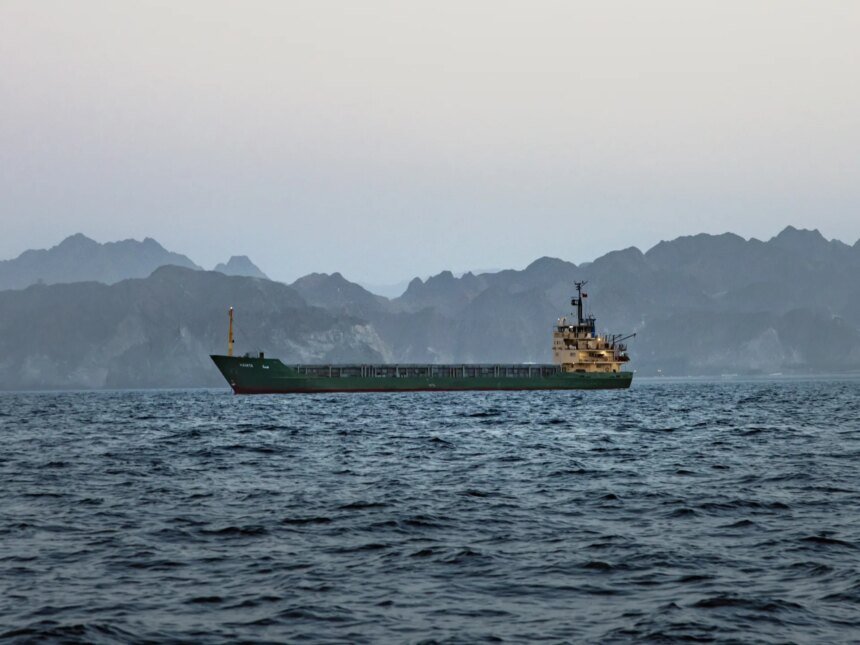
The Secretary-General of the International Maritime Organization, Arsenio Dominguez, announced the suspension of operations to remove ships stuck in the Strait of Hormuz following the attack on an oil tanker, stressing that the organization is awaiting an Iranian position that would allow the resumption of efforts aimed at securing the passage of ships through the waterway.
Dominguez explained, in statements to Al Jazeera, that the organization was informed that the corridors it proposed to remove the ships were not considered safe, indicating that all parties were notified of the steps taken by the organization to create dedicated navigation paths to facilitate the exit of stranded ships.
He added that the organization proposed the option of clearing mines in the Strait of Hormuz in coordination with Iran, pointing out that it does not object to using two paths to cross the Strait.
The Secretary-General of the International Maritime Organization stressed that there are no legal principles that allow any country to impose fees on a strait designated for international navigation, stressing that the Strait of Hormuz is an international corridor and all ships have the right to pass through it.

Voluntary fund
In this context, the New York Times, quoting Secretary-General of the International Maritime Organization, Arsenio Dominguez, revealed the possibility of establishing a fund for voluntary payments for the Strait of Hormuz, as part of examining options to address the challenges associated with managing the shipping lane following the recent war between the United States and Iran.
Dominguez explained – according to the newspaper – that he held discussions with Omani officials regarding the management of the Strait of Hormuz, pointing out that the discussions focus on benefiting from existing international experiences and developing practical solutions to the crisis left by the war, ensuring the continuation of maritime navigation in accordance with international legal frameworks.
The newspaper added that the Sultanate of Oman submitted an official proposal to the United States and a number of its Western allies to establish this mechanism, noting that the proposal is partly based on models applied in the Straits of Malacca and Singapore to support the safety of navigation and maritime services.
According to the report, the Omani plan requires shipping companies to pay fees for services related to the sea corridor, while an informed source confirmed that American negotiators received the proposal and expressed a number of reservations and concerns that they intend to discuss with Omani officials during the upcoming consultations.

Service fees, not transit fees
Omani Foreign Minister Badr al-Busaidi expressed his country’s rejection of the idea of imposing fees simply for crossing the strait, saying that this would be illegal. But he distinguished between “transit fees” and fees for services provided by countries overlooking the strait.
Al Busaidi said in an interview with Radio Monte Carlo International that Oman, like France, calls for calm and the implementation of the terms of the memorandum and is working “with everything it can” to achieve peace, understanding and harmony, and to ensure that navigation in the Strait of Hormuz remains safe, sound and free for all.
The Minister of Foreign Affairs stressed that the Sultanate of Oman realizes the vital importance of the Strait for the global economy and the countries of the region, including Iran, explaining that the Omani dialogue with Tehran is based on the fact that any future understandings must remain within the rules of international law.
He added that the Sultanate of Oman is committed to the Convention on the Law of the Sea, even though Iran is not a party to it, stressing that there is an agreement that any agreement being discussed should not fall outside the scope of international law.
Badr Al Busaidi denied that Oman was in favor of imposing fees on ships crossing the Strait of Hormuz, saying that imposing transit fees is “internationally prohibited,” and that Oman is committed to these controls. However, he pointed out the possibility of examining voluntary arrangements related to services supporting navigation, taking advantage of existing experiences such as the Straits of Malacca and Singapore, which provide services to improve navigation security and water safety, reduce pollution, and raise readiness to deal with emergency incidents such as collisions or fires on board. Tankers.
Al Busaidi stressed that the Gulf countries agree on the priority of reducing the escalation, stopping any targeting from any party, and focusing on implementing the terms of the agreement as quickly as possible and within the specified period.

Voluntary fees
The newspaper reported, citing diplomats, that although European countries are not satisfied with the idea of fees, they are now focusing on ensuring that they are implemented at least in a way that does not violate international law, and voluntary fees may meet this condition.
“It’s voluntary, if you will,” said H. A. Hillier, a senior associate fellow at the Royal United Services Institute (a think tank in London). “Hormuz was completely open before this war, and now it’s not.”
He added: “This is not Oman’s doing. They never wanted this. All this trouble is part of the bill that Washington pays for sparking an ill-considered war.”
US Secretary of State Marco Rubio told reporters in Bahrain last week that the United States would oppose any scenario in which the Strait was financially invested, regardless of whether that was called a “fee, excise, or donation.”
“We have to go back to what the Strait was like before this conflict,” Rubio said.
But analysts say that Iran’s newfound ability to disrupt traffic through the waterway constitutes crucial leverage that it cannot afford to lose.
Iranian Foreign Minister Abbas Araqchi told state television this month that the Strait of Hormuz would not return to the situation it was before the war, when passage was free.